


Articles
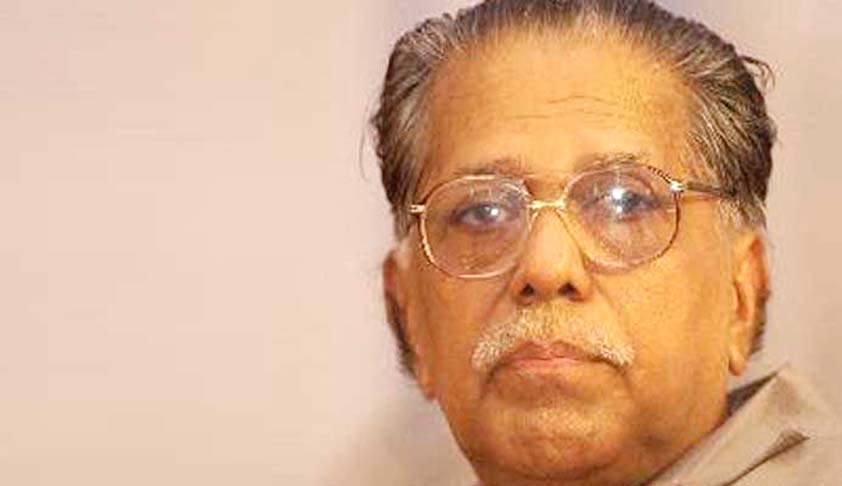
A Tribute To Ever Remembering ‘MKD’
Liked by all and hated by none- that is Adv.Muthalarath Kurungodan Damodaran (M.K.Damodaran), popularly known as ‘ MKD ’ among lawyers and ‘Damuvettan’ to close friends. Adv. M.K.Damodaran’s sad demise, indeed, has caused a great loss of a senior lawyer of his stature who had a social agenda throughout in his life. When death of near and dear occurs we console ourselves that this world is the land of the dying; the next is the land of the living. Mr.M.K.Damodaran’s humble beginning at...
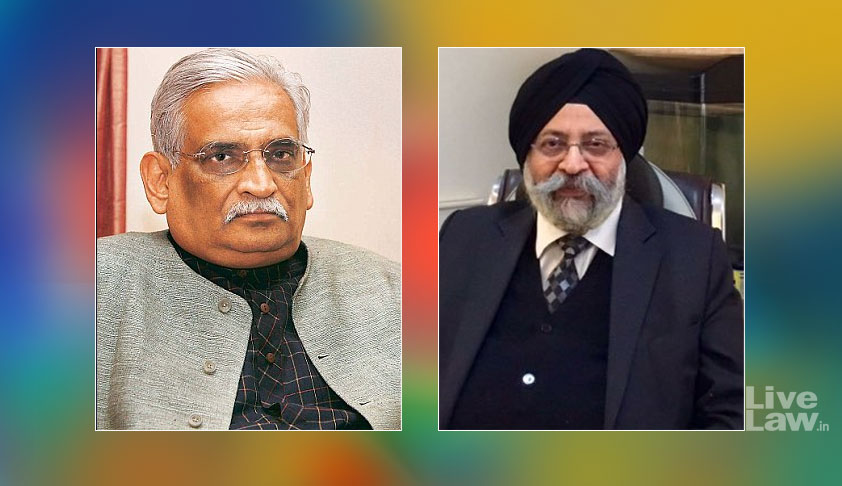
Dr. Dhavan’s Column On CJI Khehar And The Response by Sr.Advocate R.S.Suri – Two Extremes
Senior advocate and distinguished jurist Dr. Rajeev Dhavan recently in his column uploaded on online portal expressed a strongly worded anguish against Justice J.S.Khehar and termed him arguably one of the worst Chief Justices of India. The current president of the Supreme Court Bar Association (SCBA) and senior advocate Mr. R.S.Suri in his personal capacity did not subscribe to Dr. Dhavan’s opinion and responded in another online portal. In an exchange of views on the sitting CJI with just few...
Triple Talaq Case :- Can Justice Nariman’s View On Arbitrariness Be Treated As A Binding Declaration Of The Constitution Bench?
Apart from the implications it holds for Muslim Divorce Laws, the Triple-Talaq judgment of the Supreme Court has piqued the interest of legal fraternity for a different reason as well. Justice Nariman’s view(endorsed by Justice U.U Lalit) that arbitrariness can be a ground for striking down a legislation has sparked a lot of discussions among the legal commentators. Justice Nariman expressed the view by overruling the dictum in State of Andhra Pradesh vs. McDowell & Co. AIR 1996 SC 1627,...
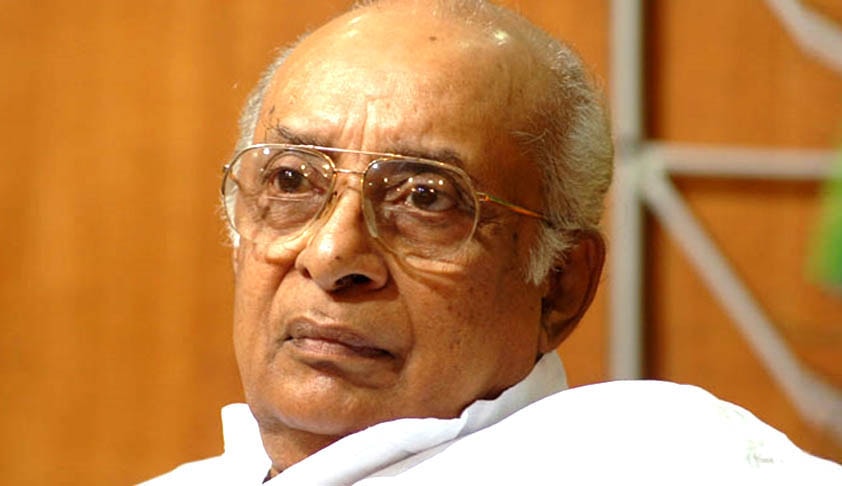
Triple Talaq Judgment: Justice For Muslim Women, Writes Justice K.T. Thomas
I am happy that the Supreme Court has rendered substantial justice to the Muslim women of the country giving them the protection envisaged in the Constitution of India.Chief Justice J.S. Khehar maintained that triple talaq being a personal law, was not unconstitutional. He was supported by Justice S. Abdul Nazeer. But the other three judges Justice Kurian Joseph, Justice Rohinton Fali Nariman and justice Uday Lalit took the view that triple talaq was unconstitutional, though on different...

Triple Talaq Judgment – Supreme Court Misses Dominant Ingredients
Professor Philip Bobbit gave five archetypes of constitutional arguments – Historical, Textual, Structural, Prudential and Doctrinal. Touching others superficially but relying on a doctrinal argument, a constitution bench of the Supreme Court vide a split decision in a close ratio of 2.6:2.4 has set aside the practice of dissolving marriage instantly through pronouncement of triple talaq (talaq-e-biddat). While Justice Khehar (writing for himself and Justice Abdul Nazeer), - the minority...

Which HC Ruling Will Get The SC’s Affirmation Over The Applicability Of 2015 Amendments To Post-Arbitration Court Proceedings?
The Arbitration & Conciliation (Amendment) Act, 2015 (“amendments” / “2015 Act”) was introduced with a purpose to give more autonomy to the arbitral tribunals and deter unnecessary and vexatious litigations arising out of arbitral proceedings. However, some felt that the provisions of 2015 Act were not precisely drafted to convey the legislative intent. Since the enactment, section 26 of the 2015 Act has been subject of interpretation in various Courts. Top lawyers of India have carefully...
Major Girl's Right To Choose A Partner vis-a-vis Right To Reside With Him Without Marriage: A Matter Of Judicial Prescription
The High Court of Kerala is off late in the limelight of academic discussions, owing to the variety of marriage cases that come before it by virtue of writ of habeas corpus.The case of Ashokan K.M (Akhila @ Hadiya Case) has brought the High Court to the national forefront of debates, due to the unusual order declaring a marriage void, even when the bride and the groom did not contest it. The parens patriae jurisdiction exercised by the Court in that case is still under a fog of vagueness and...
![Clinical Legal Education - [Part IV] Building A Roadmap For Clinical Legal Education In India](https://www.livelaw.in/cms/wp-content/uploads/2017/07/NLSIU-Banglore.jpg "Clinical Legal Education - [Part IV] Building A Roadmap For Clinical Legal Education In India")
Clinical Legal Education - [Part IV] Building A Roadmap For Clinical Legal Education In India
This piece is the fourth piece in the series of articles on clinical legal education in India. To that extent, this piece should be read in continuation of the former pieces which can be found here : Part I, Part II and Part III. This piece shows that it is important to draw upon the lessons of both the Indian experience with clinical legal education and the Harvard Law School (HLS) experience, to come up with a blueprint to reform clinical legal education system in India. First up - there are...

Will Lawyers and Judges be replaced by Artificial Intelligence ( AI )
Advancement in technology and science is growing at such a pace that questions like the above of replacement of human skills by machines through AI are being debated at present. Traditionally Lawyers and Judges are thought to be dealing with problems of human beings demanding special skills and emotions which only human beings can possess. However, today a lot of work of Lawyers and Judges is being done or atleast supported by computers. However, at present most of the work which is done by the...
The Right To Health – Uneasy Silence
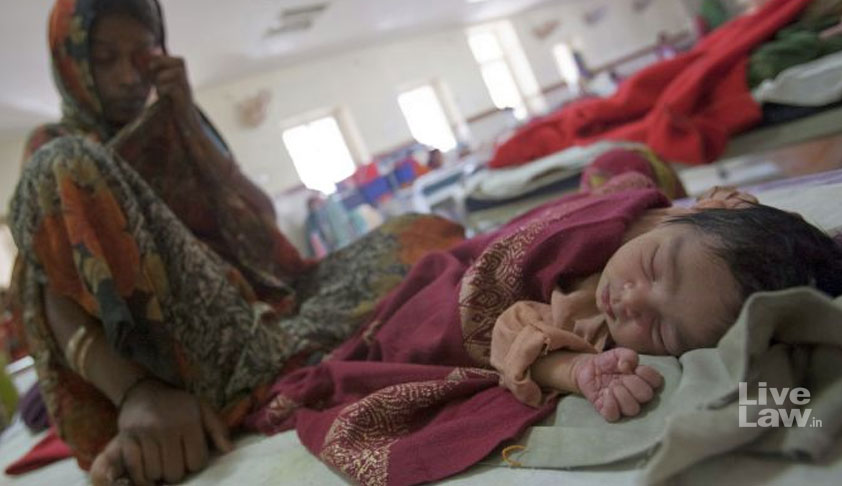
Diseases and mishaps must have had their grip over humans ever since they came into existence. The disablement, disfigurement and loss of life caused due to illness has alarmed human race. The multiple sources causing such agonies are both external and internal ranging from nature’s wrath to lack of proper hygiene. If the human race is to survive and progress preservation of good health is a must. Though personal hygiene can to a large extent ward off ordinary ailments caused due to lack of...
Can Flat Buyers Initiate Insolvency Proceedings Against Builders Under The Insolvency & Bankruptcy Code?
Can Flat Buyers initiate insolvency proceedings against Builders under the Insolvency & Bankruptcy Code? This question assumes greater significance now because many real estate giants are facing insolvency proceedings in various Company Law Tribunals under the new I & B Code, 2016 across the country. Latest is the case of J.P. Infratech which is one of the largest real estate Developer in North India. Flat buyers are in absolute legal chaos.The ‘locus standi’ of the flat buyers for...
Asbestos Company's Case Against Govt All Set To Be Dismissed By Patna High Court
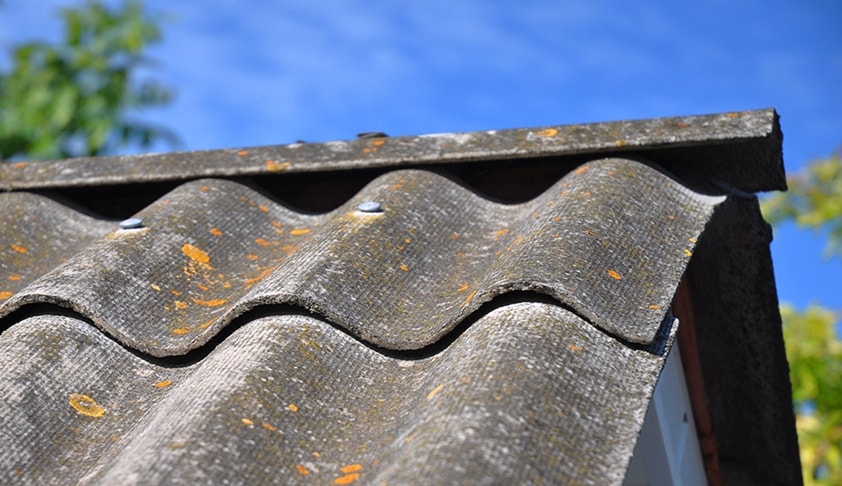
Tamil Nadu’s Nibhi asbestos company’s case against Bihar State Pollution Control Board (BSPCB), Bihar Industrial Area Development Authority (BIADA) and Bihar Government is listed for order before Justice Shivaji Pandey’s bench of Patna High Court after cancellation of permission of the carcinogenic asbestos based hazardous factory by Pollution Control Board. The matter is listed for order on August 17, 2017. The asbestos company has filed the case against State of Bihar, Department of...