




Articles
MADA Fallout: Section 9D, Article 131 Split, And Validation Doctrine That Doesn't Fit
Jharkhand collected in time. Odisha did not.Both States were operating under the same judgment - the nine-judge Constitution Bench ruling in Mineral Area Development Authority v. Steel Authority of India (2024), which held 8:1 that States possess the constitutional power to tax mineral rights and mineral-bearing land, and that royalty is not a tax. A follow-up order allowed retrospective recovery from April 2005, staggered over twelve years. On paper, every mineral-rich State stood to gain. In...
Stamp Duty On Arbitral Awards: Chargeable Event After URC Construction
An arbitral award is chargeable with stamp duty under Article 12 of Schedule I to the Indian Stamp Act, 1899 (Stamp Act). The High Courts differ on when the duty becomes payable, and the consequence follows from the timing. If it was payable when the award was signed, as the Delhi High Court held in URC Construction (P) Ltd v. Airports Authority of India (1 September 2026), the award is impounded and enforcement waits on payment of the deficit and a penalty of ten times that amount. If it is...

Right Of Accused: Accessing FIRs At Earliest Stage
Does the law mandate that the police provide a copy of the FIR to an accused person? What rulings have courts made on the right of an accused person to obtain a FIR at an earliest stage? Why is it important for an accused person to have timely access to a FIR? The Supreme Court mandated that FIRs be posted on police websites within 24 hours of registration, or on the State government's official website in the absence of such a website. On 25th August, 2026 the Supreme Court ordered the Ghaziabad...
Secondary Victimisation In India's Criminal Justice System
A rape survivor in India who decides to report the crime goes through a Herculean situation. She goes through at least four: the assault itself, the police station, the medical examination, and the trial. Each later stage is supposed to be a step toward justice. In practice, each one can hurt her all over again. This is what criminologists call “secondary victimisation”: the re-traumatisation of a survivor by the very institutions meant to help her, distinct from the harm inflicted by the...
Better Road To Equity In Indian Bar
A dignified livelihood at the Bar cannot be secured by judicial affection. It has to be built by a fairer market for junior lawyers.The Supreme Court's latest word on a never-ending saga arrived on 21 August, in 'Bhumika Trust v. Union of India, [2026 INSC 904]'. Revisiting a year-old judgment dated 20.05.2025 in 'All India Judges Association v. Union of India [2025 INSC 735]', the Court squeezed the mandatory three years of practice for entry to the post of Civil Judge (Junior Division) down to...
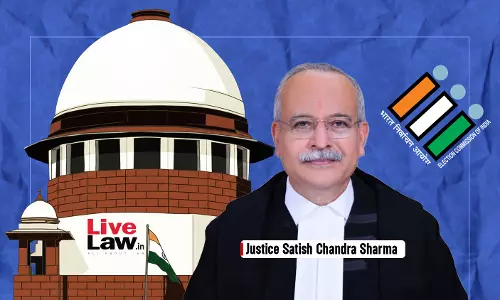
Propriety Questions Emerge As Son Of Justice SC Sharma, Who Heard ECI & Medha Roopam Cases, Is Election Commission's Lawyer
Certain serious questions concerning judicial propriety have arisen in the light of newly surfaced information that the son of Justice Satish Chandra Sharma of the Supreme Court is the standing counsel of the Election Commission of India in the Madhya Pradesh High Court.This assumes significance as Justice Sharma was part of the two-judge bench which heard the petitions challenging the 2023 law governing the appointment process for the Chief Election Commissioner and the Election...
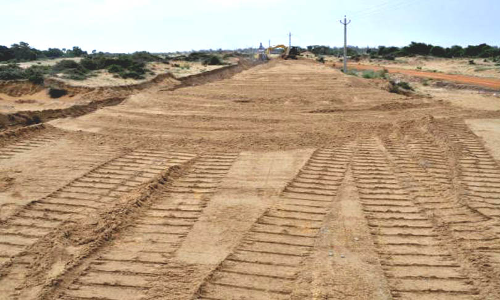
Recognising Public Trust, Recognising Legitimate Use, Compensation As Last Resort
India's legal framework facilitates compensation when individual or private land is acquired for public purposes, yet offers little protection to millions of people whose livelihoods depend upon commons. Commons support around 350 million rural people in India dependent on the commons. The Economic Survey of India 2025-26 highlighted the importance of village commons in rural India. Commons are central to livelihoods and income generation, yet they continue to face challenges such as...

Section 498A's Other Wall: Why It Still Can't See Same-Sex Couple
When the Supreme Court held in Dr. Lokesh B.H. & Ors. v. State of Karnataka & Anr. that an unmarried live-in partner can be prosecuted as a "husband" under Section 498A of the Indian Penal Code, now Section 85 of the Bharatiya Nyaya Sanhita, the criticism that followed focused on one gap in the new test: it protects only those partners who can show an intent to marry, and marriage is not an option available to same-sex couples under Indian law. The suggested fix was to replace the...

Last Room Of Refusal: Monologue Of ADR (Part 3)
The Authorities and the Appearance of ActivityThe Legal Services Authorities were created for a plain purpose: to see that poverty does not keep a person out of court.What has grown up instead is a parallel institution with an outward life of its own. Much of what reaches it is not law at all: pensions not released, entitlements not delivered, ration not issued, schemes not implemented. These are administrative failures belonging to the district administration and the departments concerned. They...
LiveLaw Editorial Guidelines For Article Submissions
LiveLaw publishes original, timely legal article that offers clear value to practitioners, academics, students and litigants. Owing to the volume of submissions, articles are assessed against the following editorial standards. I. Submission Categories a) General Articles Legal developments, legislation, policy and other areas of law. b) Law Firm Articles Contributions by law firm partners, associates, general counsel and other legal professionals. c) Law School Articles Contributions by...

Price Of Calendar: Monologue Of ADR (Part 2)
The Arithmetic ExplainedConciliation, mediation and settlement in a Lok Adalat follow the same modus operandi and yield the same result. To understand the arithmetic, the figures of any one of them will serve, and the Lok Adalat publishes its own most fully. Take the National Lok Adalat of 9 May 2026. 4.90 crore cases were taken up across the country and 3.91 crore were disposed of, with settlements totalling roughly Rs 17,300 crore[1]. Of those disposals, 3.37 crore were pre-litigation matters...
Resurrection Of Panchayat: Monologue Of ADR (Part 1)
Alternative dispute resolution is no longer alternative in any meaningful sense. Section 89 of the Civil Procedure Code directs courts to refer matters out for settlement. The Legal Services Authorities Act, 1987 gave statutory form to the Lok Adalat; the Arbitration and Conciliation Act, 1996 framed arbitration; the Mediation Act, 2023 completed the design. Every district court now houses a mediation centre, every quarter brings a National Lok Adalat, and every judicial office knows that...