




Articles

Resurrection Of Panchayat: Monologue Of ADR (Part 1)
Alternative dispute resolution is no longer alternative in any meaningful sense. Section 89 of the Civil Procedure Code directs courts to refer matters out for settlement. The Legal Services Authorities Act, 1987 gave statutory form to the Lok Adalat; the Arbitration and Conciliation Act, 1996 framed arbitration; the Mediation Act, 2023 completed the design. Every district court now houses a mediation centre, every quarter brings a National Lok Adalat, and every judicial office knows that...
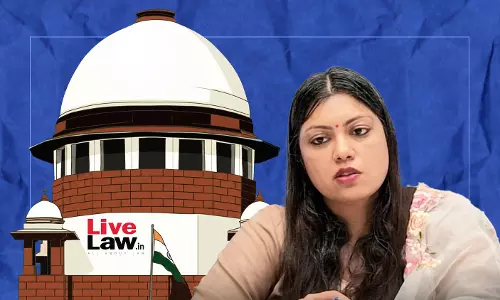
Questions Over Listing Of Noida DM Medha Roopam's Plea Before Supreme Court
The episode also brings the exercise of Master of Roster powers under scrutiny.

Demat 2.0: From Electronic Ownership Records To Programmable Securities Infrastructure
The historical trajectory of Indian securities markets is characterised by progressive technological modernisation anchored in statutory reform. Before the mid-1990s, the issuance and transfer of debt and equity instruments were governed by paper certificates, physical endorsement instruments, and statutory stamping requirements under the Indian Stamp Act, 1899. This physical paradigm created severe operational friction, high transaction costs, and systemic counterparty risks, including stolen...

Strength Of Soldier's Daughter Who Is different But Not Less
Anupam Kher's Tanvi the Great is a deeply moving film. It brings together two powerful worlds: the daily life of an autistic girl and the deep pride of a family that serves the nation. It is a story told with dignity, showing that being different does not mean being any less.At the heart of the movie is Tanvi. She struggles with basic everyday tasks. Yet, underneath her quiet daily challenges lies a strong, resilient spirit.Her life is shaped by a painful sacrifice. Her father, a brave soldier,...

Weaponizing Sections 11 And 16: Judicial Trends On Dilatory Tactics In Indian Arbitration
In India, arbitration is the most overpriced and time-consuming process for dispute resolution. This phrase became very popular amongst the members of the bar and bench, in recent years. The intent of the legislature to make India a hub of arbitration by introducing timelines right from invoking arbitration to parties completing their pleadings and in last pronouncement of the award by the Arbitrator. Furthermore, the legislature has introduced Section 11 and Section 16 the Arbitration and...

Filed, Not Registered: Unhappy Situation At Trademark Registry
Every trademark practitioner fields the same question after filing: when does the certificate come? On current timelines the honest answer is years, not weeks, and it is usually offered as an apology for administrative delay. It deserves to be treated as something graver. A growing share of India's trademark law now comes not from the Registry examining marks and registering them, but from the High Court correcting the Registry when it does not. The wait is not only slow service. It has become a...
Why Arbitration Council Of India Still Not Taken Off?
In February 2026, the Government told Parliament what the arbitration bar already knew: the Arbitration Council of India has not been constituted as yet. The admission was brief, almost routine. It should not have been. Parliament wrote the Council into the statute book in 2019, gave it a head office in Delhi and a mandate to shape the future of Indian arbitration, and then left the chair empty for close to seven years. India has spent that time announcing its ambition to become a global...

Stock Witnesses And Fair Criminal Process
A criminal prosecution should not become a self-validating exercise in which the investigating agency creates the narrative, selects the person who will certify it, records him as an independent witness and then relies upon his evidence as external corroboration. The objection to a “stock witness” is not simply that he has appeared in several cases. It is that repeated police dependence may destroy the very independence for which he is cited.Fair investigation forms part of Article 21. When...
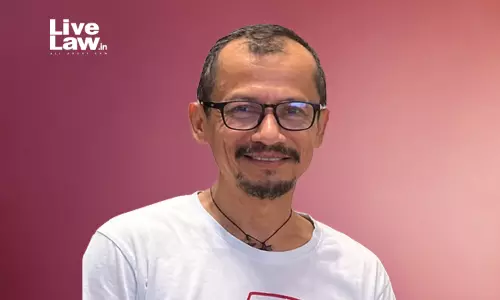
Killing Of Chongtham Vikram Singh: Equal Protection, Unequal Belonging
On September 6, in Delhi's Ashram area, Chongtham Vikram Singh, a prolific musician from Imphal in Manipur, went out after dinner to do what thousands of Delhi residents do every night: take out the trash, walk off a meal, ask a knot of drunk men outside his building to lower their voices. He did not survive the request. That a noise complaint could end in death is, on its own, a tragedy of the kind Indian cities produce with grim regularity. What makes this one different, what has pulled...

Pramod Kumar Shukla V. State Of UP: Trampling Upon Institutional Checks And Balances
The Code of Criminal Procedure 1973 (CRPC) provided for the registration of the FIR by the police officer if the information discloses a cognizable offence. If the police officer fails to do his duty, the appropriate remedy for the complainant is to move the SP. If he also fails in his duty, the complainant can file an application under section 156(3) CRPC, requesting the magistrate to order registration of FIR by the police officer.Now, in this scenario if the magistrate rejects the application...

Human Rights Commission Or Human Rights Court?
Ask where a human rights complaint in India goes, and the answer comes back instantly: "the Human Rights Commission." It's the most common answer and it's only half right. That gap between the common answer and the complete one is exactly what the Supreme Court's recent judgment in Sayad Asifulla v. State of Karnataka (2026 INSC 964) clarifies.The Protection of Human Rights Act, 1993 is built two separate mechanisms for protecting human rights in India and it's easy to conflate them:Human Rights...
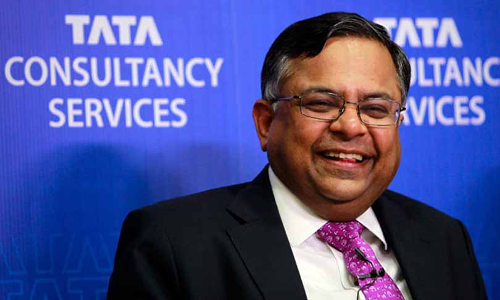
Tata Trusts Is Winning Wrong Fight
The dispute over N Chandrasekaran's return is real. But the larger question is how much of the Trusts' control can survive a Tata Sons listing, and on what terms. The Tata trusts collectively own about 66% of Tata Sons. In August, however, they could not cast a single vote at its annual general meeting. The 18 August meeting was adjourned for want of quorum. The company's articles require a representative jointly nominated by Sir Dorabji Tata Trust and Sir Ratan Tata Trust, which together hold...