


Articles
Contradiction” Under Section 145 Of The Evidence Act (Section 148 Of BSA) And Under The Proviso To Section 162 (1) Cr.P.C. (Section 181 (1) Of BNSS)
C O N T E N T SI N N E R T I T L E SParaNo.INTRODUCTION 1SECTION 145 OF THE EVIDENCE ACT.2IMPEACHING THE CREDIT OF A WITNESS3 “CONTRADICTION” AS GENERALLY UNDERSTOOD 5 “CONTRADICTION” AS ENVISAGED BY THE PROVISO TO SECTION 162 (1) Cr.P.C. AND THE LATTER LIMB OF SECTION 145 OF THE EVIDENCE ACT.6“OMISSION” EXPLAINED IN TAHSILDAR SINGH'S CASE 6 propositions laid down in Tahsildar Singh Illustration 1 Illustration 2 Illustration 3 Illustration 4779999THE DIRECT...

Notice To Accused: Section 41A CrPC Versus Section 160 CrPC
Whenever a crime is reported and an FIR is lodged, the starting point for an Investigating officer commencing the investigation would be to proceed to the place of occurrence, make an inquiry, ascertain the facts, and examine witnesses. Section 160, Chapter XII CrPC (Now, section 179 BNSS) empowers the police officer to require the attendance before himself of any person who appears to be acquainted with the facts and circumstances of the case and where such order is passed...
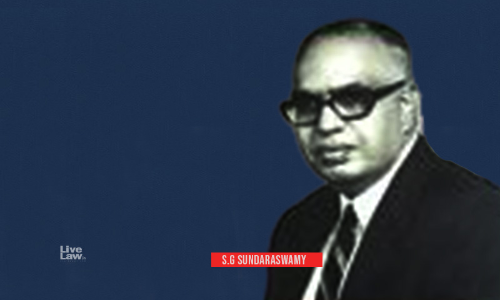
S.G. Sundaraswamy- A Doyen And A Paragon
Shri S.G. Sundaraswamy was one of the most eminent lawyers and a former Advocate General of the State of Karnataka, then known as Mysore. I had the fortune to be his junior. This September 22 marks his birth centenary. It is appropriate to recall and celebrate his life and work which were quiet and unobtrusive but exemplary. He belongs to the galaxy of the old world that is becoming increasingly rare.It is my melancholy duty and privilege as perhaps the last of his juniors to remember and pay...
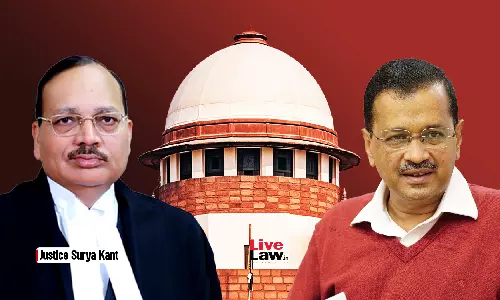
Whether Reasons Recorded By CBI To Arrest Kejriwal Met Legal Standards? A Critique Of Justice Surya Kant's Judgment
The Supreme Court's two-judge bench agreed that Delhi CM Arvind Kejriwal should be granted bail in the CBI's 'Liquor Policy Scam' case but framed separate opinions regarding the arrest's validity though upholding the same. Justice Surya Kant upheld the arrest, noting the CBI met procedural requirements under the Code of Criminal Procedure (Cr.P.C.). In contrast, Justice Ujjal Bhuyan questioned the timing of the arrest and supported Dr. Singhvi's (Kejriwal's counsel) view that the CBI's action...

Killer Acquisitions: A New Frontier For The CCI?
In an interesting development, the Ministry of Corporate Affairs (“MCA”) recently hinted at the possibility of incorporating specific provisions in the proposed Digital Competition Bill, 2024 (“2024 Bill”) to bring 'killer acquisitions' within the regulatory domain of the Competition Commission of India (“CCI”).[1] The proposal if materialized, would make India one of the few jurisdictions that has taken a proactive step in addressing an issue that has plagued regulators worldwide. ...
Implications Of Bhartiya Sakshya Adhiniyam On Digital Evidence In Ongoing Trials
A Delhi Court has issued directives to the Delhi Police to ensure adherence with the new legislation governing the submission of digital evidence. Additional Sessions Judge Sh. Pulastaya Parmachala, while delivering an order in the 2020 Delhi riots case, noted that despite the repeal of the Indian Evidence Act, 1872, certificates for validating the authenticity of digital evidence were still being submitted under the now-defunct Section 65B of the 1872 Act. In the present case, the...

Eligibility Of Suspended Director To Submit A Resolution Plan: Revisiting Hari Babu Thota
Section 29A of the Insolvency and Bankruptcy Code, 2016 (“IBC”), excludes certain classes of persons from submitting a resolution plan in the Corporate Insolvency Resolution Process (“CIRP”) of a Corporate Debtor (“CD”). This includes the promoter or suspended director of a CD[1] among others. The objective of this provision is to inter alia eliminate the risk of an unsuitable person such as a defaulting promoter from submitting a resolution plan and returning to the management of the CD...

The Constitutionality Of West Bengal's Anti- Rape Laws
India is ranked 128th out of 177 countries in terms of women's inclusion, justice and security in the Women, Peace and Security index of 2023 released by Georgetown Institute for Women, Peace and Security. According to the recent data from National Crime Records Bureau (NCRB), crime against women in India rose by 12.9% between 2018 and 2022. As widespread protests sweep the nation in response to the tragic rape and murder of a doctor in Kolkata, the West Bengal Assembly has responded...
Shajan Skaria: A Judicial Excursion In Granting Anticipatory Bail Under Prevention Of Atrocities Act
Recently, in Shajan Skariah v. the State of Kerela, the Supreme Court granted anticipatory bail to an accused charged with offences under the Scheduled Castes and Scheduled Tribes (Prevention of Atrocities) Act, 1989 ('the PoA Act'), despite the specific bar under Section 18 of the PoA Act. This article critically analyses the Court's interpretation of Section 18 of the PoA Act and its interplay with other provisions of the Code on Criminal Procedure (“CrPC”), inconsistent with the...
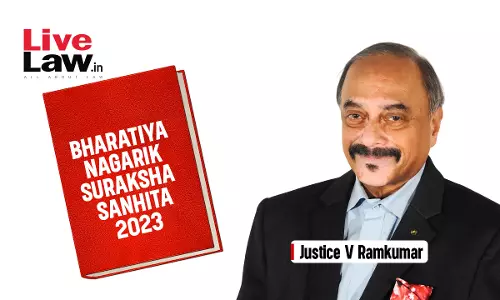
The Welcome And Unwelcome Changes In Section 183 Of BNSS
Before evaluating the merits and demerits of Section 183 of the Bharatiya Nagarik Suraksha Sanhita, 2023 (“BNSS” for short), it is necessary to make a comparison of the above Section with the corresponding Section 164 of the Code of Criminal Procedure, 1973 (“Cr.P.C” for short).Section 164 Cr.P.CSection 183 BNSSSection 164: Recording of confessions and statements(1) Any Metropolitan Magistrate or Judicial Magistrate may, whether or not he has jurisdiction in the case, record any confession or...

The Aparajita Bill: Legislative Populism Unvanquished
The recently passed Aparajita Woman and Child (West Bengal Criminal Laws Amendment) Bill, 2024, presents itself as a law intended to address the grave issue of sexual violence. Yet, beneath its facade lies a troubling reality—one marked by populist rhetoric and a hasty response to public outrage. This bill, rather than providing substantial solutions to protect women and children, seems to perpetuate a cycle of ineffective legal reforms that may, in fact, worsen the situation for survivors of...

Sub-Classification Within The SC & ST Categories Should Not Eventually Lead To De-Reservation
A seven judge bench of the Supreme Court in State of Punjab & Ors. vs Davinder Singh & Ors. 2024 LiveLaw SC 538 has recently held that sub-classification of the Scheduled Caste (SC) and Scheduled Tribe (ST) categories is permissible under Article 14, 15(4) and 16(4) of the Constitution of India. The court has held that sub-classification for the purposes of reservation is a facet and exposition of 'substantive equality' as against mere 'formal equality'. While doing so, the...