


Articles

Sub-Classification Within The SC & ST Categories Should Not Eventually Lead To De-Reservation
A seven judge bench of the Supreme Court in State of Punjab & Ors. vs Davinder Singh & Ors. 2024 LiveLaw SC 538 has recently held that sub-classification of the Scheduled Caste (SC) and Scheduled Tribe (ST) categories is permissible under Article 14, 15(4) and 16(4) of the Constitution of India. The court has held that sub-classification for the purposes of reservation is a facet and exposition of 'substantive equality' as against mere 'formal equality'. While doing so, the...

Cuffed But Unbroken: Understanding Arrest Rights And Due Process
On 7th August 2024, the Hon'ble Supreme Court of India in Tushar Rajnikantbhai Shahvs. Kamal Dayani & Ors. was faced with a peculiar challenge. In a contempt petition, a division bench of the court comprising Hon'ble Justices B.R. Gavai and Sandeep Mehta, took serious objection to the conduct of an Additional Chief Judicial Magistrate (ACJM) and a police inspector in the state of Gujarat. The court issued contempt notices to these two contemnors for their failure to respect an 'interim...
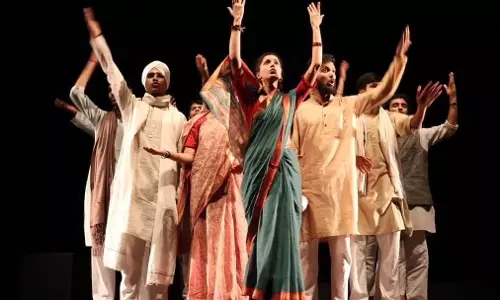
To Perform Or Not To Perform? : How Delhi's New 'Performance' Licencing Regime Threatens The Fundamental Rights Of Artists
A never-ending socio-political and cultural evolution of art forms and expression can be witnessed at Delhi's Mandi House. The doyens of modern Indian Theatre - Ebrahim Alkazi and Habib Tanvir through their pathbreaking plays like Tughlaq (historical drama), Charandas Chor (social satire on a truthful thief), and Jis Lahore Ni Dekhya (communal theme of India's Partition) shaped thought-provoking dialogue with the audiences. In the present day scenario, the creation of continuous artistic...

What Ministry's Advisory On Queer Partners' Bank Accounts Fails To Address
On 28th August 2024, the Ministry of Finance (through its Department of Financial Services) issued an“Advisory” claiming to be in connection with the Supreme Court's decision pronounced on 17th October 2023 in Supriyo @ Supriyo Chakraborty and Anr. v.Union of India and clarifying that “there are no restrictions for persons of the Queer community to open a joint bank account and also to nominate a person in queer relationship as a nominee to receive the balance in the account, in the...
Petrol And Diesel In The GST Conundrum: Unravelling The Test Of Cooperative Federalism
The inclusion of petrol and diesel under the GST ambit has sparked a significant debate, primarily revolving around the principles of cooperative federalism. While mainstream discourse often centres on the heavy tax burden on consumers under the current VAT and excise duties regime, this blog shifts the focus to a pressing yet overlooked concern: the substantial revenue loss that states would face if these fuels were brought under GST. At the heart of this GST conundrum lies the challenge...
Extending The Tribunal's Mandate Post Award: Tenable In Law?
Think of a race where the finishing line keeps moving. Section 29A of the Arbitration and Conciliation Act, 1996 (hereinafter the A&C Act, 1996) , grapples with just this dilemma in arbitral jurisprudence. Viewed to be a check to ensure that the arbitral process remains efficient and effective, the provision places a specific period within which arbitral awards are required to be pronounced. But what happens when the race ends and it seems as though the finish line is still within...

India's Green Trade Revolution; Navigating Challenges And Seizing Opportunities For Sustainable Growth
The concept of green trade is anchored between sustainable development and cross-border trade. One of the prevalent connotations of green trade refers to it as a “type of trade that emphasizes environmental protection and sustainable economic and social development.”[1] Other associated meanings refer to green trade as “promotion of sustainable measures to engage in trade without polluting the environment.”[2] Lastly, many environmental experts view green trade in the context of Green ...
Shifting Paradigms: Understanding The Supreme Court's Evolving Stance On Bail Under The PMLA
The Supreme Court of India has recently shifted towards a more nuanced approach to bail applications under the Prevention of Money Laundering Act (PMLA). While the court previously emphasised strict adherence to the twin conditions outlined in Section 45, which require the accused to prove they are not guilty and that they will not commit further offenses, recent rulings suggest a shift in perspective. This evolving stance in bail jurisprudence under the PMLA considers factors such as the...

Mandating Dashboard Cameras: Enhancing Accountability And Safety In Vehicles
The increasing incidence of road accidents and traffic violations in India highlights the urgent need for enhanced safety measures and greater accountability on the roads. Recent cases of hit-and-run incidents, which are becoming alarmingly widespread across the country, underscore the necessity for substantial changes that can deter offenders and curb the sense of impunity some drivers feel behind the wheel. According to official data from the Ministry of Road Transport and Highways (MoRTH),...
Defending The Defenders: The Imperative Of Fair Representation In Law
In the annals of legal history, the role of lawyers has been both celebrated and vilified. However, the bedrock of any functional legal system is the unwavering principle that every individual, regardless of their side in a dispute, deserves representation. To castigate lawyers for appearing for any particular side undermines the very essence of justice. This article is intended to be an explainer of the legal position. The Magna Carta of 1215 and the Universal Declaration of Human Rights...

The Forgotten Creditors: IBC's Dual Approach For Homebuyers And Other Consumers
The Insolvency and Bankruptcy landscape in India underwent a significant transformation with the enactment of the Insolvency and Bankruptcy Code (IBC) in 2016. One of the most intriguing aspects of the IBC is its impact on consumers, particularly those who find themselves in precarious situations when companies they have transacted with go under the insolvency process. Imagine a scenario where a consumer buys a plane ticket, looking forward to a much-anticipated trip, only to find out the...
Set-Off Conundrum Under Insolvency And Bankruptcy Code, 2016
The Supreme Court recently in Bharti Airtel Limited and Anr. v. Vijay Kumar Iyer and Ors[1] [“Bharti Airtel Judgement”] has settled the issue on the applicability of the principle of setoff under Insolvency and Bankruptcy Code, 2016 [“IBC”]. The Division bench of Supreme Court of India comprising of Justice Sanjiv Khanna and Justice S.K.V Bhatti dismissed an Appeal filed by Bharti Airtel Limited [“Airtel”] under Section 62 of IBC. The bench by its judgement dated 3rd January, 2024 upheld...