


Articles
One Of The Absurdities Pointed Out In Section 187 (2) Of BNSS Continues To Pose A Threat To The Liberty Of An Accused Person
Section 187 (1) and (2) of Bharatiya Nagarik Suraksha Sanhita, 2023 (BNSS for short) read as follows:-187: Procedure when investigation cannot be completed in twenty-four hours.--“(1) Whenever any person is arrested and detained in custody, and it appears that the investigation cannot be completed within the period of twenty-four hours fixed by section 58, and there are grounds for believing that the accusation or information is well-founded, the officer in charge of the police station or the...

Unionisation Of Sex Workers In India
Prostitution is the most established calling on the planet but is as yet not thought about as a genuine calling. It stands to reason that if workers in the sex industry were treated and regulated in the same manner as those working in more conventional establishments, the industry would be more efficient and the workers would be sufficiently protected. In India alone, there are over 15 million women forced into the sex industry, and with the numbers increasing, over 100,000 women ...
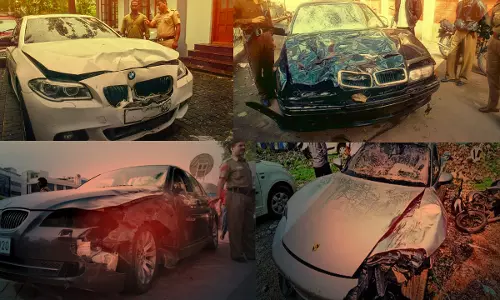
The Paradox In Hit And Run Cases Under Bhartiya Nyaya Sanhita, 2023
The Motor Vehicle Act, 1988 (“MV Act”) lays down special provisions for compensating the victims of a “hit and run motor accident.” A perusal of the definition of the term “hit and run motor accident” covers those vehicles/wrongdoers whose identity is unascertained, despite reasonable efforts being taken. Nevertheless, victims/representatives of the victims are provided relief compensation in such no-fault liability scenarios. It is pertinent to note that under the repealed Indian...
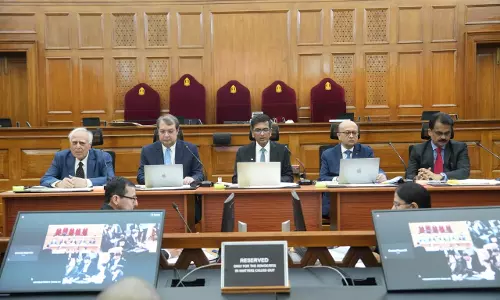
Special Lok Adalat Week, 2024- A Stellar Beginning!
The recently concluded Special Lok Adalat Week in the Supreme Court from 29th July, 2024 to 2nd August, 2024 has been a grand success on so many different parameters. More than 1000 cases pending before the Supreme Court have been settled. But the numbers are only part of the story.The settled cases relate to diverse areas such as motor accident & insurance claims, matrimonial & child custody disputes, service law disputes, and even land acquisition matters. As indicated by Mr. Atul...
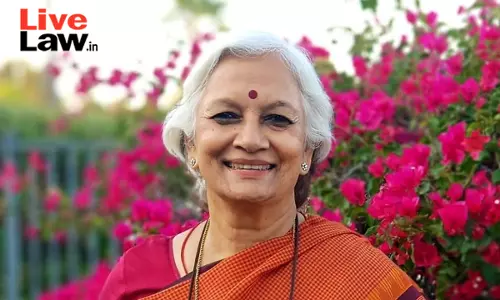
An Ode To Sadhana Ramachandran
I had seen Sadhana as an educationist from a distance as part of an audience. That was many years ago. Fate would conspire with me to see her at close quarters years later. It was Madhavi Divan, who understanding the issues, suggested wisely that only Sadhana could mediate in and resolve a particularly fratricidal litigation. The Supreme Court agreed and appointed Sadhana as one of the two mediators. It was my first face-to-face encounter with her. She was a pleasant personality....
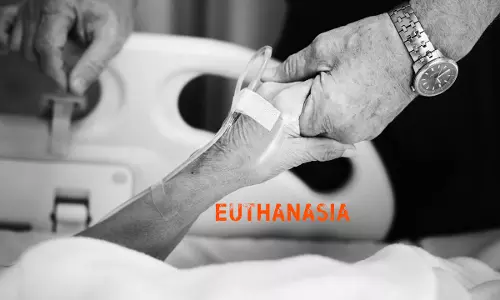
Euthanasia: Legal Aspects In India And Around The World
The term Euthanasia comes from two Ancient Greek words: 'Eu' means 'Good', and 'thantos' means 'death', so euthanasia means good death. Euthanasia, often referred to as "mercy killing" or "physician-assisted death," is a complex and highly debated topic within legal and ethical realms. Western Philosophers such as Plato and Aristotle have debated the ethics of euthanasia for centuries, and the discussion continues to be relevant even today. In contemporary times, John Stuart Mill, a...
A Fly In The Ointment: Legislative Error In Consumer Protection Act 2019
The mischief of the Consumer Protection Act, of 1986 (“Act”) was to provide the consumers with a redressal mechanism. It was a “social benefit-oriented legislation”[1], enacted to provide 'protection' to the interests of the consumer of both the goods and the services alike. According to the object of the Consumer Protection Act, 2019 (“New Act”), the New Act appears to intend to achieve the same objective. However, a perusal of its provisions does not seem to allow it to do so. It is...
The Stance Of Euthanasia In India
Euthanasia in the simplest sense involves intentionally ending a person's life to relieve ongoing suffering such as suffering from an irrecoverable or an incurable state of being and is a complex and evolving issue in the Indian landscape. While death with dignity is not only a legal issue but simultaneously a cultural and spiritual issue as well, a country secular as India possesses a different perspective on Euthanasia depending on religion and societal viewpoint. Forms of Euthanasia...

“Microsoft Blues”: A Call For Regulatory Shift & Invoking No Fault Liability
In the digital age, the security and resilience of critical infrastructure has become a paramount concern for nations worldwide. The recent Microsoft cloud outage, which caused widespread disruptions to various services and applications, has highlighted the world's uninhibited dependency on private companies and the urgent need for policymakers to mitigate the risks of such data outages with a regulatory framework.Critical infrastructure refers to the essential systems or sectors of any nation,...
Need For Policy-Driven Digital Rehabilitation In India
In today's technological era, the research ecosystem around digital services is getting richer. There is curiosity-driven literature around the assistive role of digital rehabilitative interventions (DR) being developed across the globe. The National Center for Biotechnology Information, USA, in 2023 defined DR as a part of the rehabilitation process that utilises technology as a means of target-correcting a person's mental or physical ailment, and improving their functioning in society....
Applicability Of Section 17 To Foreign Seated Arbitrations
Currently under the framework of the Arbitration and Conciliation Act, 1996 (“Act”), Section 17 (which deals with powers of the arbitration tribunal to grant interim measures) –by virtue of it being under Part I of the Act– is applicable only to arbitration that are seated in India. However, in arbitrations seated outside India, the party seeking interim reliefs against the opposite party having its assets in India does not have an efficacious remedy for directly enforcing the reliefs in...

Genetic, Environmental, Legal Challenges Of Antisocial Personality Disorders In Criminal Justice System
In recent years, the Indian judiciary has emphasized that no one is born a criminal, highlighting the influence of environmental factors on criminal behaviour. However, scientific evidence indicates that genetic traits also play a significant role. Conduct disorder, sociopathy, and psychopathy are conditions that manifest as a pervasive pattern of behaviour where individuals infringe upon the rights of others. These rights include personal safety, property rights, and emotional well-being....