


Articles

Applicability Of CrPC After July 1, 2024: A Conflict In The Twilight Zone
Within days of coming into force, the much celebrated new criminal laws which repealed the "colonial remnants" have provoked a legal conundrum qua their applicability to offences registered prior to July 1, 2024.There is also uncertainty regarding applicability of the old statues to proceedings after the said date. This article is an attempt to dissect some of these issues.If an offence is committed on or after July 1, 2024, clearly, the newly enacted Bharatiya Nyaya Sanhita (which repealed the...
Chaining Freedom: The Conflict Between Use Of Handcuffs Under BNSS And Right To Life And Personal Liberty
On 1st July, 2024, the new criminal laws i.e., Bharatiya Nyaya Sanhita, 2023 ['BNS'], Bharatiya Nagarik Suraksha Sanhita, 2023 ['BNSS'] and Bharatiya Sakshya Adhiniyam, 2023 ['BSA'] have come into force replacing the Indian Penal Code, 1860, Code of Criminal Procedure, 1973 ['CrPC'] and the Evidence Act, 1872 respectively. Though the objective behind enforcement of these new criminal laws was to replace the old criminal laws which were based on colonial legacies and reform, modernize and...

Lawyers Advertising Through Online Portals, Commodification Of Profession Against Ethical Mandate
In ancient Greece, Socrates warned against the sophists who, much like hawkers in a bustling marketplace, peddled their teaching services purely for profit. Fast forward to the present day, and the tension between commercial interests and professional integrity has found a modern parallel in India's legal practice. The recent Madras High Court judgment in P.N. Vignesh v. Bar Council of India & Ors ( 2024 LiveLaw (Mad) 268) highlights the struggle to preserve the sanctity of...
Reviewing Judicial Review: Loper Bright's Mausoleum for Chevron
“Though criticized by many commentators, Loper Bright is a shot in the arm for the concept of judicial review”On June 28, 2024, the Supreme Court of the United States (SCOTUS) delivered a landmark decision in Loper Bright v Raimondo, marking a significant shift, nay homecoming, in administrative law. The Court overturned (6:3) and finally buried the longstanding 'Chevron doctrine' established in Chevron USA Inc v Natural Resources Defense Council (1984) ending a forty-year practice of judicial...
The Never-Ending Bail Hearing In Delhi Riots Conspiracy Case
The prosecuting agency should not oppose bail plea citing seriousness of offence if it cannot protect accused's right to speedy trial, the Supreme Court has observed recently in a UAPA case. The Apex Court also reminded the trial courts and High Courts “a very well-settled principle of law” that bail is not to be withheld as a punishment. While the Supreme Court has yet again emphasized on the importance of speedy trial and grant of bail irrespective of the nature of alleged offence, it still...

Are You Wealthy With NRI Connection ? Merit Is Not An Issue, There Is Reservation For Rich In National Law Universities
National Law Universities are considered premium places to study law in India, they have the best, the infrastructure, faculty, and campus like I.I.T.s considered the best to pursue engineering. Like other colleges in India, NLUs also have reservations for disadvantaged sections like SC, ST, OBC, EWS PWD, and Women. They do have special categories of reservation, named as 'NRI' and ' NRI sponsored category'. Non Resident Indian is an Indian citizen but resides outside India. NRI...

Widening The Scope Of SBO Rules; A Lesson From Linkedin India And Samsung
Samsung Display Noida Pvt Ltd ('Samsung Noida') and Linked InTechnology Information Pvt Ltd ('LinkedIn India') recently found themselves in a legal bind after the Registrar of Companies ('RoC') penalized them in separate rulings for active non-compliance in disclosing Significant Beneficial Ownership of their companies. These rulings were particularly noteworthy in that the penalty was imposed not only on the company but also on senior officers, including CEOs, chairman, and non-executive ...
Trump V. United States: The Ghost Of Marbury And Its Impending Pitfalls
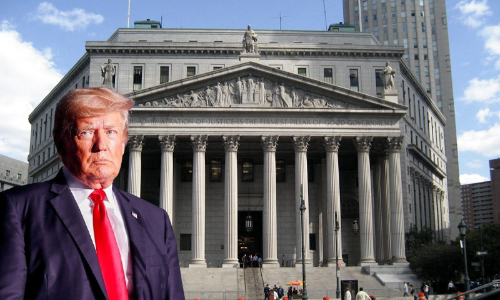
A federal grand jury had indicted former US President Donald Trump on four counts for attempting to invalidate the results of the November 2020 US elections by knowingly spreading false claims of election fraud, during the final days of his Presidency. Trump based his motion to dismiss the indictment on Presidential immunity, arguing that a President enjoys absolute immunity from criminal prosecution for actions performed within the outer perimeter of his official responsibilities,...

Criminal Remedies For Copyright Infringement: A Comparative Look At India's Old And New Criminal Legislations
Copyright infringement is a serious issue within the realm of intellectual property law, demanding robust legal frameworks to safeguard creators' rights. India has recently introduced significant legislative reforms to modernize its legal system, the new statutes—Bharatiya Nyaya Sanhita, 2023 (BNS), Bharatiya Nagarik Suraksha Sanhita, 2023 (BNSS), and Bharatiya Sakshya Adhiniyam, 2023 (BSA)—replace the Indian Penal Code, 1860 (IPC), the Code of Criminal Procedure, 1973 (CrPC), and the...

Need For Impartiality Standards To Arbitral Institutions
Arbitration's popularity in dispute resolution stems from its efficiency and the freedom offered by its promise of party autonomy. However, the legitimacy of any arbitral award hinges on its adherence to the fundamental principles of natural justice, which demands a neutral and impartial Arbitral Tribunal. The Indian legal framework comprising of the Arbitration and Conciliation Act, 1996 (“the Act”), together with judicial pronouncements, have established a robust framework to ensure...
'Community Service' Under The BNS – An Incomplete Yet Promising Penologocial Advancement
The BNS, 2023, has for the first time introduced 'Community Service' as an alternate to imprisonment[1]. This welcome step marks a significant shift in the sphere of penology under the Indian criminal justice system.Punishments seek to serve various objectives, some of which are retribution, justice, deterrence, reformation etc. Modern sentencing policies reflect a combination of several or all of these aims[2]. In 106 BC, Cicero wrote “Let the punishment fit the crime”. To this day, this...

Why Acknowledging Collective Dominance Matters In Perpetually Shifting Market Dynamics
There is a need to include Collective Dominance in India's Competition Act, ('the Act')which stems from several crucial factors. Firstly, the Indian market landscape has witnessed a proliferation of oligopolistic structures across various sectors, ranging from the food delivery industry to the airline industry. In such environments, the risk of collusion and tacit coordination among dominant players poses a significant threat to market dynamics and consumer interests. Tuis analysis ...