


Articles
CCTV Cameras And Making Of Surveillance Societies
The recent explosion of CCTV usage in society has made it a quintessential aspect of the material culture of technology in such a way that it is nearly impossible to not come under its watch in the public sphere. It is estimated that there are about one billion surveillance cameras in operation worldwide. Delhi, the national capital of India, has been reported to have around 1826 CCTV cameras per square mile, making it first in the list of cities with the highest number of CCTVs in the...
How To Fulfill Requirements Of Admissibility Of Electronic Evidence Under Bhartiya Sakshay Adhiniyam, 2023?
The advent of technology has ushered in a transformative era in the legal landscape, significantly altering the nature of evidence presented in court cases. In recent years, there has been a remarkable shift towards an increasing reliance on electronic evidence. The ubiquity of digital devices and the widespread use of online platforms have generated a wealth of electronic data that now plays a pivotal role in legal proceedings. From emails and text messages to social media posts and...
Towards Robust Competition Law In India: Addressing Hub And Spoke Cartels
The significant growth of Indian markets and a paradigm shift in business operations prompted the Government of India to establish the Competition Law Review Committee (CLRC) in 2018. The CLRC was tasked with examining and suggesting modifications to the Competition Act of 2002. In 2019, the CLRC submitted its recommendations to the Government. Following a review of these recommendations and public consultations, amendments to the law were proposed. The goal of these amendments is to...

Critically Examining The Draft Guidelines For Prevention And Regulation Of Greenwashing, 2024
India's consumer rights sentinel, i.e., The Central Consumer Protection Authority (CCPA), has released the draft Guidelines for the Prevention and Regulation of Greenwashing, 2024. It is to be issued under sub-clause (1) of sub-section (2) of Section 18 of the Consumer Protection Act, 2019. Greenwashing, has been permeating the market at a global level. Thus, the Guidelines seeks to combat the false environmental claims made by the businesses about their products. The Principal...

India Back To Coalition Era: How The Government Will Respond To Challenges Of Fiscal Federalism?
Recently, India held its 18th Lok Sabha election, which concluded without any single political party securing the majority (272) required to form the government in the Centre. The Bhartiya Janta Party (BJP), under the leadership of Prime Minister Narendra Modi, became the single-largest party by securing 240 seats. The BJP managed to form the government with its coalition partners, Referred to as the National Democratic Alliance (NDA). This marks a pivotal moment in Indian politics – the...

Misinformation And Deepfakes In The Age Of AI
The increasing innovations in technology has led to the development of new facets of generative AIs and deepfakes. With the major developed countries bringing legislation to regulate their misuse, the authors analyse the Indian landscape and suggest measures for the same. In the recently concluded Lok Sabha elections, one might have encountered videos over the internet of deceased politicians campaigning for the electoral candidates of different political parties. In a similar...
A Primer On Avoidance Transactions Under Insolvency And Bankruptcy Code
Corporate insolvency and bankruptcy are critical issues that impact the financial stability and operational viability of businesses. In India, the Insolvency and Bankruptcy Code, 2016 (“Code”) serves as a comprehensive framework to address insolvency and ensure timely resolution. During insolvency or liquidation proceedings, the primary goal is to maximize the recovery of assets of the Corporate Debtor and distribute them fairly among stakeholders, ensuring that creditors are paid in...
Judicial Interference And Indian Arbitration And Conciliation Act, 1996
The judgment by the Supreme Court of India in the matter of Delhi Metro Rail Corporation Ltd. versus Delhi Airport Metro Express Pvt. Ltd[1] (Delhi Metro case) has got arbitration practitioners, lawyers and academics talking and introspecting alike, with almost everyone having an opinion on it. This has been criticised by some as the death knell for India's intention to become an international arbitration hub and some as a retrograde / backward step in arbitration. To me it is neither-...
Examining Public Examinations (Prevention Of Unfair Means) Act: Does It Pass Critical Lens?
They say a single piece of paper cannot decide your future. In India, quite the opposite is true. The frequent rumours of paper leaks, malpractices at the examination center, discrimination with the candidates, etc., with regard to public examinations, have marred even the little faith in the testing agencies. With the recent rising controversies in the National Eligibility-cum-Entrance Test (NEET) UG-2024, the focus is steered towards public examinations in general. To what extent are the...
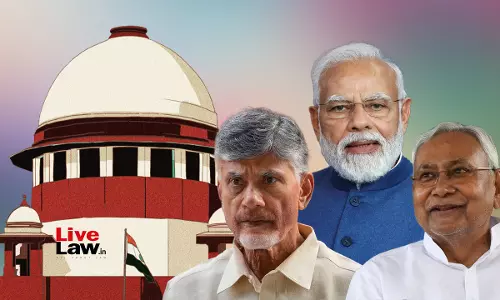
Judiciary During Coalition Government : Potential Changes In Power Dynamics
A coalition government is back in power in India after ten years. The Bharatiya Janata Party (BJP), having fallen short of the majority mark, is now dependent on its allies within the National Democratic Alliance (NDA) to form the government. Although the NDA government, with Narendra Modi as Prime Minister, is continuing with most of the Ministers from the previous administration, it is widely speculated that the domineering approach displayed during the previous two terms, when the BJP held an...
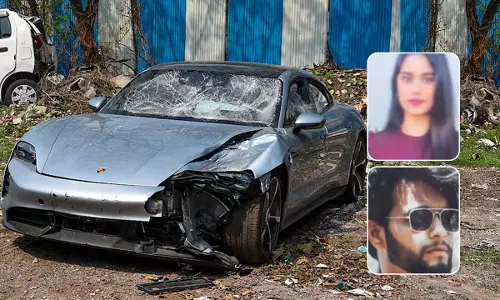
The Act Of Balancing Rehabilitation And Accountability: Analysing The Functioning Of JJB
The recent case in Pune, where a 17-year-old boy killed two innocent youngsters in a road accident through rash and drunk driving, has been making headlines. What has infuriated people even more is the punishment handed down by the Juvenile Justice Board (JJB), which is also thought to be influenced by the high profile that the father of the accused holds. The minor was assigned to write a 300-word essay on the topic of "Road Accidents and Their Solutions" and to work with the Regional Transport...