


Articles
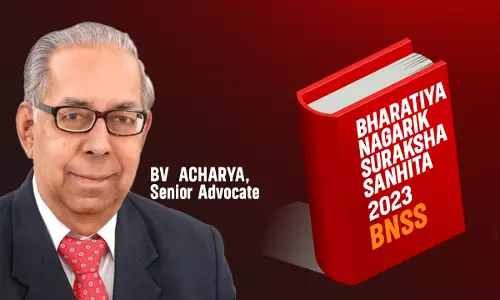
Bharathiya Nagarik Suraksha Sanhita 2023- A Critique
Bharathiya Nagarik Suraksha Sanhita 2023 (for short hereinafter referred to as“ Sanhita” ) replaces the Code of Criminal Procedure 1973 ( for short hereinafter referred to the as Code) . There can be no dispute that both Sanhita and Code deal with the procedure relating to criminal matters. The preamble to the Sanhita itself provides as follows “An Act to consolidate and amend the law relating to Criminal Procedure”. While the Code gives the title correctly as Code of Criminal...

Free Speech v. Digital Disinformation: How Is State Intervention In Social Media Content Moderation Being Navigated In USA & India
Recently, the United States (US) Supreme Court in Moody v. NetChoice, LLC (2024) refrained from issuing what could have been a landmark judgment on a pivotal issue: whether states can enact laws that limit the power of social media companies to moderate content. This case revolved around the constitutionality of laws enacted by Texas and Florida that aimed to restrict social media platforms from censoring user content or deplatforming individuals based on the platforms' guidelines. The lower...

Arbitration /Litigation/Mediation – Hobson's Choice Or Commonsense?
A recent Office Memorandum (OM) dated 03-06-2024 issued by the Department of Expenditure, Procurement Policy Division, Ministry of Finance, Government of India (GOI) has caused quite a stir in legal circles prompting the newly formed Arbitration Bar of India to shoot off a very strong letter to the Ministry of Finance. When I discussed the OM with a friend who is a former bureaucrat with experience in the government and private sector, he said that this is a typical knee-jerk reaction of...
Shamefully Misogynistic Section 69 Of Bharatiya Nyaya Samhita – Is This The Way Forward?
During the conduct of a project titled 'Project POSH' that I am part of, a student intern in utter dismay expressed her shock and disbelief at the new Section 69 of the then BNS Bill. I was happy at the political correctness and sensitivity in young law students, and uttered in hopeful soliloquy that the Bill might not be passed in that shape. It was disheartening to see the section in the Act as it was in the Bill. Now that the Act has been brought into force, academicians and lawyers...

Shackled In Sugar: Unjust Labour Practices In Maharashtra's Sugar Industry
The Maharashtra sugar industry counts for 1/3rd of the sugar production in our country. Its fertile sugarcane belts not only underpin the state's rural economy but also sustain the livelihoods of millions of workers who migrate from drought-affected regions during the harvest season. However, despite its economic pertinence, the sugar producing powerhouse has long been mired in severe labour exploitation. The backbone of the industry is its workers, who hailing from impoverished areas,...
The SC/ST (Prevention of Atrocities) Act: Ensuring Justice And Equality For Marginalized Communities
The Scheduled Castes and Scheduled Tribes (Prevention of Atrocities) Act, 1989, commonly known as the SC/ST Act, stands as a pivotal legislative measure in India aimed at safeguarding the rights of Scheduled Castes (SCs) and Scheduled Tribes (STs) from various forms of abuse, discrimination, and violence. This landmark legislation provides a robust framework to ensure justice for these marginalized communities, thereby addressing historical injustices and systemic discrimination they face....
Supreme Court judgement in Chief Engineer V. BSC&C On Section 29-A , Arbitration Act
In a short order passed on 13th May 2024, the Supreme Court dismissed a Special Leave Petition (“SLP”) in arising out of a judgment passed by the Meghalaya High Court in Chief Engineer v. M/s. BSC&C and C JV (“BSC”) in which it interpreted the expression “Court” in Section 29-A of the Arbitration and Conciliation Act, 1996 (“Arbitration Act”). The Supreme Court stated that the power to extend the mandate of an arbitral tribunal under Section 29(4) vests in the Court defined under Section...
The Change In Remand Law As Per The Bharatiya Nagarik Suraksha Sanhita, 2023.
Three new criminal laws have been passed by the Parliament to replace the existing Code of Criminal Procedure, 1973 (Cr.P.C.), the Indian Penal Code, 1860 (I.P.C.) and Indian Evidence Act, 1872 (I.E.A.). These new laws will come into force on 1 July 2024. However, even though the objective of the enactment of these laws were to create an empathy-driven legal framework, several provisions need to be reconsidered, since its enforcement will amount to a diametrically opposite result. The remand...
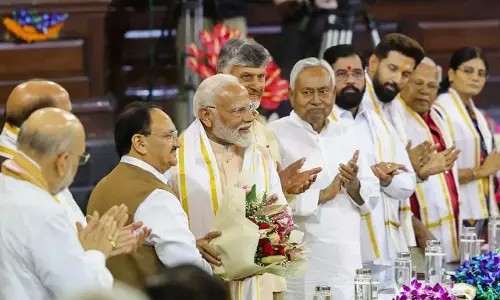
The Message And Implications Of The 2024 General Election
The nation has just completed the biggest dance and festival of democracy. The people of India have exercised their supreme right, their vote to choose a government. This is the largest experiment undertaken in human history in the art of democratic living and governance. Never before and nowhere else has more than one sixth of the human race lived as one political entity under conditions of freedom and voted smoothly for the same or a new government. As Harrison Moore puts it in his The...

Original Civil Jurisdiction And Arbitration: Unpacking The Supreme Court's Ruling On Section 29A Of The Arbitration Act
The recent ruling of the Supreme Court in Chief Engineer (NH) PWD (Roads) v. M/s. BSC & C and C JV brings clarity regarding the jurisdiction of courts under Section 29A(4) of the Arbitration and Conciliation Act, 1996 (the “Act”). The Supreme Court upheld the Meghalaya High Court's decision, affirming that the authority to extend the mandate of an arbitral tribunal beyond the prescribed 18 months lies exclusively with the 'Court' defined in Section 2(1)(e) of the Act. This 'Court' is...

Information Utilities Under IBC: Navigating Judicial And Regulatory Complexities
The success of insolvency proceedings critically hinges on the availability of complete, correct, and up-to-date information about the debtor. Such comprehensive information is rarely available to all stakeholders in equal measure. This disparity can hinder the resolution process and compromise the objective of value maximization, while the asymmetry of information can lead to uneven value distribution among stakeholders. To tackle these challenges, the Insolvency and Bankruptcy Code,...
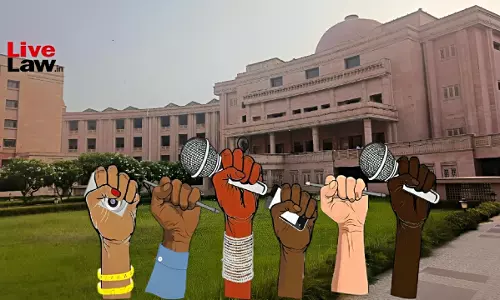
Allahabad HC Preventing Live Reporting Of Its Hearing Raises Concerns Regarding Freedom Of Press To Cover Court Proceedings
While hearing a PIL Plea challenging Congress leader Rahul Gandhi's election as an MP from the Rae Bareli constituency, the Allahabad High Court yesterday asked a LiveLaw reporter to stop reporting on the court proceedings and immediately leave the Courtroom premises. Sparsh Upadhyay, an associate editor with LiveLaw, and the only journalist present in the courtroom posting live updates on Live Law's official Twitter handle from his mobile phone, was asked by a bench of Justice Alok...