


Articles
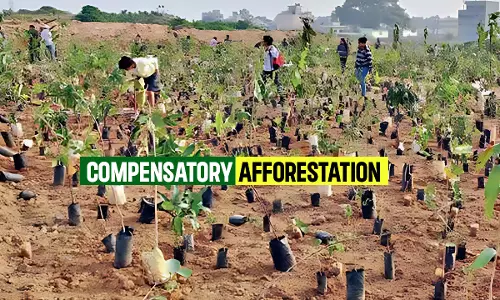
Compensatory Afforestation: Highlights And Challenges
Under the Forest (Conservation) Act, 1980, whenever forest land is diverted for non-forest purposes such as residential, commercial, mining and industrial purposes, an equivalent area of non-forest land has to be taken up for compensatory afforestation. Additionally, in line with the ‘polluter pays’ principle, the entity responsible for such land diversion is also liable to contribute funds for establishing the compensatory forest fund. Compensatory afforestation is a crucial...

Are Dissenting Financial Creditors Adequately Protected Under Section 30(2)(e) Of The Insolvency And Bankruptcy Code (IBC)?
When a Resolution Applicant (RA) submits a Resolution Plan to the Committee of Creditors [“CoC”], the CoC engages in extensive discussions to decide whether to approve or reject the plan. If the plan is rejected and brought before the National Company Law Tribunal (NCLT), the NCLT initiates the liquidation process as per Section 33(1) of the Insolvency and Bankruptcy Code (IBC). However, if the plan is approved by at least 66% of the CoC members and presented to the NCLT, it undergoes two...

World Drug Day: 20 Important Judgments On The Narcotic Drugs and Psychotropic Substances Act
“The Narcotic Drugs and Psychotropic Substances Act has been enacted with the object of meeting the unprecedented challenge of illicit traffic in narcotic drugs and psychotropic substances. Drug abuse has been recognized as the single most powerful social offender in recent times creating unimaginable extent of damages on frighteningly large sections of the society. Its effect on the people addicted to it, is catastrophic for which the international conventions as to traffic on such drugs and...

Rights Of Autistic People And Duties To Autistic Children
Rights of Autistic people:A. EducationLegal FrameworkThe Right to Education Act 2009 safeguards education rights for all children in India, including those with special needs like autism.The act ensures free and compulsory education for children aged 6 to 14 and promotes inclusive education.Children with disabilities, including autism, can receive education in mainstream schools under the act.The act references the Persons with Disabilities (Equal Opportunities, Protection and Full...

Power Sector Peril: Unmasking The Threats Of Cyber Security
Technology has brought several changes in the human life. Better healthcare, education, commerce, travelling, lifestyle, every aspect of human life is influenced by technology. But like every coin has two sides, technology has pros as well as cons. Cybersecurity is one of the issues related with technology. In the recent times, with advent of modern modes of crimes, cyberwars have drawn attention of international, national as well as local institutions. Almost all sectors like...
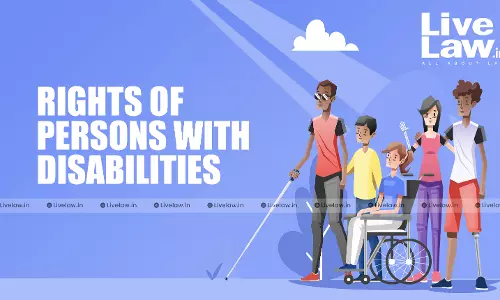
Understanding Recent Amendments To RPwD Rules, 2017
On 5th June, the Ministry of Social Justice and Empowerment (“MoSJ&E”) notified the amendment to the Right of Persons with Disabilities Rules 2017 (“RPwD Rules”) in the official gazette. This amendment substituted the 2016 Harmonised Guidelines and Space Standards for Barrier-Free Built Environment for Persons with Disability and Elderly Persons (“Harmonised Guidelines 2016”) with Ministry of Housing and Urban Affairs latest revised Harmonised guideline called “Harmonised Guidelines...

An Analysis Of The Digital Personal Data Protection Bill, 2022
The Digital Personal Data Protection Bill, 2022 introduces a new framework for personal data protection, making it paramount to comprehend and understand its applicability and functions. The Government of India sees this released bill as one of the parts of its larger vision of a Digital Economy, this vision will include a comprehensive “Digital India Act” that would in due course of time replace the existing Information Technology Act, 2000. Hence it becomes crucial to take a closer look...

Jhuggi Demolitions : How Actions Of Authorities Go Against The Legislative Intent
For the last several weeks Delhi has been witnessing a large-scale eviction of the jhuggi dwellers ahead of an international event in the capital. The eviction drive has rendered hundreds of children, women and old people homeless and thrown into the streets during this scorching summer. Arbitrary jhuggi demolitions are not new in the country, especially in the capital. But the ongoing drive is unprecedented and more surprisingly, it is happening when Delhi has a comprehensive policy for the...

The Saga Of Money Bill Controversies In India
Chief Justice DY Chandrachud recently made an oral remark on the constitution of a 7 judge bench for considering the money bill issue. Its formation is due to the reference made by the constitution bench in Roger Mathew v. South Indian Bank[1] on the interpretation of Article 110(1) of the Constitution of India. The correctness of the majority judgment in Aadhaar case[2] on this point was also doubted by the Court. Thereafter in the PMLA case,[3] the question left open for the...

Intestate’s Husband And Intestate’s Wife
Since the Hindu Succession Act, 1956 or the Indian Succession Act, 1925 do not contain the definition of the terms ‘widow’ and ‘widower’, the dictionary meaning of the said terms to be taken into consideration. According to Merriam Webster dictionary the meaning of ‘widow’ is a woman who has lost her spouse or partner by death and usually has not remarried and the meaning of ‘widower’ is a man who has lost his spouse or partner by death and usually has not remarried. The Hindu Succession...

Soliciting And Advertising By Lawyers
In January 2023, the Supreme Court Advocates-on-Record of India (SCAORA) took notice of an issue involving Forbes India Magazine's publication of a "Legal Powerlist" featuring the top 25 Advocates on Record in India. Following a complaint, the SCAORA unanimously passed a resolution condemning the list and calling for its removal, as lawyers are prohibited from soliciting or advertising their work. Presently, Indian legislation prohibits lawyers from engaging in any form of advertising....

Incorporating Environment, Social And Governance Norms Into Indian Corporations
Environment, Social and Governance (ESG) norms are a set of standards that provide a framework for the company’s operations to have more accountability and transparency and ensures that the operations follow better governance, environmentally friendly measure and social responsibility. Concerning the Environment, it mainly deals with potential climate risks, carbon footprints, deforestation etc. Social deals with how the companies are dealing with the stakeholders, and employees is their ...