



Public Exhibition Of Accused And Presumption Of Innocence
Anirudh Singh
14 Feb 2026 4:00 PM IST
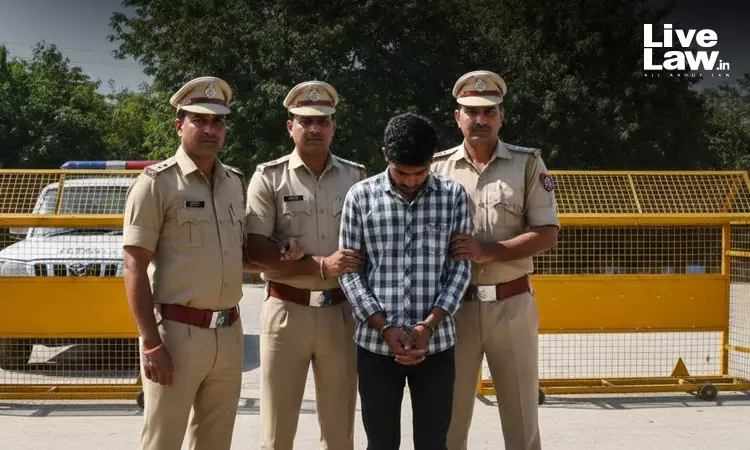
This is in the context of the public exhibition of accused persons, drawing from the Rajasthan High Court's recent order in Islam Khan & Ors. v. State of Rajasthan & Ors., S.B. Criminal Writ Petition No. 224/2026, decided on 20.01.2026 (Raj HC). It underscores the continued relevance of the presumption of innocence beyond the courtroom.
An accused and a convict do not stand on the same footing. This distinction lies at the heart of criminal jurisprudence and underpins the necessity of the trial process. In short, guilt is not presumed but established through evidence before a competent court. Until that process concludes, a person remains legally innocent and entitled to return to society without stigma if acquitted.
Courts have repeatedly reaffirmed this distinction, anchoring it in the Right to Life and Personal Liberty under Article 21 of the Constitution. The presumption of innocence embodies a basic but indispensable principle of criminal jurisprudence, namely that the State must prove before it condemns.
Yet, despite these clear mandates, practice reflects a starkly different reality. Accused persons are often showcased as trophies, made to sit on the floors of police stations or stand behind officers during press briefings. In more troubling instances, they are paraded through public streets, subjected to public abuse, garlanded with shoes, or otherwise humiliated. This is long before a court has determined their guilt, and while the possibility of their innocence remains very real. Such acts blur the line between accusation and conviction and operate as punishment even before the trial begins.


Islam Khan: A Judicial Rejection of Institutional Humiliation
The recent order of the Rajasthan High Court in Islam Khan v. State of Rajasthan, S.B. Criminal Writ Petition No. 224/2026, decided on 20.01.2026 (Raj HC), reiterates these constitutional principles. The court took note of the disturbing practice wherein accused persons were compelled to sit on the floor of the police station before the press, in certain instances even in partially disrobed conditions, and their photographs and videos were widely circulated on social media and news platforms.
The court reminded that an accused is not a convict and that constitutional protections do not evaporate upon arrest. Public exhibition prior to adjudication, it observed, strikes at the root of constitutional morality and rule of law. Characterising the practice as “institutional humiliation,” the court held that it violates the dignity guaranteed under Article 21. It further noted that such conduct is unbecoming of a disciplined force entrusted with protecting citizens' rights, particularly when no law authorises such actions. Taking note of the irreparable harm that such circulations may cause, the court directed the removal of all such photographs and videos within 24 hours.
The Statutory Void: Policing Without Authority
These practices amount to executive overreach. There is no discernible basis under any of the statutes, be it the Police Manual, the Police Act, the erstwhile Code of Criminal Procedure, or the newly enacted Bharatiya Nagarik Suraksha Sanhita (BNSS). Arrest allows for the deprivation of personal liberty in accordance with law but does not authorise public exhibition. The purpose of arrest is to protect the integrity of the investigation and not to facilitate a public spectacle. On the contrary, the Ministry of Home Affairs, through its advisory dated 1 April 2010, directed all States and Union Territories not to parade accused persons before the media, or violate their legal, human, and privacy-based rights. Similarly, the National Human Rights Commission has also issued guidelines prohibiting the public display and parading of the accused, and directing authorities to protect the dignity of the person arrested.
Dignity and Reputational Punishment
Acts such as compelling an accused to stand for media photo-ops or parading them in public amount to a violation of their individual dignity, particularly when a person who has not been convicted is presented as the perpetrator of an offence. Human dignity has been recognised as an integral facet of the Right to Life and Personal Liberty under Article 21. In D.K. Basu v. State of West Bengal (1997) 1 SCC 416, the Supreme Court described custodial torture as a “naked violation of human dignity” and cautioned that abuse of police power wounds constitutional conscience. Significantly, the court clarified that custodial violence extends beyond physical assault to include mental agony inflicted within custody. Public exhibition, though not involving physical harm, subjects an accused to humiliation and psychological degradation while under State control. Such treatment cannot satisfy the constitutional mandate that any deprivation of liberty be just, fair and reasonable.
However, such actions by the officials are devoid of any adjudication of guilt and amount to a form of sentencing, a power that does not vest with them. In the case of Shabnam v. Union of India (2015) 6 SCC 702, while examining the concept of human dignity with regard to the death row convicts, the Supreme Court observed that a person's dignity is infringed where his life, physical, or mental welfare is harmed, and that this includes acts of humiliation. Thus, if dignity survives the conviction (even in the case of a death sentence), it follows a fortiori that it cannot be disregarded at the stage of arrest or accusation. It is not difficult to conclude that these acts by the officials fall squarely within this category, particularly when such acts serve no legitimate investigative purpose. Similarly, in In Re: Banners Placed on Roadside in the City of Lucknow v. State of U.P., 2020 SCC OnLine All 244, the Court observed that hoardings showcasing photos and details of alleged rioters (during CAA protests), had no statutory basis and amounted to a violation of the right to privacy and dignity guaranteed under Article 21.
The impact of these violations is further magnified in this digital age, where the stigma is neither fleeting nor easily erased. Images and videos disseminated during these acts create a permanent digital footprint which, even if removed, may resurface indefinitely. The accused is thus made to suffer not merely momentary humiliation but a form of reputational punishment that endures long after the spectacle has faded.
Presumption of Innocence Beyond the Courtroom
This enduring digital stigma directly undermines the presumption of innocence, which is a basic tenet of Indian criminal jurisprudence, as reiterated in Kali Ram v. State of Himachal Pradesh, (1973) 2 SCC 808, where the court underscored that suspicion, however grave, cannot substitute proof. Moreover, this presumption is not confined to evidentiary burdens within courtrooms. The law does not permit condemnation without proof, whether inside or outside the courtroom. No authority can strip away this safeguard, for to do so would subvert the very purpose behind holding a trial. Such portrayal erodes the presumption of innocence by projecting guilt before proof. It risks influencing witnesses, shaping public opinion, and undermining the neutrality of the trial. State agencies cannot sanction visual displays that trade upon perceptions of guilt and culpability. The presumption of innocence is therefore inseparable from human dignity; it protects not only against wrongful conviction but also against premature public degradation.
Such conduct often reflects an implicit presumption of guilt and risks transforming arrest from an investigative measure into a pre-adjudicatory penalty. These acts carry a strong possibility of shaping public opinion regarding guilt and adversely affecting the atmosphere necessary for conducting a fair trial, as judicial experience in high-profile cases has demonstrated. Arrest is intended to safeguard investigation and trial and not to operate as a sentencing measure. Public exhibition imposes a reputational penalty unsupported by adjudication and lacking statutory authority. Criminal law recognises punishment only after the accused is afforded a full opportunity to defend themselves and guilt is established through due process.
The Possible Defence
In an attempt to justify these actions, it may be argued that these measures are necessary to establish deterrence in society and to highlight the restoration of law and order. By showing alleged perpetrators within the grip of state agencies, the State may seek to signal a hardened stance towards criminals and that no one is above the law. However, deterrence is a facet of sentencing which falls squarely within the judicial domain, and to employ it prior to adjudication amounts to executive overreach. This implies that guilt is presupposed before any form of adjudication, thus placing such action beyond the constitutional ambit.
The second justification is more subtle. It is to signal and assure the society that the state has acted decisively, restoring order. This is more of a symbolic act which overreaches the role of policing, as no statutory authority contemplates such display as a component of arrest. Furthermore, this resembles a performative assertion of control rather than a legally grounded exercise of power. The legitimacy of the State does not lie in performative displays, but in adherence to legal procedures and safeguards. In seeking to discipline violators of law, the State cannot transgress the very constitutional limits that define its authority.
These practices also risk entering into the realm of carceral populism, wherein visible penal action becomes a means of satisfying the public demand for retribution rather than adhering to procedural safeguards. A constitutional democracy must resist this drift. Measures that lack statutory foundation and serve no investigative necessity cannot be allowed merely because they have public approval.
Preserving Dignity and the Presumption of Innocence
Ultimately, the criminal process derives its legitimacy from adherence to procedure and from each organ acting within constitutional limits; it has no room for public spectacle. The distinction between an accused and a convict is not a mere technicality but a constitutional foundation of criminal jurisprudence. When the State permits such acts of public humiliation, it blurs this essential distinction and converts arrest itself into punishment. The presumption of innocence loses its meaning if reputational penalties are to be imposed prior to adjudication, and the guarantee of dignity and privacy under Article 21 becomes hollow if it yields to spectacle or public sentiment.
The Rajasthan High Court's order serves as a timely reminder that constitutional discipline must guide executive action and that investigative authority does not extend to public exhibition and humiliation. A system committed to the rule of law must ensure that the administration of criminal justice remains a function of adjudication rather than performance, that dignity survives arrest, and that guilt is determined only after a fair trial.
The author is an Advocate practicing at Rajasthan High Court. Views are personal


