



Who Gets Chair In Court? Dignity Of Advocates And Crisis Of Courtroom Chair Protocol
Masoom Ali & Neelam Chaudhary
12 Nov 2026 8:11 PM IST
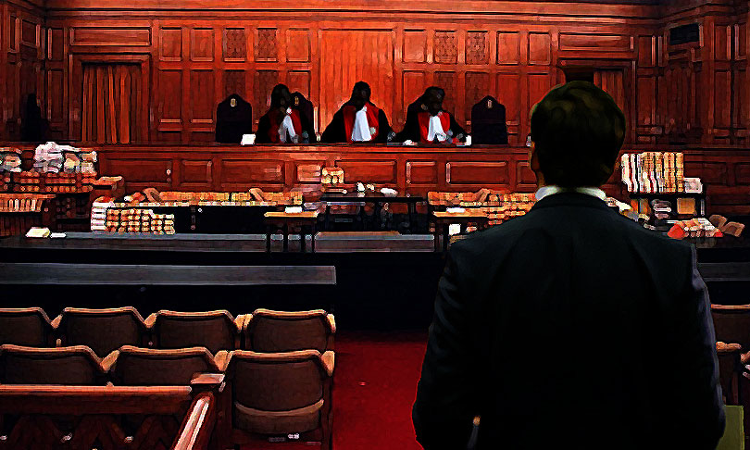
The seating dispute at the Allahabad High Court has drawn the attention of the entire profession. Who sits where in court? The principle is decades old. The written rule is still missing.
In the last few days, a single seating dispute at the Allahabad High Court has held the attention of the entire legal community. It began on 27 October 2026 in Court No. 49, over a chair, in a dispute reportedly involving a senior police officer and an advocate. It did not end in that courtroom.
According to the representation of the Allahabad High Court Bar Association, the advocate was threatened with jail and asked to apologise to the officer. The Association wrote to the Chief Justice and warned that it would boycott the court if no appropriate action was taken. The next day advocates protested and a different bench, finding that proceedings in its own court had been disturbed, described the conduct as contemptuous, directed that those involved be identified through CCTV footage and indicated that the matter could go to the Bar Council of Uttar Pradesh and to contempt proceedings.


This opinion article does not decide who was right. The allegations are contested, the Chief Justice and the court are the proper forums and the matter is still unfolding. Its question is narrower and more lasting: why does a chair in a courtroom carry so much power to wound and to inflame and why is there still no written rule to say who sits where?
The same question surfaced, more quietly and more constructively, in the Karnataka High Court. In Court Hall No. 14, advocates reportedly struggled to enter, move around and find seats and a senior counsel pointed out that interns were occupying chairs meant for advocates. Justice M. Nagaprasanna took note of the overcrowding and invited the Bar to suggest workable measures. Two High Courts, two temperaments, one gap.
A question the law has already answered
Anyone who thinks this is a new grievance should read P.C. Jose v. Nandakumar, 1993 Ker 184: AIR 1997 Ker 243: (1993) 2 KLT 342: 1994 Cri LJ 682, decided by Hon'ble Justice K.T. Thomas of the Kerala High Court on 26 July 1993.
A litigant arguing his own civil case occupied a front-row seat while senior advocates stood for lack of seating. When the Munsiff asked him to move, he refused and demanded a written order. The court treated this as an intentional insult or interruption under Section 228 of the Indian Penal Code, proceeded under Section 345 of the Code of Criminal Procedure and imposed a fine of Rs. 150. The litigant then invoked the High Court's inherent power under Section 482 CrPC.
The question, as the judgment framed it, was delicate: can a litigant claim an equal right to the front seats when advocates must stand? Because the answer would affect the whole Bar, the court heard the Advocate General, the Director General of Prosecution, the President of the Advocate's Association and senior counsel, with an amicus curiae assisting.
The reasoning is balanced. The judgment first acknowledges the constitutional equality of every person before a public court, whether or not represented and then weighs it against the special status of the advocate as a member of the Bar. Its sharpest observation is that the absence of a statute proves nothing. No statute prescribes the judge's seat, the bench clerk's seat or the witness's seat, yet a litigant could not claim those on the equality clause. The test, the court said, is not whether a written rule exists.
The court then traced the word “Bar” to its origin: the partition that divided the hall between lawyers and officers of the court on one side and suitors and the public on the other. The space reserved for counsel is as old as the court itself.
For authority, the judgment drew on a long line of decisions:
1. The 1888 Allahabad Full Bench (1888 ILR IX All 188) directed an advocate, appearing as Official Liquidator, not to address from the advocates' table in robes but from the place of an ordinary member of the public.
2. The Supreme Court in Vidya Verma vs. Shiv Narain Verma AIR 1956 SC 108:(1956 Cri LJ 283) declined to hear a robed advocate appearing as next friend until he discharged the advocate on record.
3. T. Venkanna v. Mysore High Court, AIR 1973 Mysore 127, held that an advocate arguing his own cause must address the court from the same place and in the same way as an ordinary member of the public.
4. Prayag Das v. Civil Judge, AIR 1974 All 133 was cited for the proposition that formality in court, including costume, preserves its dignity.
The thread connecting them is that the advocate's place in court belongs to the advocate's role as an officer of the court. It follows the office, not the individual. On the statutory side, the court relied on Sections 29 and 33 of the Advocates Act, 1961 (the exclusive right to practise), Section 23 (rights of pre-audience for the Attorney-General, Solicitor-General, Advocates-General and Senior Advocates) and Section 49 (Bar Council rule-making on professional conduct and etiquette).
The holding was clear. Where advocates must stand for lack of seating, litigants cannot claim the available seats and the presiding officer may direct them to vacate for the Bar if no other seating exists. The court called this a rule of practice for the discipline and decorum of the court and dismissed the petition.
Three limits in the judgment deserve equal emphasis. The direction is a last resort, applicable only where no other seating is available, which means the real answer is more seats. It is not a licence for overreach: the court noted the caution in S. Narayana Murthy v. State of Mysore (1974 Cri LJ 211) that courts should not seem unduly sensitive about their dignity and upheld action only because of the litigant's persistent defiance in open court. And it does not diminish the litigant, whose equal standing before a public court the judgment acknowledged at the very start.
What the Supreme Court says about the Bar
P.C. Jose is not an isolated view. It rests on how the Supreme Court has long understood the advocate.
In Bar Council of Maharashtra v. M.V. Dabholkar (AIR 1975 SC 2092; (1976) 2 SCC 291), a seven-judge bench described the Bar Council as the sentinel of the professional code, vitally interested in the rights and privileges of advocates as well as the purity and dignity of the profession. Hon'ble Justice Krishna Iyer's celebrated passage begins by saying that “the Bar is not a private guild.” It is a public institution with public duties and those who carry such duties deserve the conditions to discharge them.
The same principle works in the other direction. In Ex-Capt. Harish Uppal v. Union of India ((2003) 2 SCC 45), a Constitution Bench held that lawyers have no right to strike or give a call for boycott, even a token one, except in the rarest of rare cases where the dignity, integrity and independence of the Bar or the Bench is in question. The Bar accepted a heavy duty of restraint. That duty rests on the understanding that the dignity of both Bar and Bench is a protected interest.
And the machinery for a written rule already exists. The Supreme Court has directed High Courts, in R.K. Anand v. Registrar, Delhi High Court ((2009) 8 SCC 106), to frame rules under Section 34 of the Advocates Act,1961. A comparable rule was upheld in Pravin C. Shah v. K.A. Mohd. Ali ((2001) 8 SCC 650) and Bar Council of India v. High Court of Kerala ((2004) 6 SCC 311) has been relied on for the High Courts' power to frame such rules. A seating rule would be a gentle use of a power the Supreme Court has already confirmed.
Dignity is becoming infrastructure
The most important development of 2026 is that the Supreme Court has begun to treat the physical conditions of advocacy as a matter of constitutional dignity.
In a public interest litigation by women advocates, the Court observed that basic infrastructure for women advocates bears a direct nexus with the right to life and dignity under Article 21. In July 2026 it reportedly said that no plea of lack of funds would be entertained. A bench of the Chief Justice of India Surya Kant and Justices Joymalya Bagchi and V. Mohana disapproved of the lack of ladies' bar rooms and said such facilities should be provided regardless of numbers. States were directed to provide funds and land where required, High Court infrastructure committees were asked to prioritise implementation and the matter was listed for 2 December.
The survey in that case speaks directly to our subject. It found that most court complexes lacked dedicated ladies' bar rooms or had inadequate facilities, including insufficient seating and the Court said the issue could not be treated as mere administrative convenience.
Other courts are moving the same way. The Patna High Court has held that lawyers are part and parcel of the justice delivery system and that complete infrastructure for their use must be in place. The Bombay High Court, objecting to advocates addressing virtual hearings from parked cars, directed the State to allocate cubicles, observing that hybrid hearing is here to stay and that infrastructure cannot wait for long-term projects.
A respectful submission follows and it is an argument rather than a holding of any court: if the dignity guaranteed by Article 21 extends to a bar room and a washroom, the same reasoning can fairly be extended to a chair in the courtroom where the advocate actually works.
What the controversy teaches
Three lessons can be drawn without prejudging anything.
First, a grievance about the dignity of the Bar must travel through the proper channel. However deeply felt, it belongs with the Chief Justice. The Constitution Bench in Harish Uppal contemplated that even in the rarest cases where the dignity of the Bar or the Bench is in question, the Bar's leadership must first consult the Chief Justice. The Bar was entitled to place its concerns before the Chief Justice and that is the course that protects both dignity and institution.
Second, the work of other courts cannot become the price of a grievance. Litigants in other courtrooms had no part in the dispute and the High Court has said so in strong terms. At the same time, a Bench whose conduct is questioned deserves a calm and fair inquiry and the Bar deserves a hearing. Neither is served by a trial by slogan.
Third, a single chair can bear enormous weight when there is no protocol. Who may occupy the counsel's bench? Where should an officer summoned to court sit? What is an advocate to do when a seat meant for counsel is taken and what is the presiding officer to do when asked to settle it in the middle of a hearing? Where the rule is unwritten, every such moment becomes a test of tempers and tempers fail in public. A written protocol would not have decided any dispute. It might simply have prevented one.
A protocol, not a privilege
Courtroom seating should be governed by clear and uniform institutional rules that uphold the dignity of advocates and preserve judicial decorum. Such arrangements should reflect established courtroom conventions, professional respect and the orderly administration of justice, rather than depend on individual discretion. No advocate should be placed in the position of having to seek, as a personal favour, the consideration that a fair and consistent protocol can ensure. Ultimately, institutional dignity is best preserved when professional respect is secured through established rules and not left to individual discretion.
Reform need not wait for another petition. A practice direction under the High Courts' rule-making power, or a Bar-Bench consultative process of the kind the Karnataka High Court invited, can deliver the following:
1. Codify P.C. Jose. Advocates appearing in listed matters get seating priority where space is short, with litigants and the public accommodated behind them and never shut out.
2. Priority for those who need it most: senior advocates, women advocates with young children and advocates with disabilities.
3. Defined seating for interns, clerks and officials, including investigating officers and State functionaries summoned to court, kept distinct from the benches meant for counsel, so that seats meant for counsel do not vanish in the afternoon rush and no official is left unsure where to sit.
4. Capacity audits by High Court infrastructure committees, the bodies the Supreme Court has already tasked with advocate facilities.
5. One published, uniform norm, so that dignity does not change with the courtroom number.
None of this questions any Hon'ble judge or any order. The Bench has shown the Bar patience and the Bar owes it the same. But every advocate remembers the long list, the aching feet and the file held against the chest, waiting and hoping the matter would be reached before the day ran out.
Hon'ble Justice Thomas reminded us, quoting Bacon, that “the place of justice is a hallowed place.” A hallowed place has room for those who serve it. The principle is old, the machinery exists and the Supreme Court has shown the way. What remains is to write it down.
Table of Authorities
Case / provision | Citation | Used for |
|---|---|---|
P.C. Jose v. Nandakumar, Kerala High Court (K.T. Thomas J.) | 1993 SCC OnLine Ker 184: AIR 1997 Ker 243: (1993) 2 KLT 342: 1994 Cri LJ 682 | Seating priority of advocates as a rule of practice |
Bar Council of Maharashtra v. M.V. Dabholkar, Supreme Court | AIR 1975 SC 2092; (1976) 2 SCC 291 | Bar as a public institution; dignity of the profession |
Ex-Capt. Harish Uppal v. Union of India, Supreme Court (Constitution Bench) | (2003) 2 SCC 45 | Duty of restraint; dignity of Bar and Bench |
R.K. Anand v. Registrar, Delhi High Court | (2009) 8 SCC 106 | Direction to frame rules under Section 34 |
Pravin C. Shah v. K.A. Mohd. Ali | (2001) 8 SCC 650 | Validity of High Court rules on advocates' conduct |
Bar Council of India v. High Court of Kerala | (2004) 6 SCC 311 | High Courts' power to frame rules |
T. Venkanna v. Mysore High Court | AIR 1973 Mysore 127 | Advocate appearing in person |
Prayag Das v. Civil Judge, Bulandshahr, Allahabad High Court | As cited in P.C. Jose | Decorum and dress in court |
Shrimati Vidya Verma v. Dr. Shiv Narain Verma, Supreme Court | As cited in P.C. Jose | Robed advocate appearing as next friend |
S. Narayana Murthy v. State of Mysore | As cited in P.C. Jose | Caution against undue sensitivity |
Advocates Act, 1961 | Sections 23, 29, 33, 34, 49 | Right to practise; pre-audience; rule-making |
Constitution of India | Article 21 | Dignity; infrastructure for advocates |
Note: Sections 228 IPC and 345 CrPC, as applied in P.C. Jose, correspond to Section 267 BNS and Section 384 BNSS respectively.
Authors are Advocates at District and Session Court Dehradun, Uttarakhand. Views are personal.


