



Civil Law
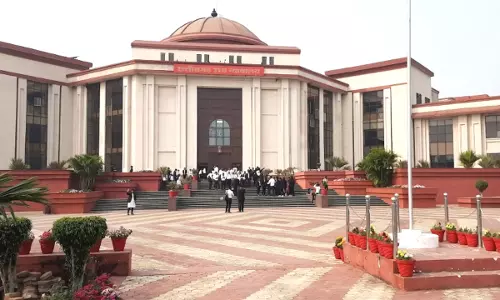
Will's Propounder Must Prove Execution And Attestation; Failure To Prove Forgery Cannot Validate It: Chhattisgarh High Court
The Chhattisgarh High Court has held that the burden of proving a Will's due execution and attestation rests on the person propounding it, and cannot be shifted to the person challenging the Will merely because they have failed to establish forgery. The Court observed that a will cannot be used in evidence unless at least one attesting witness is called to prove its execution. Justice Sachin Singh Rajput was hearing a second appeal filed against judgments dismissing the appellant's suit for...

Chit Fund Dispute Can't Be Pursued As Ordinary Money Recovery Suit Following Dishonour Of Cheque Issued Towards Dues: Karnataka High Court
The Karnataka High Court has ruled that the issuance of a cheque towards repayment of a chit fund liability, even if subsequently dishonoured, does not alter the nature of the underlying chit transaction. Consequently, a subscriber cannot bypass the statutory arbitration mechanism under the Chit Funds Act, 1982, and institute an independent civil suit for recovery of the dues.Allowing the...
Section 92 CPC Suit Doesn't Give Every Devotee An Automatic Right To Be Impleaded: Supreme Court
The Supreme Court on Thursday (November 19) held that a suit under Section 92 of the Code of Civil Procedure, 1908 (CPC) is representative in nature, but this does not give every devotee or member of the institution an automatic right to be impleaded. A bench of Justice Vikram Nath, Justice Sandeep Mehta, and Justice Aparesh Kumar Singh observed so while setting aside the Calcutta High Court's orders, which included an interim order staying the trial court's removal of a Special Officer, and...
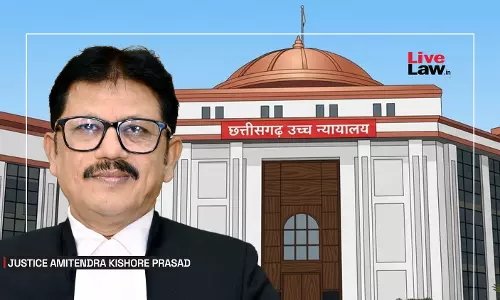
Non-Utilisation Of Land Acquired Under 1894 Land Acquisition Act Creates No Right To Restitution: Chhattisgarh High Court
The Chhattisgarh High Court has held that mere non-utilisation of land acquired under the Land Acquisition Act, 1894, does not confer an enforceable right on erstwhile landowners to seek its restoration or reconveyance. The Court clarified that Section 101 of the Right to Fair Compensation and Transparency in Land Acquisition, Rehabilitation and Resettlement Act, 2013, which provides for...
Transfer Of Child Custody Case Doesn't Confer Territorial Jurisdiction On Transferee Court: Kerala High Court
The Kerala High Court recently clarified that an order passed under Section 24 of the Code of Civil Procedure (CPC) transferring a minor's custody petition would not confer territorial or subject-matter jurisdiction on the transferee court. [2026 LiveLaw (Ker) 637]Justice C.S. Dias observed:“An order under Section 24 of the CPC regulates the forum in which a proceeding is to be tried; it...

Disciplinary Punishment Can't Be Based Solely On Inquiry Report Without Examining Witnesses: Kerala High Court
The Kerala High Court has held that disciplinary proceedings cannot be sustained when the findings against an employee are based entirely on an inquiry officer's report without summoning or examining the witnesses whose statements form the basis of the allegations. [2026 LiveLaw (Ker) 635]A Division Bench comprising Justice Devan Ramachandran and Justice Basant Balaji was considering an...
Delay In Collecting Returned Petition Can't Be Excluded While Calculating Limitation Period: Tripura High Court
The Tripura High Court has held that the State cannot claim exclusion of the period spent in collecting an application returned by a court for lack of territorial jurisdiction when the delay was caused by its own negligence.A Division Bench of Chief Justice M.S. Ramachandra Rao and Justice S. Datta Purkayastha made the observation while dismissing an appeal filed by the State of Tripura...
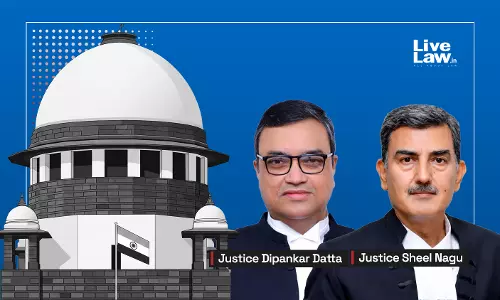
Constructive Res Judicata | Claim Based On Subsequent Cause Of Action Not Barred By Judgment On Prior Cause Of Action : Supreme Court
The Supreme Court on Wednesday (November 18) held that the principle of constructive res judicata cannot bar a subsequent claim merely because a relief was not sought in earlier proceedings, where the cause of action for such relief had not arisen when the original proceedings were instituted. A bench of Justice Dipankar Datta and Justice Sheel Nagu heard the case concerning a retired...
Remand For Fresh Adjudication Doesn't Give Parties Fresh Opportunity To Reconstruct Pleadings: Allahabad High Court
The Allahabad High Court has held that an order of remand directing fresh adjudication does not, by itself, give a party a fresh opportunity to reconstruct its pleadings by introducing factual grounds which were already within its knowledge before the earlier decision was set aside. It held that a party cannot claim an unrestricted right to bring in such grounds by successive amendments...
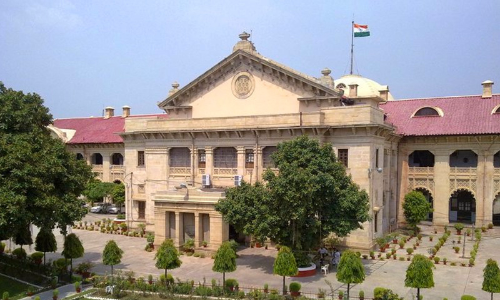
Land Acquisition Authority Can't Review Its Own Compensation Award Under National Highways Act: Allahabad High Court
The Allahabad High Court has held that the Competent Authority under the National Highways Act, 1956 cannot review the compensation it has determined under Section 3-G(1) and substitute a fresh figure by a second supplementary award. A party dissatisfied with the amount must approach the Arbitrator under Section 3-G(5) of the Act.The bench of Justice Siddhartha Varma and Justice Kunal Ravi...

Unsuccessful Treatment Or Patient's Death Doesn't Automatically Establish Medical Negligence: Kerala High Court
The Kerala High Court recently held that unsuccessful treatment does not automatically establish that there is medical negligence on the part of doctors.[2026 LiveLaw (Ker) 628]Justice Mohammed Nias C.P. observed that merely because treatment was unsuccessful, it cannot be presumed that there was medical negligence, in the absence of cogent medical evidence:“In every case where treatment is...
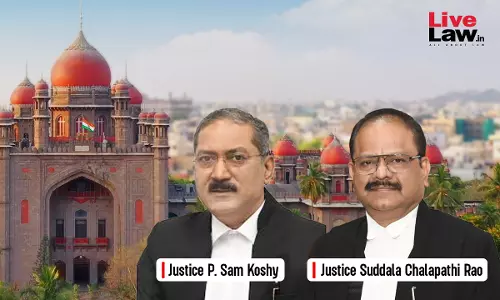
Courts Can't Decide Feasibility Of Highway Projects Or Road Alignments Unless Illegality Or Mala Fides Shown: Telangana High Court
The Telangana High Court dismissed a plea challenging acquisition of land for the Kalwakurthy bypass on NH-167K, observing that courts are not equipped to decide the viability and feasibility of a particular project or to examine whether a particular alignment would serve the larger public interest. The court also held that the objections raised by the landowner had been duly considered by...