



When Biography Ends But Biology Remains: Constitutional Right To Let Go
Rishabh Tyagi
26 March 2026 9:00 PM IST
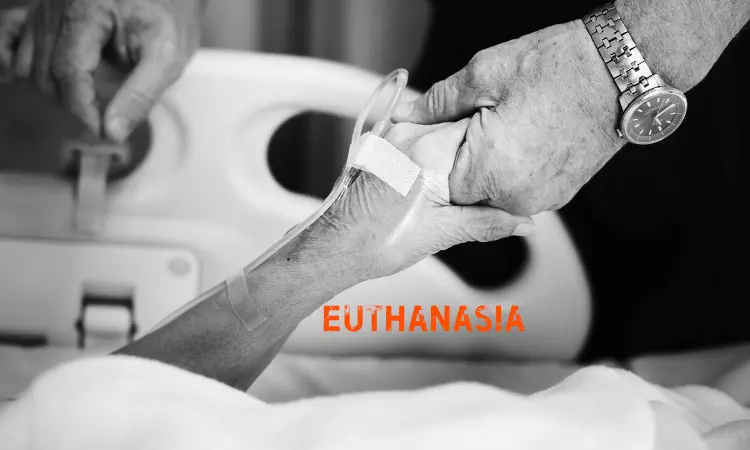
The cold, clinical hum of the ventilator and the rhythmic drip of the feeding tube have become the modern world's most ambivalent totems. In our age of advanced medicalization, technology has achieved the miraculous—the preservation of biological function long after the light of consciousness has been extinguished. Yet, this triumph carries a dark corollary: the "technological trap," where the machinery of healing becomes an apparatus of incarceration. On March 11, 2026, the Supreme Court of India, in the landmark case of Harish Rana v. Union of India, finally dismantled one of the most persistent bars of this cage.
In permitting the withdrawal of Clinically Assisted Nutrition and Hydration (CANH) from a thirty-two-year-old man who had endured thirteen years in a Persistent Vegetative State (PVS), the Court did more than resolve a private tragedy. It issued a profound ontological statement on the nature of human existence and a scathing rebuke to a Parliament that has, for thirty years, sought refuge in the shadows of legislative inertia.


The central question in Harish Rana was deceptively simple but philosophically fraught: does a feeding tube constitute "medical treatment" that may be lawfully withdrawn, or is it "basic care" whose removal amounts to the barbaric act of starvation? The Court's answer was a triumph of clinical reality over sentimental abstraction. It recognized that CANH is not a mere "comfort measure" like a blanket or a sponge; it is a complex medical intervention requiring surgical insertion, expert monitoring, and the chemical management of metabolic waste. When such an intervention ceases to be therapeutic and serves only to sustain a "biological remainder" devoid of cognitive capacity or future hope, its continuation is not an act of mercy. It is an act of clinical vanity.
The jurisprudential scaffolding of this decision is rooted in a decades-long evolutionary struggle. To understand the gravity of Harish Rana, one must look back to the constitutional archaeology of the "Right to Die." In 1996, the Constitution Bench in Gian Kaur v. State of Punjab famously held that Article 21 does not encompass a "right to die," thereby upholding the criminality of assisted suicide. Yet, even within that restrictive framework, the Court sowed the seeds of future liberation. It conceded that the "Right to Life" is not a mandate for mere animal existence; it is the right to live with dignity, which must, by necessary implication, include the right to die with dignity when life is "ebbing out."
It took fifteen years for that seed to germinate in the tragic soil of the Aruna Shanbaug case (2011). Drawing upon the Parens Patriae jurisdiction—where the State acts as the ultimate guardian of those who cannot care for themselves—the Court authorized passive euthanasia under judicial supervision. However, that ruling remained hampered by a lingering moral anxiety, a hesitation to fully embrace the autonomy of the individual over the sanctity of biological life.
The definitive shift occurred in the 2018 Common Cause judgment, where a five-judge bench elevated the right to a dignified death to a constitutional imperative. This was not a mere refinement of medical law; it was a revolution in the "Theology of the State." By grounding the right in the autonomy doctrine of K.S. Puttaswamy (the Privacy judgment), Justice D.Y. Chandrachud and his colleagues recognized that "bodily integrity" and "informational self-determination" are the bedrock of human dignity. If the State cannot compel a citizen's mind, it surely cannot colonize a citizen's dying body.
Harish Rana (2026) serves as the terminal point of this intellectual journey. It clarifies the "active-passive" semantic trap that has long bedeviled the Bar. The Court noted that the distinction is not one of physics (acts versus omissions), but of causation. To administer a lethal injection is to introduce a new, external agency of harm; to withdraw a ventilator or a feeding tube is simply to remove an artificial barrier to the natural trajectory of a supervening death. In a move of significant linguistic hygiene, the Court moved to retire the term "passive euthanasia" altogether, preferring the more accurate "withdrawal of futile medical treatment."
Yet, the brilliance of the Court's prose only highlights the darkness of Parliament's silence. The judgment is, in essence, a thundering legislative ultimatum. Since the 196th Law Commission Report in 2006, the executive and legislative branches have been presented with the blueprints for a statutory framework. The 241st Report (2012) and the "Medical Treatment of Terminally Ill Patients Bill (2016)" have been left to gather dust in the labyrinthine corridors of the Secretariat.
This paralysis is a calculated "politics of avoidance." The ethics of death—intertwined with religious sensitivities, the sacerdotal authority of the family, and the professional anxieties of the medical fraternity—are viewed by the political class as electorally toxic. By abdicating its duty, Parliament has forced the judiciary to act as a "National Medical Board," a role for which it is structurally ill-equipped. Every time a family is forced to approach a High Court for a "permission to let go," it represents a failure of the social contract. Why must a private grief be subjected to a public trial?
A comprehensive statute is now a moral necessity, not a policy choice. It must codify the "Two-Board" mechanism with statutory finality, shielding doctors from the specter of criminal prosecution under Section 304 of the IPC (now BNS). It must give Advance Medical Directives (Living Wills) an enforceable legal status that bypasses the need for judicial confirmation. Most importantly, it must democratize the "right to let go," ensuring that the benefits of Harish Rana are not reserved for the elite who can afford the "litigation tax" of a Supreme Court petition.
As we navigate the mid-point of this decade, we must confront a difficult truth: the Constitution of India protects not the "sanctity of life" in a vacuum, but the "sanctity of the person." When the person is gone—when the biography has ended and only the biology remains—the Law's insistence on the machine is an affront to the human spirit.
Harish Rana will soon pass into the silence he has inhabited for thirteen years. The judgment that bears his name settles the law, but it does not settle the conscience of the State. We cannot continue to govern the most intimate moments of human existence through "pious hopes" and judge-made stopgaps. Parliament has had thirty years, five landmark judgments, and two Law Commission reports. The time for avoidance has ended. The next family standing in the twilight of a loved one's life deserves the clarity of a statute, the mercy of the law, and the dignity of a quiet exit.
Author is an Advocate practicing at Delhi High Court. Views are personal.


