Borrowed Clothes: Personality Rights And Statutes That Never Name Them
Nisha Verma
27 Nov 2026 3:00 PM IST
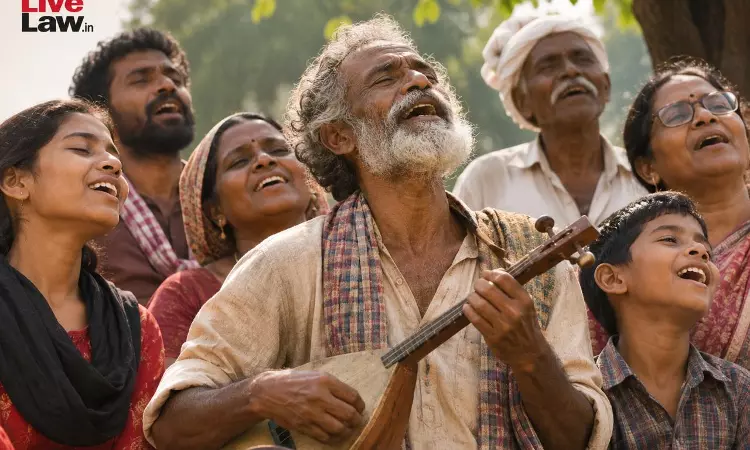
Pick almost any week of 2026, and you will find a film star, a cricketer or a television personality walking into the Delhi High Court with the same complaint: someone online is using their face, their voice or their catchphrase without asking. Anil Kapoor, Aman Gupta, Ravi Kishan, Yuvraj Singh, Vijay Deverakonda, Kangana Ranaut and Kriti Sanon have all walked out with interim orders this year, and the Bombay High Court has added Samantha Ruth Prabhu to the list.
The suits are similar. There are generic defendants (John Doe), numerous URLs, AI-generated videos, voice cloning, investment scams, and products featuring a star's visage. There is no overarching legislation governing personality rights in India. The protection comes from common-law principles, constitutional reasoning, and statutory rights.
The Trade Marks Act, 1999 comes closest in the commercial context. Under section 14, any mark which falsely suggests a connection with a living person or a person who has been dead within twenty years of the date of the application shall not be registered unless consent has been given. Section 2(1)(m) provides that names can be trademarks. However, section 14 provides protection to registered trade marks. Infringement occurs where there is use of the registered trademark in circumstances covered by section 29. Morphed videos may not include a name to indicate the source. In Digital Collectibles Pte. Ltd. v. Galactus Funware Technology Pvt. Ltd. (2023), the Delhi High Court emphasised that publicity rights are not infringed merely because a celebrity is identifiable or a defendant makes commercial gains; misappropriation of goodwill and reputation in the sale of goods or services must be shown. That reasoning fits a fake endorsement more readily than a morphed nude.


The Copyright Act, 1957 offers less protection. There will be no protection for the voice, face or style. In general, the photographer will have copyright in the photograph due to section 2(d)(iv). However, in most cases, the celebrity will not own copyright in the photograph. They will have exclusive rights (section 38A) and moral rights (section 38B), including protection against distortion or alteration of a performance that would damage their reputation. An alteration of an existing performance may attract Section 38B; a wholly synthetic imitation raises a different question. As demonstrated by the Arijit Singh case, personality rights are becoming increasingly central to issues of voice imitation.
The courts have provided an umbrella for personality rights through cases such as ICC Development v. Arvee Enterprises (2003), the Daler Mehndi dolls case, D.M. Entertainment v. Baby Gift House (2010) and the privacy aspect of K.S. Puttaswamy under Article 21. However, as the number of similar cases has grown, the term has been expanded to include fan pages, memes, and criticism. Personality rights risked becoming a salad platter of distinct claims.
This is the year the Delhi High Court started separating the ingredients.
Such suits are often instituted as commercial suits by invoking Section 2(1)(c)(xvii) of the Commercial Courts Act, 2015, which covers specified intellectual-property disputes, and are heard by the High Court's Intellectual Property Rights Division under its 2022 Rules. The Kriti Sanon order of 29 October brings the distinction between personal and commercial claims into focus. Justice Purushaindra Kumar Kaurav observed, prima facie, that “personality rights” describe distinct claims involving publicity, passing off, privacy and defamation, alongside trade mark or copyright claims where statutory requirements are met. Privacy, dignity and reputation are personal and cannot be assigned; the commercial publicity right can be licensed. Each claim retains its own ingredients, defences and remedies: “All the claims in a suit of this kind cannot be put under one umbrella and met with one omnibus injunction.” The Court observed that these rights belong to everyone and that mere use of identity is not unlawful. These are preliminary thoughts, but where a claim contains both a commercial defamation claim and a personal claim, why should the whole dispute be considered as a commercial IP claim?
There is also the issue of freedom of speech. Although Article 19(2) does not automatically give rise to a right of action in the private sphere, the courts granting an injunction must have regard to Article 19(1)(a), especially if the relief sought would prevent criticism, satire, parody, reporting or public interest speech. In Digital Collectibles, the Court recognised the importance of expression when assessing publicity claims. In April, it warned against treating every success or milestone as a personality right, declining to recognise a CLAT topper's achievement as sufficient by itself. In Janhvi Kapoor's case in August, 6884 URLs were requested to be taken down. The Court ordered removal of 552 that appeared grossly vulgar or pornographic, while refusing a blanket takedown. In Alakh Pandey's case, the Court cautioned that personality rights should not be deployed to prevent the dissemination of information concerning wrongdoing or to extinguish an entire genre of expression, including caricature, lampooning and parody, particularly where such expression does not amount to commercial exploitation of an individual's personality or publicity rights.
Most recently, in Sourav Ganguly & Anr. v. Abhinay Deo & Ors. The Delhi High Court held that the plaintiff has made out a prima facie case for unauthorised commercialisation of the plaintiff's identity and personality. Court did not prohibit the screening of the movie but directed that the makers should show a prominent disclaimer at the beginning and end of the movie and also provide an unconditional bank guarantee of Rs. 2
At first glance, the April and October orders seem to contradict each other. However, this is evident when analysing the differences between the two claims. Whilst it may be important to establish that someone has achieved public recognition based upon one accomplishment, fame is not a requirement. This may be important in relation to publicity rights, as the commercial value will depend on how well-known the persona is.
Now consider what this means for ordinary people. The same tools that clone a film star's voice can place an ordinary person's face into an explicit video in minutes. Women are particularly affected by non-consensual intimate imagery. Unlike celebrities, ordinary individuals may lack the resources to bring commercial suits and compile extensive URL lists. The February 2026 amendments to the IT Rules define “synthetically generated information” and introduce labelling obligations for specified synthetic content. They prescribe distinct timelines: three hours for intermediaries to act on qualifying court or government orders under Rule 3(1)(d), and two hours for specified complaints under Rule 3(2)(b), including certain complaints involving nudity, sexual content, impersonation and morphed images. The two-hour period is not a general deadline for every deepfake complaint. Section 79 of the Information Technology Act, 2000 provides conditional safe-harbour protection. The Kriti Sanon order addressed intermediary compliance and actual knowledge under Rule 3(1)(d); website blocking under Section 69A is a separate process. Depending on the facts, Sections 66D, 66E and 67A of the IT Act, and Sections 319 and 356 of the Bharatiya Nyaya Sanhita, 2023, may also apply. A fabricated trading-app endorsement may constitute a misleading advertisement under Section 2(28) of the Consumer Protection Act, 2019, potentially attracting action under Section 21.
Data protection law, oddly, steps aside. Section 3(c)(ii) of the Digital Personal Data Protection Act, 2023 excludes personal data which has been created or made available by the Data Principal or by someone who is legally required to do so. Furthermore, Section 3 itself is not yet in force. According to the notification of commencement, Section 3 will come in to force in May 2027. The question remains how far the exclusion will extend when publicly shared data becomes AI input.
Death exposes another gap. In 2023, the Delhi High Court did not grant an injunction to prevent a film about the life of Sushant Singh Rajput. This was due to privacy and personality rights not being inheritable. Yet statutes preserve certain interests associated with identity or performance beyond death. Section 14 of the Trade Marks Act contemplates consent concerning persons who died within twenty years before an application; Section 38(2) of the Copyright Act preserves performers' rights for fifty years from the beginning of the calendar year following the performance. These provisions protect different interests, not a heritable personality right. They raise a legislative question: should the commercial value of a persona, deliberately cultivated and licensed during life, cease entirely at death?
More questions remain. The Delhi High Court has asked whether personality rights can be breached by using a celebrity's photograph, even if copyright lies with the photographer. An AI voice platform based in China is looking to challenge an order against Salman Khan from December 2025. Amici have been appointed, Gautam Bhatia among them, in the Janhvi Kapoor and Vivek Oberoi suits. The Supreme Court has not authoritatively determined the contours of a standalone personality-rights framework.
If Parliament ever wants to legislate, the material is already on the table: distinguish the assignable commercial publicity right from personal claims concerning privacy, dignity and reputation; protect criticism, reporting, satire, parody and public-interest expression, drawing on the values reflected in Section 52 of the Copyright Act; and decide whether, and for how long, commercial personality interests should survive death. We need to consider if and for how long commercial personality rights should exist after death. However, it needs to be easy for an average person to seek remedies and shouldn't be used to stifle free expression. Until then, when you see a headline stating that a star has received protection for their face, read on. See what wasn't taken down and why. This is where real law is being made regarding your face (and mine).
Author is an Advocate based in Delhi. Views are personal.