



Can Bureaucratic Uncertainty Defeat Supreme Court Judgment? OBC Creamy Layer Dispute
Namit Srivastava
6 Nov 2026 3:00 PM IST
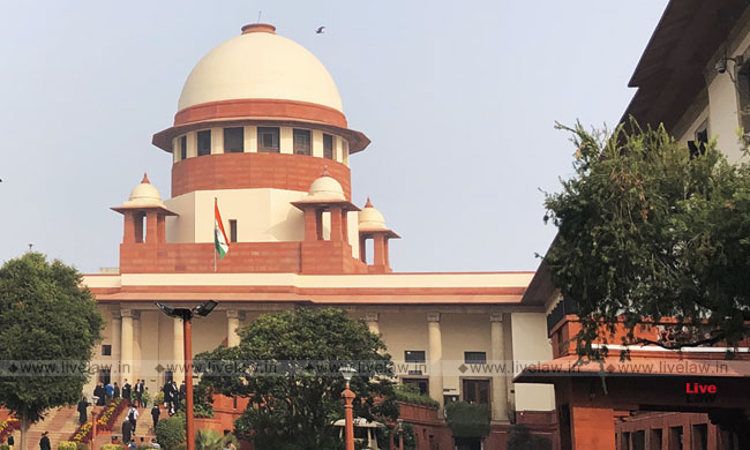
On 6 March 2026, the Union Public Service Commission declared the final results of the Civil Services Examination 2025 and recommended 958 candidates for appointment. Five days later, the Supreme Court decided Union of India v. Rohith Nathan (2026 INSC 230). More than seven months on, not one of those 958 has been allocated a service, and their Foundation Course is on hold. No stay has been granted and no review petition is pending. What stands in the way is an application by the Union seeking “clarification” of a judgment it lost, together with a request for two more years to complete an exercise it was meant to complete in 1993.
The dispute is about the creamy layer, but the question it raises is wider. When the executive tells the Court that a judgment cannot be implemented because its own rules are unclear, and the unclarity is of its own making, how much weight should that plea carry?
What the Court decided
The creamy layer test for Other Backward Classes comes from the Department of Personnel and Training's Office Memorandum of 8 September 1993, issued after Indra Sawhney v. Union of India (1992). The OM works mainly on status. Children of Group A officers, and of parents who both hold Group B posts, are excluded because of the post the parent holds, not the salary attached to it. For employees of PSUs, banks, insurance companies, universities and private employers, the OM said the same criteria would apply to equivalent or comparable posts. It then added a fallback. Until equivalence was evaluated, these families would face the Income/Wealth Test, and under that test income from salaries and agricultural land is not counted.


A clarificatory letter of 14 October 2004 changed that in practice. Where equivalence had not been fixed, it allowed the parents' salary income to be counted. The result was that the child of a PSU or bank employee could be pushed into the creamy layer on salary alone, while the child of a government servant at a comparable level stayed out.
In March, a Bench of Justice P.S. Narasimha and Justice R. Mahadevan held that the 2004 letter could not introduce a substantive condition absent from the 1993 policy, and that treating these two groups differently amounted to hostile discrimination under Articles 14 and 16. It dismissed the Union's appeals against rulings of the Madras, Delhi and Kerala High Courts and directed the DoPT to reconsider the claims of affected candidates within six months.
What the Union now wants
On 25 August, the Solicitor General mentioned the matter before the Chief Justice's Bench, and a special Bench of the two judges who wrote the March judgment was constituted. Notice was issued on 1 September. The application insists it does not seek review. It asks for clarification on the “temporal operation” of the judgment. In substance, the Union wants four things: that the judgment not reopen completed selections, service and cadre allocations, seniority or admissions; clarity on recruitments already underway on 11 March; two years to establish equivalence of posts and frame a uniform mechanism; and, in the interim, permission to allocate services to the CSE 2025 batch under the “existing” 1993 OM.
The Union's figures are large. It says more than 5.69 lakh reserved vacancies, including 3.70 lakh OBC vacancies, were filled in Central ministries and departments between 2016 and 2025. It warns that civil services allocations going back to 2012 could be reopened, and that 18 States and Union Territories following the 1993 OM would face the same problem. The Court reserved orders on 24 September, and the candidates are still waiting.
Look closely at the interim prayer. The March judgment enforced the 1993 OM. What the DoPT had actually been applying was the 1993 OM read with the 2004 letter. So a request to allocate the 2025 batch under the “existing” regime, read plainly, is a request to keep using the very criterion the Court struck down, for a batch whose allocation was still pending on the day of judgment.
Clarification or review by another name
The Supreme Court has seen this move before. In Delhi Administration v. Gurdip Singh Uban (2000), it warned against applications styled as “clarification” or “modification” that are really attempts to reargue a decided case while sidestepping the limits on review. Those limits exist for a reason. Under the Supreme Court Rules, 2013, a review petition must be filed within thirty days and is confined to narrow grounds. The Union's application came more than five months after the judgment.
The label matters less than the effect. A request that a judgment should not reach the very candidates whose allocation was pending when it was delivered, and that compliance be deferred by two years, is a request to change the operative part of that judgment. Calling it clarification does not alter what it asks for.
The declaratory problem
Prospective operation is a real tool. Since I.C. Golaknath v. State of Punjab (1967), the Court has, in suitable cases, limited the reach of its rulings to protect settled transactions, and Article 142 gives it room to do so. But that choice is ordinarily made in the judgment itself. In P.V. George v. State of Kerala (2007), the Court held that law declared by it operates retrospectively unless the Court expressly says otherwise.
Rohith Nathan did not overrule a precedent or invent a new test. It read a 1993 OM and said what it had always meant. If the 2004 letter never validly added the salary condition, candidates excluded under it were excluded under a rule that had no legal footing. Blanket prospectivity here would let the State keep the benefit of an unlawful rule for thirteen years of recruitment, and it would do so at the instance of the party that issued the rule.
That said, the Union's worry about third parties is not frivolous. Officers appointed since 2012 were not before the Court. Seniority lists have been settled. Some institutions have no supernumerary seats. The difficulty is that the application treats every form of retrospectivity as the same thing. It is not.
There is a difference between unseating and including. Unseating means displacing someone who was appointed in good faith, on the rules as then applied. The Court has often protected such appointments, and it could do so here. Including means giving a wrongly excluded candidate what was due, without taking it from anyone else. Supernumerary posts, which the March judgment itself contemplated, make that possible in public employment. Notional seniority with monetary benefits running only from the date of judgment is another familiar device. The Union's plea folds both kinds of retrospectivity into one, and asks the Court to switch both off.
Uncertainty of whose making
The request for two years is the weakest part of the application. The 1993 OM anticipated exactly this situation. It said what to do while equivalence was pending: apply the Income/Wealth Test, with salary and agricultural income left out. So there is no vacuum. The DoPT can comply with Rohith Nathan tomorrow without having fixed a single equivalence. It may not like the result, because more candidates will qualify as non-creamy layer, but that is a policy preference and not an administrative impossibility.
Equivalence itself has been pending for thirty-three years. The 2004 letter was a stopgap that hardened into the rule. It is difficult to see how the State's own delay, which created the uncertainty, can now be the reason to postpone rights the Court has declared. The old maxim that no one may take advantage of their own wrong applies to governments as well as to private litigants.
The timing compounds the problem. The judgment gave six months. The Union came to the Court in late August, close to the end of that window, rather than soon after March. The effect is that a compliance deadline ran into a pending application, and the people who won the case are the ones bearing the delay.
There is history here too. In Indra Sawhney v. Union of India (2000), when Kerala failed to identify the creamy layer and its legislature went so far as to declare that none existed, the Court struck the declaration down and had the exercise done through a committee. The lesson was simple: inaction cannot neutralise a constitutional direction. Article 144 makes the same point in general terms. Every authority, civil and judicial, is bound to act in aid of the Supreme Court. Asking for time is acceptable. Asking for time in a way that suspends the judgment for the people it was meant to benefit is something else.
Nine hundred and fifty-eight people waiting for a service allocation is not evidence that the judgment is unworkable. It is evidence of what happens when a judgment is treated as an opening position in a negotiation. If administrative inconvenience, especially self-inflicted inconvenience, can buy two years and a narrowing of relief after the fact, every department with a lost case will learn the method.
So can bureaucratic uncertainty defeat a Supreme Court judgment? It should not. Whether it does will depend on the order the Court has reserved.
Author is an Assistant Professor at School of Law, CHRIST (Deemed to be University), Delhi NCR Campus. Views are personal.


