Euthanasia & Morality Of Chosen Death
Katyayani Suhrud
5 April 2026 6:23 PM IST
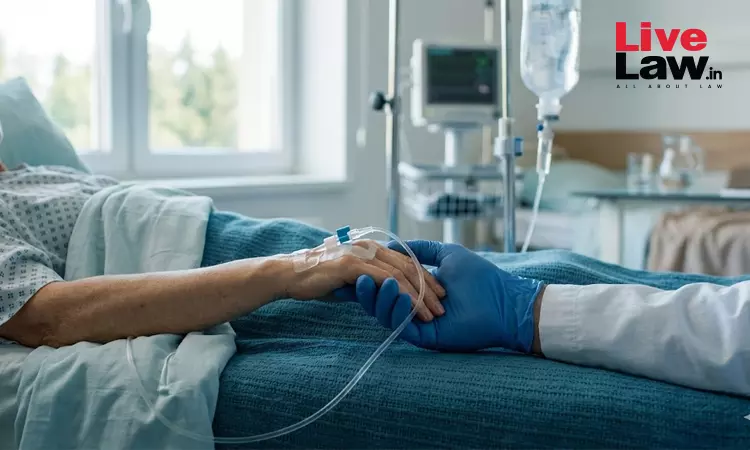
On March 11 2026, the Supreme Court in a historic first permitted a plea seeking passive euthanasia. Understandably, a question as fundamental as life and death and the extent to which human intervention may be permitted in altering the cycle of life is a polarizing one. It helps greatly if the legal thing to do corresponds with the moral thing to do. The question of euthanasia, like the question of capital punishment, produces moral discomfort in both the legislature and the judiciary. Since India has taken this historic step, it may be worth examining the similarities or lack thereof of euthanasia with other acts/abstinences which we are not as uncomfortable with and by doing so, examine what it is about euthanasia in particular which causes moral upheaval.
Four comparable scenarios come to mind. They have been chosen because they are similar to euthanasia in one primary way, i.e., they permit the decision to not extend life, or to allow life to end in a way that is not entirely natural. To put it simply, these are scenarios where a decision is made by a person, not by nature, biology or circumstance, to allow a life to end. The desire to intervene so as to extend life is suppressed. All four scenarios are also different from euthanasia in one important way – they are all legal (active euthanasia is still not), and they do not seem to cause comparable moral panic.


First, Advanced Medical Directives which are legally permissible in India as affirmed by Common Cause v. Union of India (2018) and in several other jurisdictions. An Advanced Medical Directive as per Common Cause is “... an individual's advance exercise of his autonomy on the subject of extent of medical intervention that he wishes to allow upon his own body at a future date, when he may not be in a position to specify his wishes.” They may take the form of Do Not Resuscitate (DNR) and Do Not Intubate (DNI) orders. DNR is a medical order indicating that a person should not receive CPR if that person's heart stops beating. DNI is a medical directive instructing healthcare providers that the patient does not wish to be intubated when they cannot breathe on their own in case of a life threatening situation. Both DNR and DNI orders are express wishes that a person whose life can be prolonged has chosen otherwise. Both orders are legal and far more common and widely accepted than euthanasia. Both orders can be made by the individual or by someone entrusted to do so on their behalf. Life giving care is not given in case of DNR/DNI orders. In the case of passive euthanasia, care once given is withdrawn.
Second, the decision made by someone with a terminal illness to not be treated or the decision made on behalf of family members not to prolong a life. Many of us may know a family that decided not to take an elderly ailing grandparent to the hospital but instead chose to let them die peacefully at home, away from the tubes and monitors of hospitals, and with family and friends by their bedside. In theory, it is possible to argue that such a decision also means that when oxygen levels begin to drop or the heart stops beating, a conscious decision is made not to revive the person. The possibility of life saving and life prolonging care is denied.
In a similar vein, persons diagnosed with terminal illnesses sometimes decide not to avail treatments which may extend their life by a few years, on the ground that they do not wish to spend their remaining time in and out of hospitals and feeling diminished by the heavy medication they will receive. This is also an instance of medical care being kept at bay because it is the quality of life and not the duration of life which is deemed important.
Third, Jehovah's witnesses. It is a Christian denomination with a set of distinct beliefs, one of them being that they refuse blood transfusions. Consequently, in situations where the life of a Jehovah's witness is threatened due to illness or accident and a blood transfusion is imperative, such lifesaving intervention is not permitted. In cases where an illness or surgery requires multiple transfusions, it would not be allowed. This belief is similar to euthanasia – life sustaining medical care is available and it is denied. It is also different – it is legal.
Fourth, and more acute that the previous three, Santhara or Sallekhana, which is a Jain religious practice of fasting unto death. It involves gradually abstaining from both food and water, until life is lost. Santhara is seen as a way to purify the soul and attain liberation. According to Jain scriptures, it is not a practice that can be undertaken at any time but should be observed in situations like a natural disaster such as famine, old age, or illness. While the practice has faced legal challenge, with the Rajasthan High Court ruling in Nikhil Soni v. Union of India (2015) that it should be considered illegal and equivalent to suicide, the Supreme Court when met with protests by the Jain community stayed the order, effectively allowing Santhara to continue as a legal practice in India.
The main distinction which can be drawn between these examples and euthanasia is that of volition. The four choices discussed above are exactly that – choices. It is the individual who makes the decision. The moral predicament which rightly arises when discussing euthanasia is because the decision is left to others – family, friends, doctors, and finally, judges. It is perhaps one of the weightiest decisions someone can be asked to make. It would be understandable if a judge were to say that despite knowing that the life in question is no longer worth living, extinguishing life is beyond their legal and moral jurisdiction.
Further, the scenarios discussed above do not always involve the judiciary because we think that they are well within the bounds of personal decision making. They do not seem to have the same societal repercussions as euthanasia, which although a rare personal choice, is almost always accompanied by collective anxiety.
Euthanasia may also feel different and more morally burdensome because while the other scenarios involve inaction (with the exception of Santhara), euthanasia involves the action of withdrawing life support. We seem to prefer inaction to action because then the resultant death may feel less attributable to people and more the result of nature taking its course.
As lifespans continue to be extended and people all over the world have less children, the question of caregiving will involve the question of euthanasia. Modern medicine has successfully managed to extend lifespans and often it also manages to curtail suffering. However, there are still enough instances where suffering is prolonged because of medicine, while its intended purpose was always to abate it. In countries like the Netherlands where euthanasia is legal, although it is still rare, more and more people and couples are choosing to end their lives this way when physiological or psychological suffering becomes unbearable and there are no prospects for improvement. For many, it allows for a death with dignity, which is arguably a necessary part of a life well lived.
Euthanasia tends to cause more moral discomfort than the scenarios above. It is perhaps easier to find people who are for capital punishment than those who are for euthanasia, never mind that both ultimately entail human intervention to cause death. Questions of life and death are bound to cause moral apprehension, as they should. As Indian jurisprudence turns a new page in its relationship with euthanasia, it is important to remember the assisted deaths we seem to be okay with, and be clear about our reasons for being against others. We may find that there isn't enough reason to be as anti-euthanasia as we have tended to be thus far. The end is inevitable, but how it arrives will always matter. Hastening its arrival may not be as morally reprehensible as prolonging life's suffering. A good life requires a good death.
Author is an Advocate practicing at Supreme Court of India. Views are personal.