Footpaths, Freedom And Livelihood: Reconciling Right To Walk With Right To Vending
Srajit Gaur
9 Aug 2026 3:00 PM IST
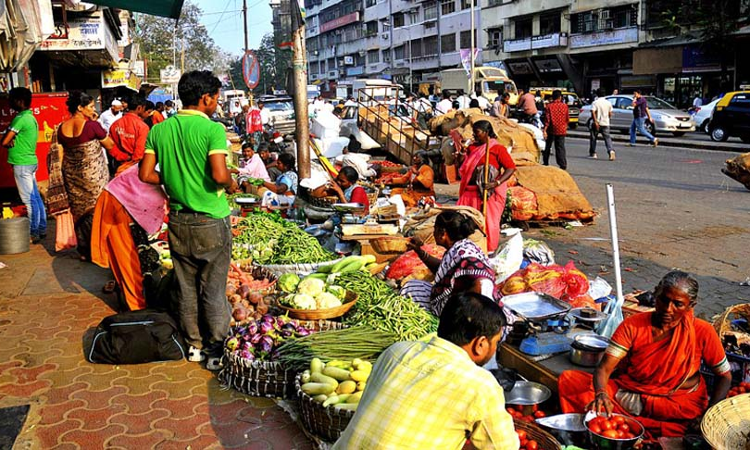
The Supreme Court, in Maniyar Iliyaz v. P. Ayyappan & Ors., has recognised the right to walk as an fundamental right of the Constitution. By elevating unobstructed pedestrian movement to the status of a constitutional right, the Court has reinforced the principle that public footpaths exist primarily for pedestrians and that safe, convenient, and unhindered movement is an essential element of human dignity and personal liberty. The judgment thus strengthens the constitutional obligation of public authorities to preserve footpaths for their intended public purpose and to ensure that citizens are not forced onto roadways because pedestrian spaces have become unusable.
Yet this constitutional development appears to raise an important question when viewed alongside the Street Vendors (Protection of Livelihood and Regulation of Street Vending) Act, 2014. Unlike many statutes that merely regulate commercial activities, Parliament, through the Street Vendors Act, expressly recognised that vending may be carried on on streets, lanes, sidewalks and footpaths. Section 2(l) defines a street vendor as:


"...a person engaged in vending of articles, goods, wares, food items or merchandise of everyday use or offering services to the general public, in a street, lane, sidewalk, footpath..."
The significance of this definition extends beyond mere semantics. It reflects a conscious legislative recognition that footpaths may serve not only as spaces for pedestrian movement but also as places where livelihood can be earned through regulated street vending. Parliament did not merely acknowledge the existence of vendors on footpaths as a social reality; it enacted a statutory framework to regulate their presence, balancing their economic interests with broader concerns of urban governance, public convenience, and planning. The Act therefore proceeds on the premise that vending on footpaths, when carried out in accordance with law, is not inherently unlawful but is an activity capable of legal regulation.
This legislative intent is further reflected in the practices of municipal authorities such as the MCD, BMC, and other urban local bodies, which routinely issue Tehbazari licences and vending certificates permitting commercial activity on footpaths in accordance with the statutory framework. These permissions are not mere administrative indulgences but are manifestations of a legislative policy that contemplates the regulated use of portions of public spaces, including footpaths, for livelihood. Consequently, the legal landscape is not one in which footpaths are viewed exclusively as pedestrian corridors; rather, they are recognised, subject to statutory safeguards, as spaces capable of accommodating both movement and regulated economic activity.
The constitutional dilemma therefore becomes apparent. Suppose a pedestrian is compelled to step onto a busy carriageway because a licensed street vendor occupies a substantial portion of the footpath. If the reasoning of Maniyar Iliyaz is applied, one may argue that the pedestrian's fundamental right to walk has been infringed, since the constitutional guarantee under Article 21 would be rendered ineffective if safe pedestrian passage is obstructed. On the other hand, if that vendor is removed solely because he occupies a footpath, it raises another equally significant constitutional question. Parliament itself recognised footpaths as legitimate sites for regulated vending, while Article 19(1)(g) guarantees every citizen the freedom to practise any profession or carry on any occupation, trade or business, subject to reasonable restrictions. The vendor's
presence, where authorised under the statutory framework, is therefore not merely an act of private commercial enterprise but one undertaken pursuant to legislative recognition and municipal regulation.
The debate, therefore, is not merely between pedestrians and vendors, nor is it simply a contest between convenience and commerce. Rather, it represents a constitutional tension between two legally protected public interests that converge upon the same physical space. One constitutional vision emphasises the pedestrian's right to safe and unobstructed movement under Article 21; the other reflects Parliament's recognition that public spaces, including footpaths, may also sustain the livelihoods of economically vulnerable citizens through a carefully regulated statutory regime. Neither interest can be dismissed as subordinate merely because the other has constitutional significance.
This gives rise to a broader question of constitutional interpretation. Is a footpath exclusively a pedestrian corridor, or can it simultaneously function as a place of livelihood, as Parliament appears to have contemplated in the Street Vendors Act, 2014? When Parliament itself has recognized footpaths as legitimate spaces for regulated street vending, can the judicial recognition of the right to walk as a fundamental right require the complete exclusion of vendors from those very spaces? Or does the Constitution instead require a model of harmonious construction—one that reconciles the pedestrian's right to safe passage with the vendor's statutorily recognized and constitutionally protected right to livelihood, ensuring that neither right is rendered illusory nor reduced to a mere abstraction?
Author is currently pursuing Master's in Public Policy, Law and Governance at IIT Kharagpur. Views are personal.