



Ignored Warning Sign: Satya Niketan And Delhi's Regulatory Failure On PG Accommodations
Sangjam Chakraborty & Guru Kasoudhan
21 Sept 2026 8:00 AM IST
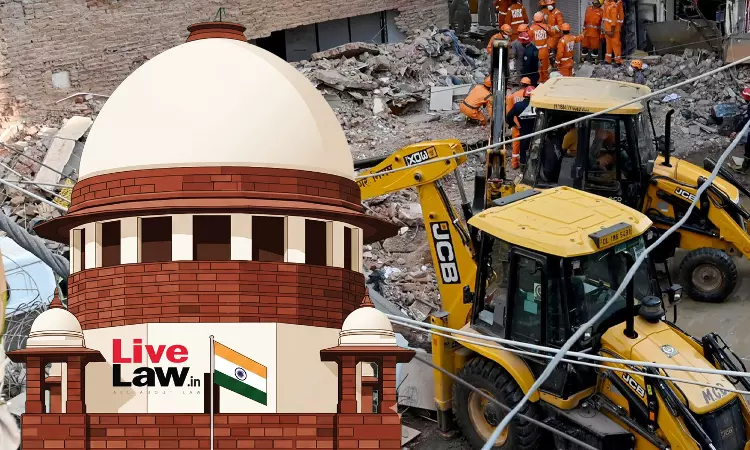
We tend to ignore the warning sign until the tragedy strikes, an industry which has lived in the suburbs of grey areas, finding its way into the downtrodden trenches of regulatory provisions and later picked up like a forest fire.
Satya Niketan, which literally translates to the 'Abode of Truth', has now shattered to smithereens, and it is horrifying, even in today's time, to ponder that even the places which we treat as homes, as a safe space where we live to fulfil and pursue our dreams, are not as safe, and perhaps not even as much ours, as they make them look like.
For the students who lived through the collapse, and the thousands who read about it from a hostel room or PG identical to the one that fell, the fear is not abstract. It is the fear of climbing a staircase whose sanction nobody has verified, of sleeping under a ceiling nobody has certified, of trusting a landlord's word because the law has given them nothing sturdier to trust. Delhi houses an estimated two lakh PG units, clustered in Mukherjee Nagar, Laxmi Nagar and Rajendra Nagar, and until this collapse, not one of them was required to prove it was safe before a student moved in. That is not an oversight, but rather a system built to look the other way.


The Regulatory Blind Spot
The dispute arises from the classification of a PG arrangement. According to Section 105 of the Transfer of Property Act, 1882, a lease of property constitutes a transfer of real interest in property, provided that the tenant shall enjoy exclusive possession of the premises that the landlord may not casually disturb. Section 52 of the Indian Easements Act, 1882, however, states that a license is a mere permission for the use of premises without creating any interest in the property concerned. This distinction may appear to be a matter of law. In a PG room, it decides whether the student has any right apropos the place where they are fighting to build their future.
When a student pays the market rent, keeps the keys and stays in the same room for several years, in substance they are a tenant. PG contracts, however, are generally drafted in the form of a license while dressed up with the claim of providing meals or “services”, enabling the landlord to extract the excessive amount of rent without providing any tenant protection under the law. The Supreme Court, in the case of Associated Hotels of India Ltd. v. R.N. Kapoor, established decades ago, that substance must prevail over nomenclature, and that exclusive possession creates, at the very least, a presumption of tenancy that clever drafting cannot simply erase. Unfortunately, the PG industry has managed to circumvent this law for decades, and the regulators have not taken any measures to force the question. In addition, the Delhi Rent Control Act 1958 exempts premises where the monthly rent exceeds ₹3,500, a threshold so obsolete that it excludes nearly every PG in the city, leaving students at the mercy of a private contract with no statutory floor beneath them.
Classification adds to the chaos. The Master Plan of Delhi shows 'hostels' and 'guest houses' as separate entities with their specifications of plot-size, floor-area, height, etc. Each is treated differently as prescribed in Rule 27 of the Delhi Fire Service Rules, 2010. Hence, as far as the Fire NOC is concerned, a guest house has a different requirement when its height is more than three storeys or exceeds twelve metres, while in the case of a flat, the threshold happens to be four storeys or fifteen metres. However, an ordinary flat converted into a dense, commercial PG fits neatly into neither box. That discretion is precisely what makes the system vulnerable, it leaves room for properties to operate in the grey area between what they are on paper and what they are in reality. Satya Niketan brought that vulnerability into sharp focus, just as years before it, the Old Rajinder Nagar basement had done, where three UPSC aspirants drowned in a coaching library that municipal records still described as storage
Warnings Ignored and Accountability Deferred
Delhi does not lack warning signs. In 2022, the Delhi Police, the MCD and the Delhi government discussed licensing roughly 700 identified PGs, including the Satya Niketan, with the proposal specifically covering lodging capacity, kitchen and lift safety, and fire clearance. But the scheme was never notified. It remained a discussion on paper, while PG owners openly told officials that there was no written rule requiring them to obtain any licence at all. That is not a gap the law simply forgot to close. It is a gap the administration chose not to close.
Accountability, much like the building itself, seemed to have disappeared into thin air. In the aftermath of the Old Rajinder Nagar incident, the MCD was quick to suspend a junior engineer and an assistant engineer within days, but a special court sought to ask the CBI why the senior MCD officials had not been investigated for dereliction of duty, and a 2026 supplementary CBI report found negligence by two further officials but declined to charge-sheet two senior officers for want of sanction. The ongoing trend of discipline at the bottom and silence at the top is the regulatory failure which the Satya Niketan order tries to revive by directing the MCD to name the officials responsible for the collapse and disclose what action has followed. It has also ordered a comprehensive city-wide audit of PG accommodation within a week, and asked DU to disclose how many outstation students it enrols against the hostel capacity actually available to them; an implicit admission that the State has pushed thousands of students into an unregulated private market because it has never built enough of its own.
Judicial Intervention and the Way Forward
These orders just act as a trigger only and require a remedy which can't be just another inspection drive. What lies ahead depends on a few basics to be resolved at the earliest, such as a clear statutory definition of PG, registration tied to actual occupancy and use rather than the label in a private agreement, and fire and structural clearances as preconditions to operating rather than paperwork completed after students have already moved in. The draft Paying Guest Accommodation Regulation and Safety Bill, 2026, introduced after Satya Niketan, gestures towards mandatory licensing, police verification, a fire and structural NOC, and a single-window process across the MCD, police and fire departments. Its own drafters have conceded for the fact that there can only be limited enforcement capacity and proposed a phased enforcement plan, which is precisely the kind of deferred urgency that has allowed this problem to fester for a decade.
There are examples of what could make a more practical outlook to the current situation might be like under the UK's HMO regime; as per Rent Repayment Orders (RRO) tenants can recover up to a year's rent from unlicensed landlords, turning them into enforcers of their own safety. On the other hand, Chandigarh has showcased a preventive route by refusing to register a PG unless the property already has a valid Completion and Occupation Certificate; taking this a step further is the Bruhat Bengaluru Mahanagara Palike (BBMP) by requiring a Fire NOC even before an application for a PG licence can be made. Delhi need not make these hard and fast rules, but it indeed needs to move beyond regulating what an owner chooses to call a property and start regulating what that property actually is, how it is being used, and, most importantly, the risk it places on the students living inside it.
The Supreme Court's reading of Article 21 in Chameli Singh v. State of Uttar Pradesh (1996) made it clear that the right to shelter means more than simply having a roof over one's head. Students living in such PGs are not seeking luxury, but rather something far more rudimentary. They just seek assurance that the four walls they pay for every month will be standing when they come tomorrow.
Satya Niketan should not be remembered as one more building that fell and one more inspection drive that followed. It should mark the moment Delhi was told, clearly and at a terrible cost, that a home cannot be safe merely because a landlord calls it one and that the law owed these students that certainty long before the walls came down.
Views are personal.


