



Kolkata Pride And Constitutional Crossroads: LGBTQ+ Rights Amid Legislative Silence And A Changing Political Landscape
Ditipriya Hazra
18 May 2026 8:00 PM IST
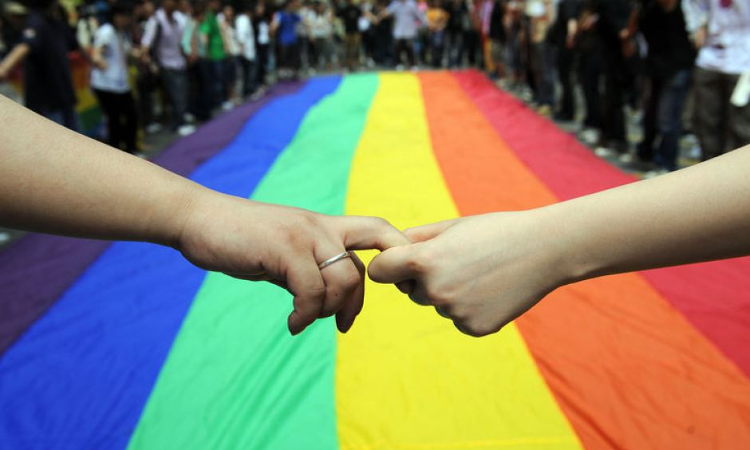
The Kolkata Rainbow Pride Walk, the oldest of its kind in India, has steadily transformed from an assertion of visibility into a recurring constitutional moment. Its contemporary significance lies not merely in symbolic expression but in the way it exposes the structural incompleteness of LGBTQ+ rights within Indian constitutionalism. In the wake of judicial recognition of identity without corresponding legislative recognition of relationships, Pride in Kolkata must be understood as occupying a liminal space-situated between formal constitutional guarantees and their incomplete institutional realisation.
The judgment in Navtej Singh Johar v. Union of India( 2019) constitutionalised sexual orientation by locating it within the guarantees of dignity, autonomy, and privacy under Article 21, while also grounding it in equality under Article 14 and expressive freedom under Article 19. Crucially, the Court's reliance on constitutional morality established that the protection of minority identities cannot be contingent upon majoritarian acceptance. However, the subsequent decision in Supriyo v. Union of India (2023) reveals the internal limits of this transformative project. By declining to recognise same-sex marriage and deferring the question to Parliament, the Court effectively delineated the boundary between judicial recognition and legislative creation of rights. This distinction has produced a doctrinal asymmetry: while identity is constitutionally affirmed, relational and family rights remain outside enforceable legal protection.


This asymmetry is not merely a gap but a site of constitutional tension. The Court's reasoning signals a retreat from strong-form judicial review in favour of institutional deference, thereby repositioning Parliament as the primary arena for further rights expansion. Yet, in the absence of legislative intervention, this deference results in a condition of normative suspension, where constitutional principles are acknowledged but not operationalised. The consequence is a form of rights without remedies, where the declaratory force of constitutional jurisprudence is not matched by corresponding statutory frameworks.
It is within this context that Pride assumes a jurisprudential significance that extends beyond expressive conduct. Pride marches can be read as performative assertions of constitutional morality, translating abstract rights into collective, visible claims. They function as sites where the normative commitments articulated in constitutional jurisprudence are enacted in public space, thereby challenging the inertia of legislative inaction. In doing so, they also foreground the continuing relevance of Article 19(1)(a) and 19(1)(b), not merely as guarantees of speech and assembly, but as mechanisms through which marginalised groups sustain constitutional dialogue in the absence of formal recognition.
The tension between constitutional morality and social morality remains central to this analysis. While constitutional jurisprudence has privileged the former, social morality continues to operate as a countervailing force, shaping both public discourse and political responses. The persistence of normative frameworks rooted in tradition, family, and cultural continuity complicates the realisation of queer rights, not through explicit legal prohibition, but through subtler forms of resistance. This creates a layered constitutional field in which formal guarantees coexist with social constraints, producing a fragmented experience of rights.
The federal structure further complicates this landscape. Although questions of marriage and civil rights fall within the Concurrent List, the operational dimensions of Pride-policing, permission and public order-are governed by state authorities. This division of powers allows state governments to indirectly influence the exercise of fundamental rights without altering substantive law. Administrative discretion, exercised through regulatory frameworks governing public assemblies, becomes a key site through which constitutional freedoms are mediated. The absence of uniform standards in this regard raises concerns about the potential for differential realisation of rights across jurisdictions, thereby challenging the notion of equal citizenship.
The role of administrative power in shaping the contours of Pride cannot be overstated. Restrictions imposed through ostensibly neutral mechanisms-such as route limitations, conditional permissions, or heightened surveillance operate as forms of indirect regulation. These measures, while formally consistent with public order considerations, may produce disproportionate effects on marginalised groups, thereby implicating the doctrine of proportionality. The constitutional question, therefore, is not merely whether Pride is permitted, but whether the conditions of its permission are consistent with the substantive guarantees of equality and free expression.
At the level of political discourse, the engagement with LGBTQ+ rights increasingly reflects a strategy of selective accommodation. Rather than outright denial, there is an observable tendency to recognise limited aspects of queer identity while resisting structural transformations in the domains of family and kinship. This produces a model of partial recognition, where visibility is tolerated but equality remains constrained. Such an approach reconfigures the terrain of contestation, shifting it from questions of decriminalisation to questions of full citizenship and equal participation in social institutions.
An intersectional analysis further reveals the uneven distribution of the gains achieved through constitutional litigation. The visibility associated with Pride often reflects urban, middle-class articulations of queerness, leaving marginalised groups-particularly transgender persons and those from socio-economically disadvantaged backgrounds-outside its ambit. This raises critical questions about the representational limits of Pride and the extent to which it can serve as a comprehensive platform for LGBTQ+ rights. The persistence of intra-community disparities underscores the need to move beyond visibility towards substantive inclusion.
From a comparative perspective, India's constitutional trajectory remains incomplete. In jurisdictions where Pride has transitioned from protest to celebration, this shift has been accompanied by robust legislative frameworks ensuring anti-discrimination protections and recognition of relationships. In India, by contrast, the absence of such frameworks sustains the protest character of Pride, even as it adopts elements of celebration. This hybridity reflects a constitutional order in transition, where the formal repudiation of criminalisation has not yet culminated in full legal equality.
The future of Kolkata Pride must therefore be understood through the lens of this unresolved constitutional project. In the short term, the absence of legislative clarity is likely to sustain reliance on judicial principles and administrative discretion. Over the medium term, the direction of LGBTQ+ rights will depend on whether political institutions engage substantively with the demands for recognition or continue to defer meaningful reform. In the long term, the institutionalisation of Pride as a recognised civic practice will hinge on the alignment between constitutional commitments and political will.
Ultimately, the trajectory of queer rights in India reveals both the transformative potential of constitutional interpretation and the structural limits of its realisation in the absence of legislative action. While identity has secured a degree of constitutional protection, the continued lack of a comprehensive legal framework governing relationships and anti-discrimination protections raises foundational questions about the nature of equality itself. In this context, Kolkata Pride emerges not as a peripheral cultural event, but as a continuing site of constitutional contestation-where the promise of rights is persistently asserted against the inertia of institutional response.
Author is a practicing Advocate at Jangipur Civil Criminal Court. Views are personal.


