



Meghalaya's Rat-Hole Coal: Constitutional Middle Path Left Untriggered
Aaditya Bajpai
20 Nov 2026 10:30 AM IST
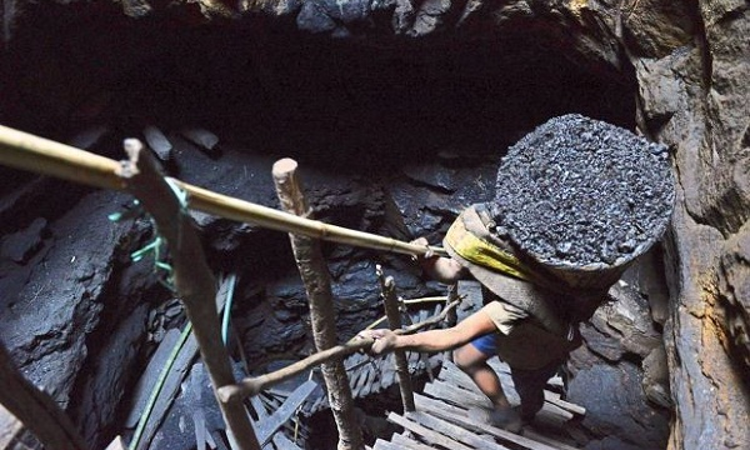
The rat-hole mining question in Meghalaya is almost always posed as a contest between two goods. On one side is tribal self-rule, because the coal lies beneath land owned by clans and families rather than the government. On the other is safety and ecology, because the National Green Tribunal called the way the coal is dug both unscientific and lethal. For more than a decade the two have been treated as irreconcilable, and the debate has run in that single groove. The framing hides a third option written into the Constitution itself. Between “central mining law does not apply here” and “central mining law applies in full” sits a setting the debate has never used.
That setting is Paragraph 12A(b) of the Sixth Schedule, which allows central law to apply to Meghalaya's tribal districts in a modified form built for their reality. Nobody has reached for it. The space where a tailored legal regime should sit has instead been filled by a ban, years of litigation, a monitoring committee, and most recently the executive's “scientific mining” permissions for a few blocks. Each of these manages a symptom. None answers the structural question the Sixth Schedule was drafted to answer, and the pits keep taking lives while it goes unasked.


The Binary That Trapped the Debate
When the dispute reached the Supreme Court, Meghalaya's case was that because the coal belongs to private and community owners and not to the state, the Mines and Minerals (Development and Regulation) Act, 1957 does not operate in its hills at all. In State of Meghalaya v. All Dimasa Students Union, the Court called that contention misconceived and settled the ownership question with care. The clan or family that holds the surface also holds the minerals beneath it, but ownership is not a licence to extract. Coal may be won only under a lease, with the Central Government's prior approval routed through the state, an environmental clearance, and compliance with the 1957 Act, the Mines Act, 1952 and the Environment (Protection) Act, 1986.
The ruling was correct, yet it closed the argument at one of two poles. Either central regulation is switched off, as the state wished, or it is switched on in full, as the Court held. The lease-and-clearance architecture the judgment required is the same one written for the large blocks that the state auctions elsewhere in India. It assumes a state that owns the resource and leases it to an operator. In Meghalaya the owner, the lessor and the miner can be the same village. What neither pole supplied was a version of that architecture built for thousands of small owners sitting over thin, scattered seams. The Constitution contains exactly that instrument.
What Paragraph 12A(b) Actually Allows
The Sixth Schedule does not treat Acts of Parliament as automatically binding on Meghalaya's autonomous districts. Paragraph 12A(b) empowers the President, by notification, to direct that any Act of Parliament shall not apply to those districts, or shall apply subject to such exceptions and modifications as the notification specifies, and to do so even with retrospective effect. This is not an on-off switch. It is a dial. It allows the central mining framework to be rewritten at the edges, lighter licensing thresholds, ownership-sensitive leasing, community-level permits, so that it fits a landscape where the resource is held by the many rather than leased to the few. The Schedule's design is deliberately of this kind: a parallel power lets the Governor modulate state legislation for the same districts. Modification, not wholesale exclusion, is the Schedule's way of reconciling tribal self-government with the laws of the wider republic.
Nor is the concern hypothetical. When coal was nationalised in 1973, Meghalaya's community-owned seams were left outside the national regime precisely because the standard model did not fit them. The question the state has avoided for a decade is how to bring that mining inside a lawful and safe framework without pretending the ownership structure is something it is not. Paragraph 12A(b) is the drafted answer. It has not been used for mining.
Why the Default Framework Fails on the Ground
The cost of leaving the dial untouched is measurable. The one-man committee under Justice B.P. Katakey, set up by the Meghalaya High Court to monitor compliance with the tribunal's and the Supreme Court's directions, found close to 24,000 illegal rat-hole mines still working in the state at the end of 2024, a decade after the ban. Its reports record that, beyond notifying a set of anti-illegal-mining rules in 2022, the state had not carried out the directions it was bound to follow. The High Court has had to direct the government, more than once, simply to implement what the Supreme Court and the tribunal already ordered.
That failure is not one of policing alone. A framework that offers a single, heavy, state-routed lease to the owner of a few bighas over a thin seam is one that most owners cannot realistically use, so they do not use it. Extraction does not stop; it slips beyond the reach of the law, where there is no clearance, no safety regime and no duty to close a pit when it is spent. The mismatch between the ownership on the ground and the regulation on the books is the engine of the illegality. A court can order compliance with a framework, but it cannot rewrite that framework for tribal districts, as the same can only be done by the President, under Paragraph 12A(b).
“Scientific Mining” Is an Executive Patch, Not an Answer
The state's current response is to permit “scientific mining” in a small number of formally approved blocks. The first was inaugurated in March 2025, and the Saryngkham A and Pyndengshahlang blocks began production that June. This is lawful and welcome as far as it reaches. But it reaches a handful of large, compliant operators and leaves the thousands of small community owners, and the lethal informal economy built around them, where they already were.
The obvious objection is that the 2019 judgment and scientific mining together already supply the framework, and that Paragraph 12A(b) is surplus. The objection does not survive the facts. If the existing framework were workable for Meghalaya's pattern of ownership, close to 24,000 pits would not still be operating outside it, and workers would not still be dying in them, nine of them in a flooded pit at Umrangso, across the border in Assam's Dima Hasao, in January 2025, in the same unregulated trade. A framework that the people it governs cannot lawfully enter is not a complete framework. It is a framework with a hole where most of the activity happens, and a few block permits do not close that hole.
What Using Paragraph 12A(b) Would Mean
Invoking the provision would not dilute environmental protection. It would make lawful mining reachable. It would keep what the Supreme Court settled, community ownership of the mineral, and build around it a modified application of the central Acts: a licensing route calibrated to small and community owners, enforceable safety and scientific-method conditions, environmental clearance scaled to the size of the operation, benefit-sharing, and binding pit-closure duties, administered with the Autonomous District Councils rather than against them. That is the reconciliation the ban, the committee and the block permits have each been approximating without ever securing, because none of them is the instrument the Constitution assigned to the task.
Until that structural question is answered with the tool designed for it, Meghalaya will keep swinging between prohibition and permission, a ban that drives mining underground, a block permit that formalises a sliver of it, while the pits the law refuses to see keep filling with water and men. The Sixth Schedule was written so that tribal self-government and national regulation could hold the same ground. Paragraph 12A(b) is the point at which that coexistence was meant to be engineered. To leave the dial untouched is not neutrality. It is a decision to let a decade of deaths stand in for a law that nobody has been willing to write.
References:
State of Meghalaya v. All Dimasa Students Union, Dima-Hasao District Committee, Civil Appeal No. 10720 of 2018, https://www.livelaw.in/top-stories/state-has-constitutional-obligation-to-ensure-clean-environment-to-all-citizens-146070.
National Green Tribunal, All Dimasa Students Union v. State of Meghalaya, O.A. No. 73 of 2014, order dated 17 April 2014 banning rat-hole mining, https://megdmg.gov.in/ngt/NGT-17-04-14.pdf.
Constitution of India, Sixth Schedule, Paragraph 12A, https://ncst.gov.in/uploads/general_documents/SIXTH-SCHEDULE.pdf.
Meghalaya High Court, directions to the State to implement the Supreme Court and NGT orders on rat-hole mining, 2022 LiveLaw (Meg) 17, https://www.livelaw.in/news-updates/meghalaya-high-court-rat-hole-mining-implement-directions-supreme-court-ngt-200258.
NITI Aayog, “Research Study on Coal Minig, Displacement, and Rural Livelihoods: A Study in Mahanadi Coalfield Odisha”, https://www.niti.gov.in/sites/default/files/2019-01/Report on Coal Mining, Displacement and Rural Livelihoods A Study in Mahanadi Coalfield Odisha.pdf.
Live Law, “Despite NGT Ban and SC Scanner, Rat-Hole Mining Rampant in Meghalaya, Advocate Writes to CJI for Urgent Intervention”, https://www.livelaw.in/despite-ngt-ban-and-sc-scanner-rat-hole-mining-rampant-in-meghalaya-advocate-writes-to-cji-for-urgent-intervention.
Live Law, “Illegal Mining: Meghalaya High Court Seeks Status Report on Detection of Excess Coal in East Jaintia Hills”, https://www.livelaw.in/high-court/meghalaya-high-court/meghalaya-high-court-hearing-pil-against-illegal-coal-mining-meghalaya-government-291305.
Live Law, “Rat-Hole Coal Mining: Meghalaya High Court Directs State to Implement SC & NGT Directions”, https://www.livelaw.in/news-updates/meghalaya-high-court-rat-hole-mining-implement-directions-supreme-court-ngt-200258.
Inre Sou Motu Illegal Mining of Coal in the State of Meghalaya vs. State of Meghalaya & Ors., 28.04.2025, High Court of Meghalaya at Shillong, https://www.livelaw.in/pdf_upload/meg-hc-coal-mining-598651.pdf.
Author is a Legal researcher and a practicing Advocate. Views are personal.


