



Passport That Proves Nothing? MEA's Position And What It Costs Constitution
Mohammad Anas Khan
8 Aug 2026 3:00 PM IST
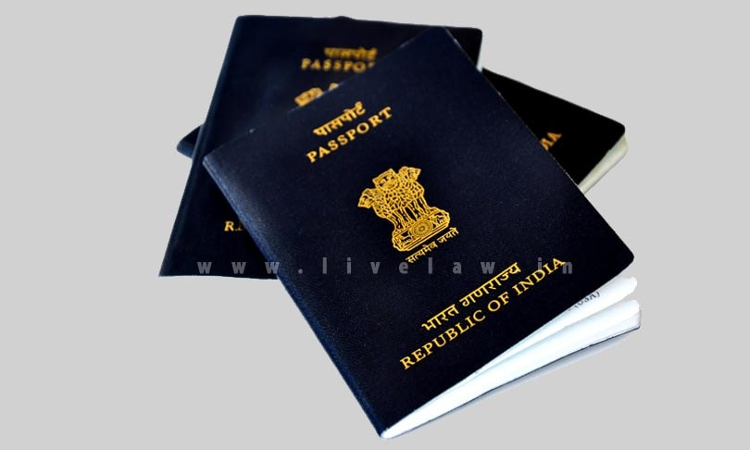
Two laws are now working against each other. The Passports Act, 1967 lets an officer refuse a passport on one ground above all others: that the applicant is not a citizen of India. The Citizenship Act, 1955 is the only law that decides who counts as a citizen. In June 2026, the Ministry of External Affairs said a passport is only a travel document, not proof of citizenship. That statement did more than clarify a technical point. It broke a link between two statutes that had worked together for six decades.
This piece is not about the MEA's press briefing. It is about what that briefing does to the law underneath it, and to the millions of Indians who treat their passport as the one document that proves they belong here.
Two Statutes One Broken Chain
The MEA's position sounds reasonable at first. A passport helps a person travel; it does not itself settle a citizenship dispute. No regional passport office holds a citizenship trial in the sense the Citizenship Act imagines. That much is true, and unremarkable.


But this framing misses something. Section 6(2)(a) of the Passports Act already requires the passport authority to verify citizenship before issuing the document. Section 5 requires an application that goes through exactly this check before any passport is printed.
If citizenship is not a fact the passport certifies, then Section 6(2)(a) serves no purpose at all. Courts do not read a statute that way; no canon of interpretation treats an entire refusal ground as meaningless surplusage. Parliament wrote citizenship into Section 6(2)(a) because it expected the passport authority's finding, once made, to travel with the document.
Section 20 sharpens the point. It lets the Central Government issue a passport to a non-citizen, but only where “necessary in the public interest,” as a special exception. An exception like this only makes sense if the general rule is that a passport belongs to a citizen. Remove that link, and the exception has nothing left to except from.
Regional passport officers verify birth records, domicile and antecedents before they issue a document, because the statute treats that verification as conclusive absent fraud. Telling those same officers, and the public that relies on their signature, that the resulting document proves nothing, strips Section 6 of the authority Parliament gave it.
One Citizen, No proof
The deeper problem is not about wording. It is structural. Aadhaar already disclaims itself as proof of citizenship under its own governing Act. PAN exists only for tax administration. Add the passport to that list, and an ordinary citizen is left holding three government-issued documents, none of which the government itself will vouch for as proof of the one status that unlocks every fundamental right.
This is not an abstract problem for a law school seminar. Former Supreme Court judge Justice Madan B. Lokur, in remarks widely reported by LiveLaw. He pointed out that Parliament used “passport” and “travel document” as separate terms precisely because it meant them to carry separate legal weight. His warning is direct: a person can be asked to prove citizenship to keep a fundamental right, and then be told that the one document they hold does not count as proof.
That warning lands hardest at the local level. Passport verification, ration card renewal and land record mutation all pass through the same local functionaries: the intelligence unit, the tehsildar, the block development officer. These officials now have no clear signal about which document, if any, carries presumptive weight. Where there is no standard, discretion fills the gap, and discretion falls hardest on people with the thinnest paper trail: internal migrants, riverine and border communities, and those without steady municipal records. A change framed as a narrow evidentiary clarification has created a real risk of arbitrary “doubtful citizen” proceedings, and that risk falls on people least equipped to contest it.
The international angle sharpens the contradiction further. Every foreign mission that stamps a visa on an Indian passport does so trusting that India has already certified the holder as its citizen. Justice Lokur's observation, that Indian passports are honoured abroad precisely because they are treated as citizenship documents, is not rhetorical flourish; it describes how consular practice actually works. So the same document is authoritative enough for a foreign government to rely on, but not authoritative enough for an Indian tehsildar to accept. That asymmetry does not survive being stated plainly.
The Judicial Weight the MEA's Position Dilutes
Indian Courts have never treated the passport as routine paperwork. In Satwant Singh Sawhney v. Assistant Passport Officer (1967), the Supreme Court held that the right to travel abroad falls within personal liberty under Article 21, and that the executive could not withhold a passport without statutory backing. Parliament passed the Passports Act because of this judgment; the Court had already told it that a citizen's claim to a passport could not rest on unstructured executive grace.
A decade later, in Maneka Gandhi v. Union of India (1978), the Court went further. Impounding a passport without a fair, reasonable procedure, it held, violates Articles 14, 19 and 21 read together, the “golden triangle” that has anchored nearly every later expansion of personal liberty in Indian constitutional law.
Both judgments treat the passport as a document that certifies something real about the holder's citizenship. Recast it as a transit slip with no evidentiary value, and the foundation of both judgments quietly erodes. A right to personal liberty built on holding a passport means little if the state simultaneously insists the passport proves nothing about who is entitled to hold it.
None of this requires reinventing the wheel. Section 3 of the Passports Act already gives the Central Government rule-making power broad enough to prescribe, by notification, exactly what evidentiary weight a passport carries and how it interacts with citizenship determinations under the Citizenship Act. If the government believes the current chain of proof is unworkable in the context of electoral roll revision, the fix lies in using that power transparently, not in a press statement that leaves the statute standing while quietly hollowing out its effect.
A Contradiction the Executive Cannot Hold
The MEA may have meant to settle one narrow dispute: whether a passport alone can resolve a citizenship question during an electoral roll revision. But a ministry cannot rewrite the evidentiary status of a statutory document through a press briefing, while leaving the statute, and six decades of Supreme Court precedent built on it, untouched.
Either Section 6(2)(a) and Section 20 of the Passports Act mean what they say, and a passport is intrinsically tied to verified citizenship, or they do not, and Parliament must be asked to say so through amendment, not press briefing. What the executive cannot do is hold both positions at once, and leave the regional passport office, the local revenue official and the ordinary citizen to absorb the resulting uncertainty. Until Parliament settles the question, courts, and not ministry statements, remain the only body competent to decide what a passport is allowed to prove.
Author is an LL.M. Research Scholar at the Hamdard Institute of Legal Studies and Research (HILSR), Jamia Hamdard, New Delhi. Views are personal.


