



Recusal Controversy: Why Supreme Court Should Frame Interim Standards
Junaid Mohd Junaid
26 April 2026 3:00 PM IST
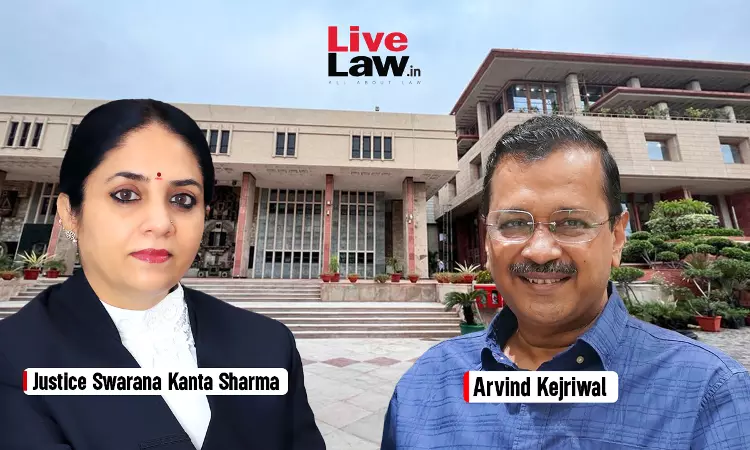
The recent recusal controversy in the Arvind Kejriwal proceedings before the Delhi High Court has revived an old but unresolved institutional question: how should courts respond when apprehension of bias is alleged against the judge seized of the matter? The immediate temptation is to reduce every such controversy either to judicial hypersensitivity or to political theatre. Both reactions are inadequate. A recusal plea, even when it fails, touches the moral architecture of adjudication, because courts derive authority not merely from law but from public confidence in impartiality. That confidence cannot be left entirely to improvised responses. At a time when courtroom developments are instantaneously amplified in the public domain, the judiciary must ensure that genuine concerns are addressed with principled clarity while speculative attacks are firmly repelled.
The Existing Law Is Clear in Principle but Thin in Procedure
Indian law already recognises the governing doctrine. In Ranjit Thakur v. Union of India, (1987) 4 SCC 611, the Supreme Court held that the relevant test is whether a reasonable person, in possession of the relevant facts, would apprehend likelihood of bias. The emphasis, therefore, is objective and institutional, not based on the personal discomfort of a litigant. Equally, in Indore Development Authority v. Manoharlal, (2020) 8 SCC 129, the Court warned against recusal being converted into a device for bench hunting or forum shopping merely because a judge had expressed a prior view on law. These two decisions, read together, yield a sound constitutional balance: real conflict must disqualify, but manufactured perception cannot dictate roster or adjudication.


Independence of the Bench Cannot Mean Silence of Standards
Yet the present framework remains underdeveloped at the procedural level. In practice, recusal questions in the higher judiciary are often left to convention, individual conscience, and fragmented practice directions. That may preserve decisional autonomy, but it does not always satisfy the public demand for visible fairness. The problem is not that judges decide recusal pleas themselves; the problem is that there is no nationally articulated standard explaining when disclosure is advisable, when recusal is ordinarily warranted, and when a plea is plainly abusive. Judicial independence is not weakened by transparent standards. On the contrary, it is strengthened when the institution demonstrates that impartiality is being protected by rule, not by personal preference or public pressure.
What Interim Guidelines from the Supreme Court Should Contain
Until Parliament enacts a dedicated law, the Supreme Court ought to consider framing limited but authoritative guidelines for constitutional courts. Such guidance need not be elaborate. It may simply require that recusal requests be made in writing, founded on specific and verifiable facts, and decided on brief but reasoned principles. It may clarify that pecuniary interest, prior professional involvement in the same dispute, or a close personal relationship with a party or counsel would ordinarily justify recusal, whereas prior judicial orders, strong courtroom observations, or ideological disagreement would ordinarily not. A calibrated framework of this nature would protect both sides of the constitutional equation: it would warrant recusal in genuine cases and discourage rhetoric designed to put the institution itself on trial.
The Real Object Is Not Withdrawal, but Restoration of Trust
Recusal doctrine should ultimately be understood as a doctrine of public trust, not judicial retreat. Courts do not become stronger by yielding to every accusation, nor by dismissing every apprehension as mischief. They become stronger when they insist that standards, not sentiment, will govern. The deeper need of the hour is therefore neither sensational reform nor defensive rhetoric, but a principled judicial statement that fairness has recognisable contours. If the recent controversy has exposed a recurring institutional discomfort, it should now become the occasion for constitutional housekeeping. A narrowly tailored set of guidelines from the Supreme Court would neither surrender judicial independence nor encourage litigant-driven bench selection. It would simply reassure the public that impartial justice in India is not only expected, but methodically secured.
References:
Ranjit Thakur v. Union of India, (1987) 4 SCC 611;
Indore Development Authority v. Manoharlal, (2020) 8 SCC 129.
Author is an Advocate practicing at Supreme Court of India. Views are personal.


