



Reels, Virality, And Manufacture Of A Hero
Aryaman Singhi
31 July 2026 11:22 AM IST
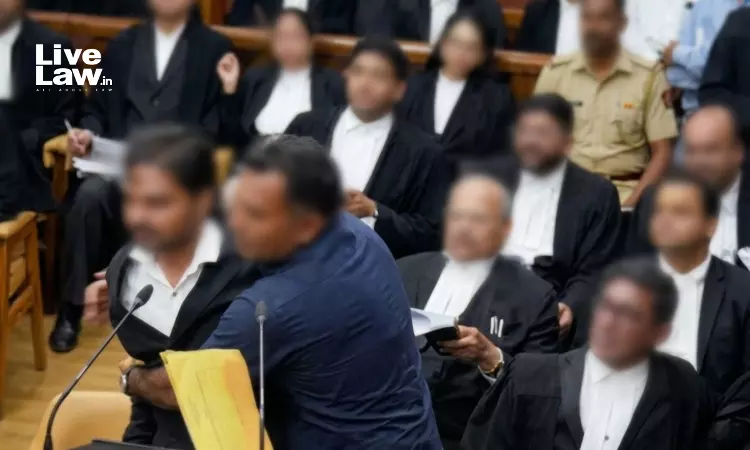
On 10 July 2026, the Supreme Court witnessed an unusual disruption. Prabal Pratap Singh, appearing as a petitioner-in-person before Justices K.V. Viswanathan and Alok Aradhe, reportedly called himself “the sovereign”, addressed the judges as “judicial servants”, and attempted to “order” the Court to direct registration of an FIR. He then allegedly threw his case papers and abused the Chief Justice of India. Security personnel escorted him out, while the Bench remained calm and dismissed the petition.
The incident was disturbing. Equally troubling was its transformation into social-media spectacle. Viral clips and reels began presenting the outburst as the voice of an ordinary citizen confronting an uncaring system. Delay, expense, procedural complexity, and police inaction may alienate litigants and deserve reform. They cannot, however, create a licence to command judges, abuse constitutional office-holders, or obstruct proceedings. Contempt is not an intensified form of protest; it attacks the process through which grievances are adjudicated.


An Adverse Order Is Not Judicial Injustice
The claim that “the judiciary pushed him to this” assumes that failure to obtain a desired remedy proves institutional failure. Courts, however, decide according to jurisdiction, statutory remedies, evidence, precedent, and procedure, not a litigant's certainty that justice lies entirely on his side.
The dispute reportedly originated in allegations of police inaction and a magistrate's treatment of Singh's request for an FIR. Police investigation is principally an executive function. A magistrate's decision to proceed as a complaint case is still a judicial determination, challengeable through lawful remedies. A High Court or the Supreme Court may also decline interference because another remedy exists, jurisdiction is limited, or legal grounds are insufficient. None of this, by itself, proves indifference.
Every judgment disappoints at least one party. Emotion may show that a person feels wronged; it does not establish that the demanded remedy is legally due. An adverse order is not synonymous with judicial injustice.
The Right to Be Heard Is Not the Right to Command
Singh was permitted to appear personally and invoke the Supreme Court's jurisdiction. He was not excluded for lacking an advocate. Yet access to court does not transfer control of the court to the litigant. The right to be heard means an opportunity to present facts and law before an impartial Bench. It does not include a right to predetermine the result, monopolise judicial time, or compel agreement. He was given access to the Court, not authority over it.
Calling himself “the sovereign” was also constitutionally misconceived. The Preamble places sovereignty in “We, the People of India” collectively. Popular sovereignty operates through constitutional institutions; it does not make each citizen a private sovereign superior to judges or public authorities. A person seeking relief from the Supreme Court necessarily recognises its constitutional authority.
Criticism Is Protected; Obstruction Is Not
Defending courtroom discipline does not require unquestioning reverence. Judges exercise public power and remain open to criticism. Judgments may be challenged as incorrect, and judicial delay, appointments, transparency, and administration may be scrutinised. Section 5 of the Contempt of Courts Act, 1971 protects fair criticism of judicial acts.
The distinction is practical. A reasoned article is criticism; an appeal is lawful recourse; a peaceful demand for reform is democratic participation. Throwing papers during a hearing, abusing judges, or attempting to force a result substitutes intimidation for argument.
Section 2(c) of the Act includes interference with judicial proceedings and obstruction of justice within criminal contempt. Article 129 recognises the Supreme Court's contempt power, while sections 13 and 14 regulate substantial interference and contempt in the Court's presence. Since no contempt trial was completed, Singh cannot be pronounced guilty. The alleged conduct was nevertheless prima facie capable of invoking contempt jurisdiction.
Contempt Does Not Exhaust Criminal Liability
The Court's decision not to initiate contempt did not place the incident beyond ordinary criminal law. Contempt protects the administration of justice; criminal law addresses separate allegations such as intentionally interrupting judicial proceedings, obstructing public servants, or using criminal force against security personnel. Guilt must, of course, be proved through evidence and trial.
On a complaint by Supreme Court security staff, Delhi Police arrested Singh and another law student. Police alleged that Singh also obstructed security personnel who attempted to restrain him. A Delhi court later remanded both accused to fourteen days' judicial custody. These remain allegations, not findings. They nevertheless show that judicial compassion in contempt does not erase possible criminal consequences for assault, obstruction, or interference with official duties.
A judge may choose not to punish an insult to the Court, but security personnel do not lose the protection of criminal law. Institutional mercy cannot become immunity for separate acts allegedly committed against them.
Courtroom Order Protects Litigants, Not Judicial Vanity
Courtroom discipline is sometimes portrayed as ceremonial deference to judges. Its real purpose is democratic: it protects every litigant's entitlement to an orderly and effective hearing. A courtroom is not a private confrontation between one citizen and one judge. Every disruption consumes time belonging to others on the cause list.
The ordinary citizen is not represented only by the person who throws papers. She is also the undertrial awaiting bail, the widow seeking pension arrears, the parent awaiting custody, and the worker challenging dismissal. Their time is also constitutional time.
Comparable incidents reinforce the principle. In Leila David v State of Maharashtra, petitioners used offensive language and one threw footwear towards the Bench.[1] In Mahipal Singh Rana v State of Uttar Pradesh, an advocate faced consequences for intimidating a judicial officer. In In Re: Mathews Nedumpara, the Supreme Court addressed repeated interruptions and efforts to dictate proceedings. Personal grievance or ideology cannot create exceptions to courtroom order.
Reels, Virality, and the Manufacture of a Hero
The danger no longer ends when security restores order. A courtroom outburst can be edited into a reel, detached from the case record, given dramatic music, and circulated as resistance. This rewards spectacle over legal reasoning and reduces questions of jurisdiction, remedies, and procedure to a simple story of one brave citizen confronting a hostile institution.
After the 2025 attempt to throw footwear at then Chief Justice B.R. Gavai, the Supreme Court was asked to consider directions against social-media posts glorifying the incident. The same concern arises here. If reels turn a disruptor into a hero, future litigants may learn that careful submissions attract less attention than abuse and theatrical defiance.
Reporting the incident, analysing the grievance, and criticising the judiciary remain legitimate. What must be resisted is the manufacture of martyrdom through selective clips. Virality is not constitutional courage, and aggression is not evidence of legal correctness.
Judicial Restraint Was a Strength, Not an Admission of Fault
The Bench did not allow disorder to dictate the outcome, but it also declined immediate punitive action after considering Singh's apparent condition. This reflected authority and restraint. Contempt power protects justice; it is not personal armour for judges.
Judicial mercy cannot be rewritten as approval. Explanation is not justification, and compassion is not endorsement. The refusal to punish Singh for contempt did not transform the alleged abuse into protected dissent, nor prevent criminal law from taking its ordinary course on a security officer's complaint.
The justice system must address delay, inaccessible procedure, unaffordable representation, police failures, and the difficulties faced by parties-in-person. Better legal aid, plain-language guidance, and de-escalation mechanisms would strengthen access to justice. None requires society to celebrate disorder.
Judicial accountability is pursued through appeals, review, scholarship, journalism, reasoned criticism, and lawful reform. It is not pursued by commanding judges, obstructing security personnel, or converting abuse into heroic content. The Supreme Court gave the petitioner access to the institution; it was not obliged to give him control over it.
The courtroom belongs not only to the person who shouts, but also to every citizen waiting quietly to be heard. Protecting its order is not a defence of judicial ego. It is a defence of equal justice under law.
Endnotes
[1] Leila David (6) v. State of Maharashtra, (2009) 10 SCC 337.
Views are personal.


