



The Unbroken Nib
Arya Suresh
11 April 2026 6:00 PM IST
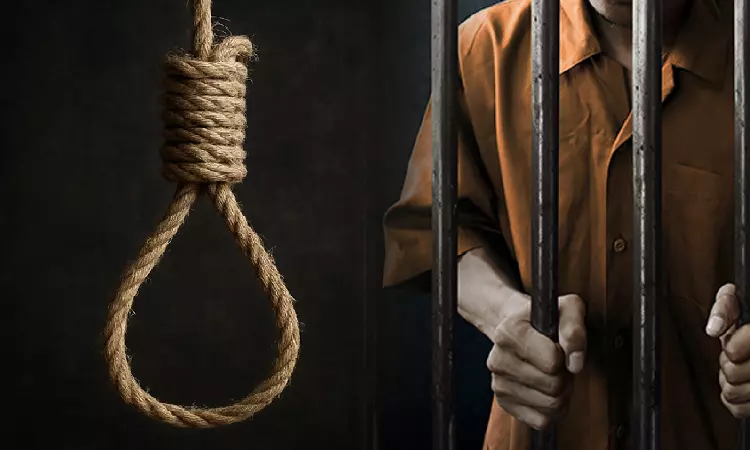
When the state kills, who bears the weight, and why the death penalty must end
There is a moment near the end of Maamla Legal Hai Season 2 that stops being funny altogether. A Principal District Judge sits alone in his chamber, a case file open before him. He must decide whether another man should live or die. He signs the order. He awards the death penalty. And then, he does not break the nib.
The breaking of the nib is not law. It appears in no statute, no schedule of the Constitution. It is tradition, old, layered, and carrying considerable weight. Tracing its origins to the Mughal era, when emperors would break the quill after signing a death warrant, the practice was adopted by British colonial judges and survived Independence. A pen that has signed away a life, the tradition holds, should never be used again. Something irreversible has passed through it.
Why do judges break the nib? Some say it marks the gravity of the sentence. Others say it acknowledges that a death warrant is unlike any other order. But there is a third, more candid explanation: the nib is broken as an act of self-absolution. A way of saying, I did what the law required. The pen is broken. It is done. The ritual creates distance between the judge and the consequences of what he has just signed.


In the show, the judge does not break the nib. His father then asks him a quiet question: dobara uthaa paoge? (Can you pick up that pen again?) If you cannot, what does that tell you about what you have signed? And if the ritual of breaking the nib exists to manage that discomfort, to formalise guilt so it can be set aside, what does that tell you about the punishment itself? The show does not answer. But the question stays in the room.
Consider what it means that such a ritual exists at all. It is an acknowledgment, built into legal culture across centuries and civilisations, that the death penalty is unlike any other judicial act. The reason is simple and worth stating plainly: death cannot be undone. It is the one punishment that forecloses every possibility of correction. Every other sentence, imprisonment, fine, disqualification, can be reversed if new evidence emerges, if an appeal succeeds, if a mistake is found. A death sentence, once carried out, cannot be.
This is not an abstract concern. India has nearly 574 people on death row, according to Project 39A's Death Penalty in India: Annual Statistics (2025), a landmark report by the National Law University, Delhi. The report documents systemic problems: inadequate legal representation at trial, a disproportionate share of convicts from economically and socially marginalised communities, and inconsistent application of the "rarest of rare" standard that is supposed to limit capital sentencing. Crucially, a significant number of death sentences are commuted or overturned on appeal, which means that some of those on death row were, in the considered judgment of higher courts, wrongly sentenced. Several sitting and retired judges have publicly acknowledged that they may have erred in capital cases. When the punishment is death, an error of judgment is not a procedural matter that can be corrected. It cannot be corrected at all.
There is also a basic clarity problem. Most people, unless they have a legal background, would reasonably assume that the death penalty applies only to murder. It does not. In India, capital punishment can be awarded for a range of offences that may not involve killing anyone: certain drug trafficking charges, acts of terrorism, waging war against the state. The "rarest of rare" doctrine, established by the Supreme Court in the 1980 Bachan Singh judgment, was designed as a safeguard. In practice, it has become a phrase stretched to accommodate the severity of public outrage, the nature of the crime's politics, and sometimes the social identity of the accused. A doctrine meant to restrict has instead been used to justify.
Gopalkrishna Gandhi, diplomat, historian, and former Governor of West Bengal, has written carefully about this in his 2016 book, Abolishing the Death Penalty: Why India Should Say No to Capital Punishment. His argument is methodical rather than sentimental. The death penalty, he concludes, is cruel in its operation, ineffective as a deterrent, deeply unequal in how it falls across society, and, precisely because it is irreversible, uniquely dangerous as a tool subject to human error. He makes one observation that deserves particular attention: the death penalty does not requite the need for retribution. It simply makes society more accustomed to state-sanctioned killing as a response to crime. That is not justice. That is a habit.
The evidence from other countries supports this. Of the 195 countries in the world, 140 have abolished the death penalty in law or practice. This includes not only wealthy Western democracies but countries across the economic spectrum. Norway, which consistently ranks at the top of the Human Development Index, has abolished it. So has Burundi, near the bottom. The argument that poorer or less stable nations need capital punishment to deter serious crime is not borne out by the data. Abolition is a policy choice, not a luxury.
India's own founding impulse pointed in this direction. The Karachi Resolution of 1931, drafted under Jawaharlal Nehru with Mahatma Gandhi's guidance, listed the abolition of capital punishment among proposed fundamental rights for independent India. That commitment was lost when the new republic largely inherited the colonial legal framework. More recently, the Law Commission's 262nd Report in 2015 recommended abolishing the death penalty for all crimes except terrorism and waging war against the state, a cautious, partial recommendation, but one that acknowledged where the evidence leads. It has not been acted upon.
The Punjabi folk legend of Mirza-Sahiban offers a useful frame. Sahiban breaks Mirza's arrows before waking him, not wanting him to kill her brothers, hoping that without weapons, some other resolution might be possible. It is not. Her brothers kill Mirza anyway. And folk memory has held this against her ever since, placing her name second where every other Punjabi legend, Heer-Ranjha, Sassi-Punnu, Sohni-Mahiwal, leads with the woman. She is the one remembered as the betrayer.
But the more considered reading is different. Sahiban understood something her brothers did not: that an arrow, once loosed, cannot be recalled. She was trying to prevent an outcome that could not be reversed. The folk tradition punished her for this. The instinct she was acting on, that lethal force, once used, is permanent, was entirely correct.
Every death sentence handed down in an Indian court is passed in our names. The Constitution vests sovereignty in the people, which means the state's power to execute is derived from our collective authority. When the government hangs someone, it does so on our behalf. That is not rhetorical. It is constitutional fact. The question of whether India should retain the death penalty is therefore not only a question for lawmakers or judges. It is a question for citizens.
So consider what you are authorising. A punishment that falls most heavily on the poor and the poorly represented. A punishment applied to crimes that many citizens do not know are capital offences. A punishment that India's own Law Commission has recommended abolishing, that 140 countries have already removed from their law books, and that several Indian judges have said, in public, they may have applied wrongly. A punishment that, by its nature, can never be taken back once carried out.
The breaking of the nib is not a solution to any of this. It is a ritual that acknowledges a problem without addressing it. It says: we know this is grave, we know this is final. But then it snaps the nib and reaches for another pen. The unbroken nib in Maamla Legal Hai is the more honest image, the pen still whole, the order still signed, no ceremony to manage what has been done. Perhaps the writers intended this as an error of stagecraft, an oversight. Or perhaps, and one would like to think this, they intended it as the most precise detail in the episode. Because here is what the unbroken nib says: I have not ritualised this. I have not performed the gesture that would allow me to move on. The pen is still whole. And I must live with what it has written.
There is no tradition that makes this right. The question is whether we are willing to keep authorising it. If the answer, on reflection, gives you pause, then the case for abolition is not a matter of sentiment. It is a matter of evidence, of constitutional responsibility, and of being clear-eyed about what the state does in our name.
The republic must ask itself, with the same seriousness that television has now asked it: Can we pick up the pen again?
And if the answer, honest, unperformed, stripped of the ritual of the broken nib, gives us pause, then perhaps it is time to put the pen down. Not break it. Not snap the nib and reach for a new one.
Author is an Advocate practicing at Supreme Court of India. Views are personal.


