



Unseen Burden Of Electronic Evidence
Mayank Makhija & Naman Sharma
21 Aug 2026 10:00 AM IST
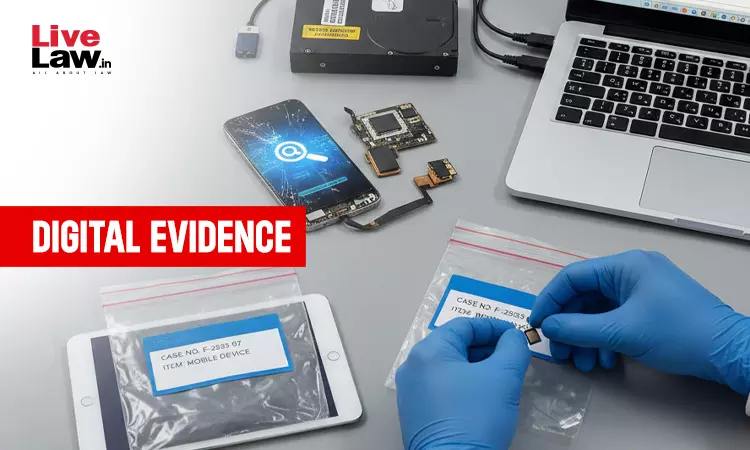
Today, digital evidence has changed the way criminal investigations are conducted. Mobile phones, laptops, CCTV cameras, emails, cloud storage and messaging applications have become important sources of evidence. The Bharatiya Sakshya Adhiniyam, 2023 (“BSA”) recognises electronic records as documentary evidence [Sections 2(1)(d) and 2(1)(e)] and provides a special mechanism for proving secondary electronic records u/s 63. Under Section 63(4), such records must be accompanied by a certificate in the form prescribed in the Schedule to the BSA.
The certificate is divided into two parts. Part A inter alia requires disclosure of hash value of the electronic records in addition to the declaration required under the erstwhile Section 65B of the Indian Evidence Act, 1872 (“IEA”). Part B of the certificate requires a further declaration signed by an expert. It is this additional requirement that gives rise to the principal difficulty. While safeguards against manipulation of electronic evidence are necessary, the law must also consider whether the means adopted to secure reliability are proportionate to the burden they impose on litigants. This article argues that mandatory expert certification places an onerous financial, technical and procedural burden on litigants and have, in practice, prevented genuine and relevant electronic evidence from being placed before the court.



[Part B, Schedule, BSA. See section 63(4)(c)]
From Flexibility to Mandatory Certification :
The judicial approach to electronic evidence has undergone considerable development. In State (NCT of Delhi) v. Navjot Sandhu, the Hon'ble Supreme Court adopted a liberal approach by permitting secondary electronic evidence to be proved in the same manner as other documentary evidence. This position, however, was subsequently altered in Anvar P.V. v. P.K. Basheer, where the Court held that secondary electronic evidence could not be admitted unless the requirements of Section 65-B, IEA were satisfied. The subsequent decision in Shafhi Mohammad vs the State of Himachal Pradesh watered down the requirement of a certificate in cases where the person producing the computer output is not in possession of the device on the basis of which a certificate is required to be issued under section 65-B, IEA. However, the larger Bench in Arjun Panditrao Khotkar v. Kailash Kushanrao Gorantyal restored certainty by reaffirming the mandatory nature of the statutory certificate. In Ravinder Singh @ Kaku vs State of Punjab, it was observed that the electronic evidence produced before the court should have been in accordance with the statute and should have complied with the certification requirement, for it to be admissible in the court of law.
The position has now been carried into the BSA. Most recently, in Pune Bar Association v. Union of India, the Hon'ble Supreme Court reiterated that the certificate requirement under Section 63 of the BSA remains mandatory and cannot be substituted through oral evidence.
The introduction of expert certification was intended to strengthen the reliability of electronic evidence. At first glance, the requirement appears to be a safeguard against tampering and manipulation of digital records. However, in practice, it creates significant procedural and financial hurdles for litigants without offering any meaningful improvement in the authenticity of electronic evidence.
The practical burden of mandatory expert certification :
The first difficulty is the availability of experts. Although Section 79A of the Information Technology Act, 2000 empowers the Central Government to notify Examiner of Electronic Evidence, only a limited number of laboratories have been notified. Their geographical reach is limited, and many litigants residing in smaller towns or rural areas have no practical access to such facilities. Although the Apex Court in Pune Bar Association (Supra), observed that in addition to entities notified as Examiner of Electronic Evidence under Section 79A, ITA, if the Court is satisfied, on the basis of unimpeachable material, that any other person has special skill and expertise in computer science and cyber forensics, opinion of such person may be held relevant as an expert with regard to electronic/digital record and such person may sign Part B of the Schedule as an expert, the court refrained from giving any conclusive opinion on this issue and kept the question of law open.
The requirement, therefore, assumes the availability of both qualified experts and adequate forensic infrastructure, an assumption that is difficult to sustain given the existing limitations of Indian Forensic Science Laboratories. Even where private forensic experts are available, questions often arise regarding whether their certification satisfies the statutory requirement. This uncertainty defeats the very purpose of creating a clear procedural rule.
The second difficulty is cost. Forensic examination is not ordinarily a free service. Examination of a device, extraction of data, preparation of a forensic report and certification may involve substantial expenditure. Such costs may be manageable for a large corporation or a State investigating agency, but the position is very different for an individual litigant. A person seeking to rely upon an email, WhatsApp conversation, photograph, audio recording or CCTV footage should not be required to incur disproportionate expenditure merely to cross a procedural threshold before the court can examine the evidentiary value of that material.
The burden becomes particularly serious in civil and private disputes. The State, in criminal proceedings, may have access to investigative agencies, forensic laboratories and technical personnel. A private litigant ordinarily does not enjoy the same institutional resources. If every secondary electronic record must undergo expert examination before it can be relied upon, the inequality between parties with different financial and institutional capacities becomes more pronounced. A procedural rule that is formally neutral may, therefore, operate unequally in practice.
An expert certificate may establish the manner in which an electronic record was produced and the integrity of the process, but it does not by itself prove the truth or genuineness of its contents. Making such certification mandatory may therefore give undue importance to procedure at the cost of substantive justice, when the ultimate assessment of the evidence remains with the court.
There is also the question of delay. Electronic evidence is now produced routinely in litigation. If every such record requires expert certification, parties may have to wait for forensic examination before the evidence can meaningfully be considered. The existing limitations of forensic infrastructure can make this process even slower. The result is that a requirement intended to protect the integrity of evidence may itself contribute to the delay that the justice system is already struggling to address.
These concerns must also be viewed in light of Article 21. In Anita Kushwaha v. Pushap Sudan, the Hon'ble Supreme Court recognised access to justice as an essential facet of the right to life and dignity. A procedural requirement that makes it unduly difficult for a litigant to place relevant evidence before the court must therefore be tested against this constitutional guarantee.
A Lesson from the United Kingdom :
Section 65-B, IEA substantially drew from the Civil Evidence Act, 1968 of the United Kingdom, particularly clauses (2)-(6) of section 5 concerning the proof of computer records. Interestingly, the UK's own experience with these provisions soon revealed their limitations.
The UK Law Commission in its 1993 report titled “the hearsay rule in civil proceedings”, had observed that section 5 appeared to have been an “afterthought” and recommended that concerns regarding authenticity and reliability should ordinarily be addressed through the weight of the evidence rather than rigid admissibility conditions (para 3.14, 3.16). Section 5 was consequently repealed by the Civil Evidence Act, 1995. A parallel provision existed under Section 69 of the Police and Criminal Evidence Act, 1984. The requirement was also found to be unnecessary and was ultimately repealed by the Youth Justice and Criminal Evidence Act, 1999. Even before its repeal, Regina v Shepherd [1993] 2 WLR 102 demonstrated that the reliability of computer-generated evidence could be established through oral evidence, without making certification the exclusive method of proof.
Thus, while UK moved away from these technology-specific certification requirements after recognising them as outdated, India retained the basic model under Section 65-B and has now introduced an additional expert declaration under Part B of the Schedule to the BSA.
Towards a more proportionate approach :
The answer does not lie in abandoning safeguards for electronic evidence. The authenticity and integrity of digital material must remain central to its evaluation. The question is whether the law can achieve that objective through a less burdensome mechanism.
A more balanced approach would adequately protect the integrity of electronic evidence while ensuring access to justice. Instead of requiring mandatory expert certification, the law should permit the party producing secondary electronic evidence to file a sworn affidavit affirming the source of the electronic record, the manner in which it was obtained and its authenticity to the best of the deponent's knowledge. Such an affidavit would make the deponent accountable for the truthfulness of the statements made therein and expose the person to prosecution for perjury if the declaration is found to be false.
Where the opposing party specifically disputes the genuineness of the electronic record or raises credible allegations of tampering, the court should retain the power to seek expert opinion under Section 39 of the BSA, which recognises the relevance of opinions on matters requiring specialised knowledge. Expert opinion should therefore be directed where the circumstances of the case genuinely require it, rather than being imposed as a mandatory procedural requirement in every case. It would reduce unnecessary costs, minimise delays and make electronic evidence more accessible, particularly for economically weaker litigants, while continuing to preserve adequate safeguards against fabricated digital evidence.
Electronic evidence has become a regular feature of modern litigation. The law must therefore protect its integrity without making its use unnecessarily difficult. Section 63 of the BSA rightly recognises the special characteristics of electronic records, but the mandatory expert certification contemplated by Part B of the Schedule raises serious practical concerns.
A safeguard cannot be permitted to become a barrier. Where a litigant has genuine electronic evidence but lacks the financial or technical ability to obtain expert certification, exclusion of that evidence may result in the court deciding a dispute without considering material that could assist in reaching the truth. The better course is to permit other reliable modes of establishing authenticity and to reserve expert examination for cases where the genuineness or integrity of the electronic record is genuinely disputed. Such an approach would preserve evidentiary safeguards while ensuring that procedural requirements remain servants of justice, and do not become its substitute.
Author Mayank Makhija is a practicing LCTawyer at Supreme Court of India and former Special Public Prosecutor for Enforcement Directorate & Mr. Naman Sharma is a final year student at Maharashtra National Law University, Nagpur. Views are personal.


