



Can Woman Commit Gang Rape? Deciphering Gender Neutrality Of “Persons” Under Section 70 BNS
Dr. Raghvendra Kumar Chaudhary & Yash Chandel
12 Nov 2026 10:00 AM IST
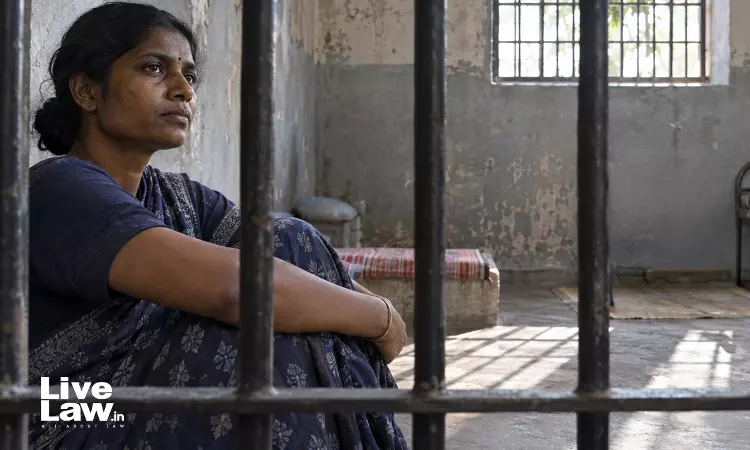
On 15 October 2026, Justice Anup Jairam Bhambhani of the Delhi High Court held that a woman can be charged with gang rape under Section 376D IPC and Section 70 BNS, even though she did not commit the physical act. The accused in ANSXXX v. State of NCT of Delhi (2026 LiveLaw (Del) 1009) was the victim's own mother. The allegation was that she threatened her minor daughter with death unless the girl submitted to the co-accused, and stayed in the room while the assaults took place over several months.
On those facts, few will lose sleep over the result. The difficulty lies elsewhere. Section 63 BNS still opens with the words “A man is said to commit rape”. Section 70 then says that each of the “persons” in a group, or acting in furtherance of a common intention, “shall be deemed to have committed the offence of rape”. The judgment reads that second word gender-neutrally while expressly declining to touch the first. A woman is therefore deemed to have committed an offence that the same statute says she cannot commit.


Before 2013, gang rape was not a freestanding offence. It sat in Section 376(2)(g) IPC as an aggravated form of rape, explained by Explanation 1: where a woman is raped by one or more in a group of persons acting in furtherance of their common intention, each is deemed to have committed gang rape.
The Supreme Court read that text in Priya Patel v. State of M.P. (2006) 6 SCC 263. The appellant was the wife of the man accused of rape, and she was said to have facilitated it. The Court held that rape could only be committed by a man, that the common intention in the Explanation was an intention to commit rape, and, in a line that has been quoted ever since, that “a woman cannot be said to have an intention to commit rape.” State of Rajasthan v. Hemraj (2009) 12 SCC 403 followed it.
That did not mean such women walked free. The practice that grew up around Priya Patel was to charge them with abetment under Section 109 IPC or criminal conspiracy under Section 120B. Both routes attach liability to a woman's own conduct, without pretending she did something the definition of rape rules out. The BNS carries those tools forward, in Sections 45 to 49 for abetment and Section 61 for conspiracy. Under Section 49, an abettor whose abetment results in the offence faces the same punishment as the principal. The gap the High Court was asked to close, in other words, was never a gap in liability.
A Statute That Chose Its Words
The BNS is not an old statute whose drafters never imagined women as offenders. It was enacted in 2023, after a decade of argument about gender-neutral sexual offences. Its drafters plainly thought about gender. Section 2(10) now says the pronoun “he” covers any person, “whether male, female or transgender”, a change High Courts have already relied on to give the categories real legal weight. Section 2(19) defines “man” as a male human being. And Section 63 still begins with “A man”.
That choice has a history. The petitioners pointed out that the Criminal Law (Amendment) Bill, 2012 had proposed replacing “man” with “person”, and that the proposal was dropped. They also pointed out that the Justice J.S. Verma Committee had recommended that gang rape cover accused persons regardless of gender, and Parliament did not adopt that wording. When the legislature has considered gender neutrality, rejected it in 2013 and declined to revisit it in 2023, a court should be slow to find it in a general word like “persons”.
The dissonance is structural, not cosmetic. Section 70 contains no definition of rape of its own. It borrows Section 63 and adds a deeming fiction. If the borrowed offence can only be committed by a man, a reading that lets the fiction reach a woman as a principal offender gives Section 70 a meaning its source provision denies.
The Best Case for the Judgment
The Court's reasoning deserves to be taken on its strongest terms, and they are stronger than the headlines suggest.
First, the 2013 amendment moved gang rape out of an Explanation and into Section 376D, a separate offence, now Section 70 BNS. Priya Patel interpreted an Explanation attached to a punishment clause, which by nature could not travel beyond Section 375. A substantive offence can. The Court held that it was giving “persons” its ordinary and strict meaning, not widening the definition of rape.
Second, the wording changed in a small but telling way. The old Explanation spoke of “their common intention”. Section 70 speaks of “a common intention”. The learned Amicus argued that the shared intention is now that rape be committed on the victim, not that each member personally intends to commit it. That answers the Priya Patel objection head-on. A woman may be incapable of committing rape under Section 63, but she is perfectly capable of intending that it happen.
Third, Section 63 itself is less closed than its opening words suggest. Each of clauses (a) to (d) covers a man who “makes her to do so with him or any other person”. The definition already pictures other participants. And on common intention generally, the Privy Council in Barendra Kumar Ghosh settled long ago that a participant need not perform the fatal act to share liability for it. The same Bench had also held in Sundari Gautam that penetrative sexual assault under POCSO is gender-neutral. The ruling fits that line.
Where the Reasoning Strains
The trouble starts with the Court's own qualification. In paragraph 87 it clarifies that a woman alone cannot be charged with gang rape, since that would not fit the definition in Section 63. Think about what follows. Two women who together commit an act covered by Section 63(b) on a victim have not committed gang rape, because neither is a man. A woman who stands by while a man does the same act has. The “persons” in Section 70 turn out to be gender-neutral only when at least one of them is male. That is not gender neutrality. It is accessory liability for a man's rape, relabelled as the woman's own commission of it.
Second, the precedent problem is handled lightly. The operative words, “persons” and “acting in furtherance of a common intention”, were carried into Section 376D almost verbatim from the Explanation that Priya Patel and Hemraj construed. The ratio of those cases rested on the definition of rape, and that definition still names a man. The shift from “their” to “a” is a respectable argument, but it is a thin one on which to distinguish two Supreme Court decisions. The Court's own discussion leans on legislative structure rather than meeting their reasoning directly.
Third, deeming fictions in penal law are read narrowly. In Sher Singh v. State of Haryana (2015) the Supreme Court called it abhorrent to criminal jurisprudence to hold a person guilty without intention or participation, and confined the fiction in Section 304-B accordingly. A fiction in Section 70 that was meant to spread liability among the members of a group is here asked to do something more: extend the offence to a class of persons whom the definition shuts out.
The stakes make this more than a drafting quibble. Section 70(1) carries a minimum of twenty years. Section 70(2), where the victim is under eighteen, carries life for the rest of natural life, or death. A general word should not be the hinge on which a person becomes exposed to capital punishment, when Parliament had the specific word before it and declined to use it.
Nor does Sundari Gautam carry the weight placed on it. Section 3 of POCSO opens with “A person”. Section 63 BNS opens with “A man”. Sundari Gautam itself drew exactly that distinction and left “man” alone.
Holding the Ladder
The judgment opens with a German proverb: he who holds the ladder is as guilty as the thief. True. But the law has always had a name for the person holding the ladder, and it is not “thief”.
Nothing in this case required the Court to take the harder road. The charge under Section 6 of POCSO was upheld anyway, on the strength of Sundari Gautam. Abetment under Section 49 BNS, read with Section 70, would have exposed the mother to the same punishment as the men, because an abettor whose abetment succeeds is punished as the principal. Conspiracy under Section 61 was also available. Every one of those routes attaches full liability to what she actually did, without asking the word “persons” to overrule the word “man”.
The Court was careful to leave open whether “man” in Section 63 is itself gender-neutral, and its remark that the expanded acts in Section 63 can equally be committed by non-male offenders reads like an invitation. That debate is worth having. It belongs to Parliament, or at the least to a Bench able to revisit Priya Patel. Until then, collective liability is a sound principle applied to the wrong provision. The mother in this case should face trial. She should face it for the offence the statute says she can commit.
Author Raghvendra Kumar Chaudhary is an Assistant Professor at School of Law, CHRIST (Deemed to be University), Delhi NCR Campus & Yash Chandel is a Law student at Banaras Hindu University, Varanasi. Views are personal.


