


Corporate

CBDT Extends Deadlines For Filing Of Income Tax Return In Audit Cases For A.Y. 2025-26
The Central Board of Direct Taxes (CBDT) has extended the due date of furnishing of the Return of Income and tax audit reports for the Assessment Year (A.Y.) 2025-26.The revised due dates for submitting audit reports and Income Tax Returns are November 10, 2025 and December 10, 2025, respectively. The CBDT announced that the due date for furnishing the Income Tax Return under Section 139(1)...

Mumbai ITAT Quashes ₹445 Crore Transfer Pricing Adjustment Against Netflix India
The Income Tax Appellate Tribunal (ITAT) Mumbai has recently set aside a Rs 445 crore transfer pricing adjustment on Netflix India for financial year 2021-22, rejecting the Revenue's claim that the company, as a licensee of its streamed content, owed higher taxes.The authorities had imposed the tax because they treated Netflix India, the Indian arm of US-based streaming giant Netflix, as...
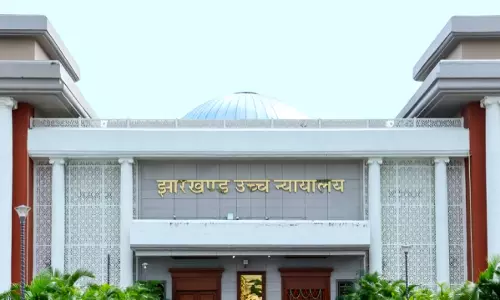
Monetary Compensation Must Be Granted From Date Of Application When Compassionate Appointment Is Denied: Jharkhand HC
A Division bench of the Jharkhand High Court comprising Chief Justice Tarlok Singh Chauhan and Justice Rajesh Shankar held that if compassionate appointment is denied then employer must grant the monetary compensation from date of application for the compassionate appointment. Background Facts The employee was a Piece Rated worker at Central Coalfields Limited (CCL) Dhori...
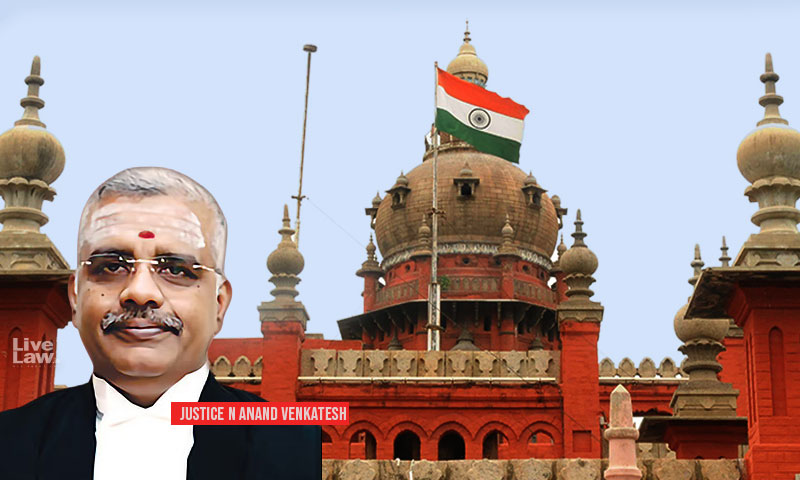
Petition U/S 34 A&C Act Filed With Deficit Court Fee Is Non-Est Unless Paid Within Limitation Period: Madras High Court
The Madras High Court held that filing of a petition with deficit court fee does not amount to proper presentation. If the entire court fee is not deposited within the limitation period under section 34(3) Arbitration and Conciliation Act, 1996 (Arbitration Act), the court is divested of its power to condone the delay. Justice N. Anand Venkatesh held that "filing of a petition...
Test Of Prejudice Irrelevant When Tribunal Is Constituted Without Consent Of JV Partner: Madras High Court Sets Aside Arbitral Award
The Madras High Court set aside an arbitral award passed against M/s Nilakantan & Brothers Constructions Pvt. Ltd. (“the petitioner”) on the ground that since the arbitral tribunal was constituted without obtaining the consent of a Joint Venture Partner, it lacked jurisdiction. The court further held that the appointment cannot be validated merely on the ground that no...

AO Cannot Rely Solely On Sales Tax Dept Data To Add Bogus Purchases Without Granting Cross-Examination: Bombay High Court
The Bombay High Court has held that the Assessing Officer (AO) cannot rely solely on Sales Tax Department Data for an income tax addition without granting cross-examination.Justices G.S. Kulkarni and Aarti Sathe stated that, "when the VAT assessment was pending adjudication, merely relying on the information of the Sales Tax Department without granting an opportunity to the Assessee...
Advance Received Towards Sale Of Land Not Liable To Service Tax: CESTAT
The New Delhi Bench of Customs, Excise, and Service Tax Appellate Tribunal (CESTAT) has stated that the amount of advance received by the assessee with respect to the sale of land is out of the scope of applicability of the provisions of the Finance Act, and hence, no service tax is leviable. Dr. Rachna Gupta (Judicial Member) and A.K. Jyotishi (Technical Member) stated that the...
SEBI Has Cleared Modified Demerger Scheme: Vedanta Informs NCLT
Anil Agarwal led Vedanta Limited on Wednesday told the National Company Law Tribunal (NCLT), Mumbai that Securities and Exchange Board of India (SEBI) has cleared its revised demerger plan after earlier warnings on disclosure and compliance issues.Vedanta, a multi-national conglomerate engaged in the business of natural resources exploration intends to split its aluminium, oil and gas, power,...

Appeal Against Order U/S 39(2) Arbitration Act Is Not Maintainable U/S 13 Commercial Courts Act: Karnataka High Court
The Karnataka High Court dismissed an appeal under section 37 of the Arbitration and Conciliation Act, 1996 (Arbitration Act), holding that no appeal under section 13 of the Commercial Courts Act lies against an order passed under section 39(2) of the Act. The court further held that the appeal under section 13 of the Commercial Courts Act is maintainable against those orders...

Award Passed After Expiry Of Arbitrator's Mandate Is Non-Est, Court Can't Extend Mandate Post-Award: Delhi High Court
The Delhi High Court held that an award passed after expiry of the arbitrator's mandate is non-est and unforceable holding that the court has no power to extend the mandate post award if no application seeking extension of the mandate was pending before the award was passed. A Division bench of Justice V. Kameswar Rao and Justice Vinod Kumar held that the award becomes operational...
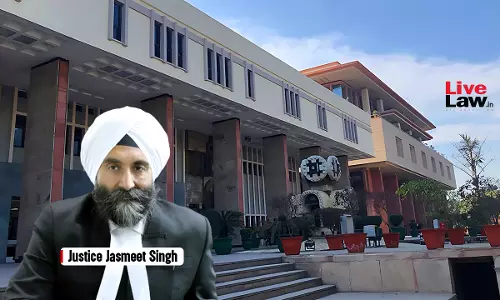
Order Terminating Arbitration For Non-Filing Of Statement Of Claim Is Not 'Award', Cannot Be Challenged U/S 34 A&C Act: Delhi High Court
The Delhi High Court held that an order terminating arbitral proceedings under section 25 of the Arbitration and Conciliation Act, 1996 (Arbitration Act) on account of non-filing of statement of claim does not amount to an arbitral award and therefore cannot be challenged under section 34. Justice Jasmeet Singh held that “the Award can only be considered to be an award once...
Crowd-Sourced Information Available On Platforms Like Wikipedia Cannot Be Relied Upon To Fasten Tax Liability: CESTAT
The New Delhi Bench of Customs, Excise, and Service Tax Appellate Tribunal (CESTAT) has stated that crowd-sourced information available on platforms like Wikipedia cannot be relied upon to fasten tax liability on the assessee. The Tribunal opined that Wikipedia is an open source information available online and anyone can write about the topic and anyone else can edit...