


Corporate

Income Tax Act | Payment For IPLC Services Not 'Royalty' U/S 9; Assessee Entitled To Deduction U/S 40(a)(i): Madras High Court
The Madras High Court has held that payment for IPLC (International Private Leased Circuits) Services does not constitute 'royalty' under Section 9 of the Income Tax Act, and that the assessee is entitled to a deduction under Section 40(a)(i) of the Income Tax Act. Chief Justice Manindra Mohan Shrivastava and Justice Sunder Mohan examined whether the payment made by the assessee for...

NCLT Kolkata Pulls Up Insolvency Professional For Appearing In Vest During Virtual Hearing, Issues Contempt Notice
The National Company Law Tribunal at Kolkata has recently issued a criminal contempt show-cause notice to insolvency professional Subrato Ghosh for appearing in a virtual hearing wearing only a vest/baniyan. The incident took place during the insolvency proceedings initiated by SREI Equipment Finance Ltd against Samsara Energy Ltd. A coram of Judicial Member Labh Singh and Technical Member...
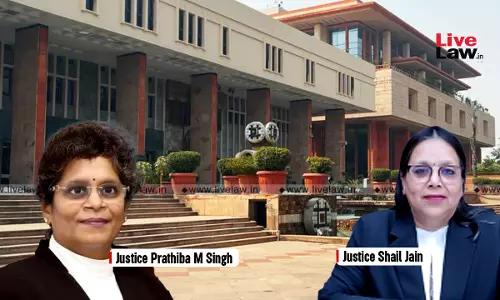
Delhi High Court Allows Consolidated Appeal Against Single GST Demand Order Covering Multiple Financial Years
The Delhi High Court has allowed the filing of a consolidated appeal in a matter where a 'common and single' order was issued, although the demand pertained to multiple financial years. In an order dated November 18, 2025, the Division Bench comprising Justice Prathiba M. Singh and Justice Shail Jain allowed the Petitioner to take recourse to a single consolidated appeal...

NCLT Delhi Clears ₹3,800-Crore MAHAGENCO–NTPC Plan To Revive Sinnar Thermal Power
The National Company Law Tribunal (NCLT) at Delhi has recently approved a ₹3,800 crore resolution plan jointly submitted by public sector power companies, Maharashtra State Power Generation Company (MAHAGENCO) and National Thermal Power Corporation (NTPC) to revive the defunct Sinnar Thermal Power Limited in Maharashtra, holding that the proposal met all requirements under the Insolvency...

Intellectual Property Rights Weekly Round-Up: November 24–30, 2025
NOMINAL INDEX Hi Tech Chemicals Limited v. Deputy Controller of Patents and Designs & Anr., C.M.A. (PT) No. 43 of 2023 Living Media India Limited and Anr v. Amar Ujala Limited and Ors, CS (COMM) 1238/2025 Visage Beauty and Healthcare Private Limited v. Freecia Professional India Private Limited & Anr., CS(COMM) 633/2022 ITC Limited v. Pelican Tobacco Co Ltd &...

Consumer Law Monthly Digest: November 2025
Supreme Court Company Purchasing Software To Enhance Efficiency & Profit Is Not A “Consumer” Within Consumer Protection Act: Supreme Court Cause Title: M/S POLY MEDICURE LTD. VERSUS M/S BRILLIO TECHNOLOGIES PVT. LTD Citation : 2025 LiveLaw (SC) 1102 The Supreme Court on Thursday (November 13) ruled that a person purchasing a product for a 'commercial purpose' having...
Bombay High Court Dismisses Plea Challenging WeWork India IPO, Imposes ₹1 Lakh Cost On Petitioner
The Bombay High Court on Monday dismissed two petitions challenging the IPO of WeWork India, bringing an end to an attempt by two retail investors to stop or modify the company's public issue over allegations of inadequate disclosures.A division bench of Justice R I Chagla and Justice Farhan A Dubash dismissed the petition filed by an invetsor Hemant Kulshreshtha with no order as to costs,...
Chandigarh Consumer Commission Orders WTC Developers To Refund ₹18.90 Lakh For Failure To Deliver Possession
The District Consumer Disputes Redressal Commission-II, U.T. Chandigarh, comprising Mr. Amrinder Singh Sidhu (President) and Mr. Brij Mohan Sharma (Member), has held WTC Chandigarh Development Co. Pvt. Ltd. and WTC Noida Development Co. Pvt. Ltd. liable for deficiency in service for failing to deliver possession of a commercial unit within the stipulated time despite...
NCLT Orders Opulent Infradevelopers' Directors To Repay Rs 10.46 Crore For Fraudulent Transactions
The National Company Law Tribunal (NCLT) at New Delhi has ordered suspended directors of insolvent Opulent Infradevelopers to personally contribute Rs 10.46 crore back to the company after finding that they ran the business “with intent to defraud creditors” by making unauthorised donations, advancing interest-free loans, falsifying accounts and booking fictitious expenses. The order...

Delhi Court Lets Izuk Impex Challenge Validity of Health-Care Firm's '5 STAR' Trademark
A Delhi District Court has allowed Izuk Impex, a herbal hair product manufacturer to challenge the validity of the “5 STAR” trademark owned by Five Star Health Care LLP, saying objection appears prima facie tenable. District Judge Pritam Singh of the Saket Courts passed the order on November 7, 2025, in a trademark infringement case filed by Izuk Impex. The company has accused Five...

Kerala High Court Grants Interim Protection To 'Bokashi Bucket' Mark, Bars Sale Of Identical Compost Bins
The Kerala High Court has put a temporary restraint on a Kozhikode-based business from making or selling compost bins using the name “Bokashi Bucket,” after finding that the term is a registered trademark owned by Global Pharmaceuticals. A single bench of Justice S Manu passed the order on November 18, 2025, overturning a Additional District Court order refusing to grant protection to...
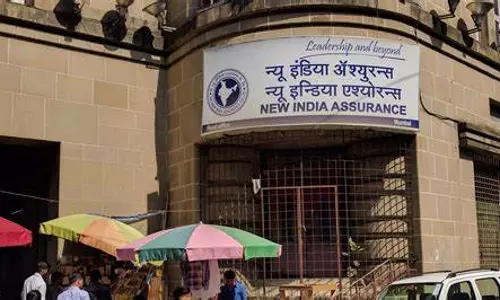
Renewal Application Within One Year Saves Insurance Claim Despite Expired Transport Licence, Holds Punjab Consumer Commission
The Chandigarh State Consumer Disputes Redressal Commission, comprising Justice Daya Chaudhary (President) and Vishav Kant Garg (Member), held that although the driver's transport licence had expired on the date of the accident, his application for renewal had been filed within the one-year statutory window under Section 15(1) of the Motor Vehicles Act, 1988, and therefore the lapse...