




CPC
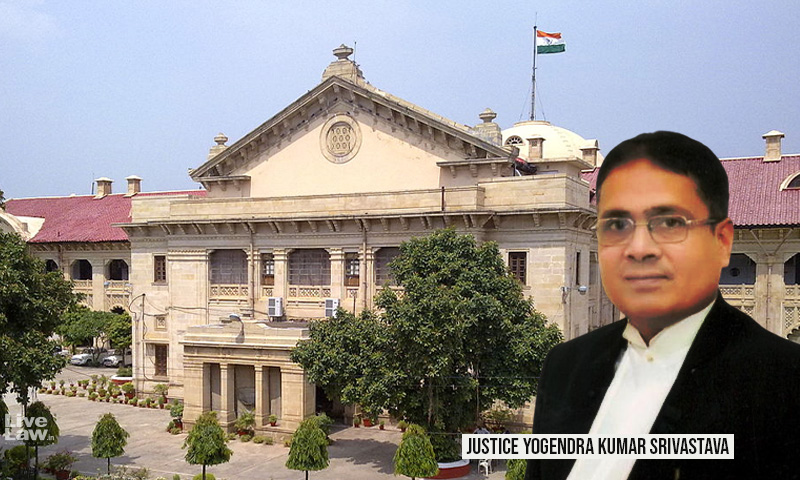
Execution Not A Nullity Merely Because Name Of Deceased Joint Decree-Holder Figures In Execution Application: Allahabad High Court
The Allahabad High Court has held that an execution proceeding is not rendered a nullity merely because the name of a joint decree-holder who had died before its institution continued to be shown in the execution application, where the execution was invoked by a surviving joint decree-holder competent to execute the whole decree.Order XXI Rule 15 of the Code of Civil Procedure permits any one...
Writ Petition Not Maintainable Once Statutory Revision Against Same Order Is Withdrawn As 'Not Pressed': Allahabad High Court
The Allahabad High Court has held that a writ petition under Article 226 is not maintainable where the petitioner had already challenged the same order in a statutory revision and then got the revision concluded as “not pressed”. Such a withdrawal, it held, amounts to abandonment of the claim and attracts the Rule of Public Policy.The Rule of Public Policy, as the Court explained it, bars a fresh suit where the earlier suit has been abandoned and is enshrined in Order XXIII Rules 1 to 4 of the...
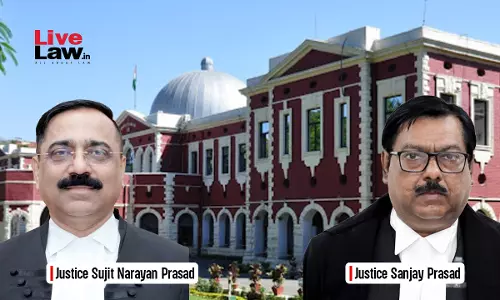
Mother's Non-Appearance In Guardianship Case No Ground To Modify Interim Custody Order: Jharkhand High Court
The Jharkhand HC has held that the alleged non-appearance of a party in a pending guardianship proceeding cannot be made a ground for seeking clarification or modification of an earlier order under Section 151 CPC, as it is for the concerned trial court to deal with the non-appearance in accordance with law.A Division Bench of Justice Sujit Narayan Prasad and Justice Sanjay Prasad was hearing...

Kerala High Court Directs Speedy Decision In Jiostar's Appeal Against Halt On 'Anali' Series Allegedly Based On Koodathayi Murders
The Kerala High Court on Tuesday (October 13) directed the expeditious hearing and disposal of an appeal filed by Jiostar Pvt. Ltd. challenging a temporary injunction passed restraining the release of Hotstar webseries Anali, which is allegedly based on the Koodathayi murders. [2026 LiveLaw (Ker) 575]The injunction suit was filed by Jollyamma Joseph @ Jolly, who is accused of the murders....

Will Can't Be Invalidated For Undue Influence Merely Because Beneficiary Son Was Caring For Aged Father: Allahabad High Court
The Allahabad High Court has held that the advanced age of a testator, taken together with the fact that the son in whose favour the Will was made was looking after him and his property, does not by itself raise a presumption of undue influence. It held that a registered Will, which carries a presumption of validity, cannot be cancelled on that ground alone.Justice Siddharth Nandan...
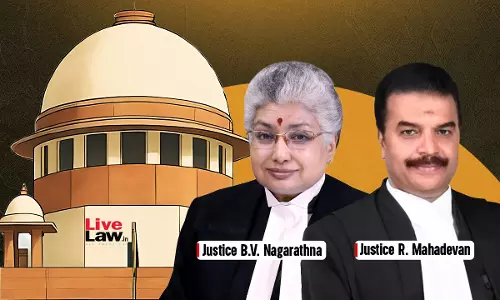
Order VI Rule 17 CPC | Amendment Permissible If Additional Facts & Reliefs Have Direct Nexus With Existing Controversy: Supreme Court
"The real inquiry is whether the amendment introduces a distinct and independent controversy having no connection with the original cause of action, or whether it merely brings on record additional facts and consequential reliefs having a direct nexus with the existing controversy."
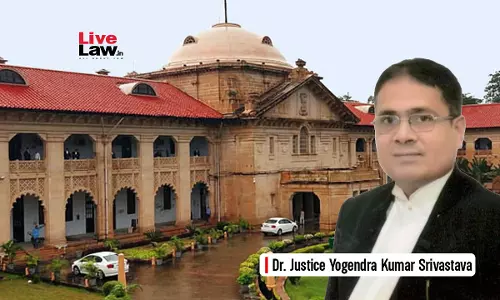
UP Tenancy Act 2021 | Plaint Can't Be Rejected Where Defence Raises Questions Beyond Scope Of Rent Authority: Allahabad High Court
The Allahabad High Court has held that a defendant cannot obtain rejection of a plaint by invoking the bar on civil court jurisdiction in Section 38(1) of the U.P. Regulation of Urban Premises Tenancy Act, 2021 when the defence he himself sets up raises questions which, under Section 38(2), the Rent Authority has no jurisdiction to decide.Section 38(1) of the Act of 2021 bars a Civil Court...
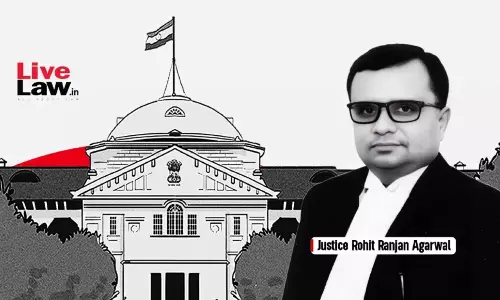
Order VI Rule 17 CPC | Subject-Matter Jurisdiction Must Be Decided Before Application For Amendment Of Plaint: Allahabad High Court
The Allahabad High Court has held that where a defendant's application under Order VII Rule 10 and Rule 11 CPC raises the issue of subject-matter jurisdiction, it must be decided before the plaintiff's application to amend the plaint under Order VI Rule 17 CPC. It held that a court lacking subject-matter jurisdiction cannot order an amendment that would bring the suit within its jurisdiction,...
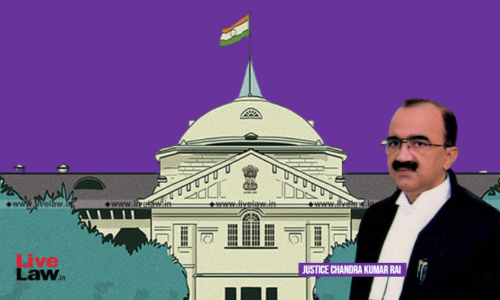
Decree Affirmed Up To Supreme Court Can't Be Reopened For Alleged Collusion When State Contested At Every Stage: Allahabad High Court
The Allahabad High Court has held that the State cannot resist execution of a decree by pleading collusion between the decree holder and State authorities, where it contested the suit and every appeal from the Trial Court up to the Supreme Court.Justice Chandra Kumar Rai held,“The judgements from Trial Court to Apex Court further demonstrate that at every stage, State was given...

Karnataka High Court Allows Minor To Change Name For Astrological Beliefs
Court held everyone has right to be recognized by their name.

Civil Court Can Direct Police Assistance To Enforce Injunction Order Under Section 151 CPC: Himachal Pradesh High Court
The Himachal Pradesh High Court has held that a civil court can, in exercise of its inherent powers under Section 151 CPC, direct the police authorities to assist in the implementation of an injunction order. The Court observed that the availability of a remedy under Order 39 Rule 2A CPC does not bar a party from seeking police assistance for effective enforcement of an injunction.Justice...
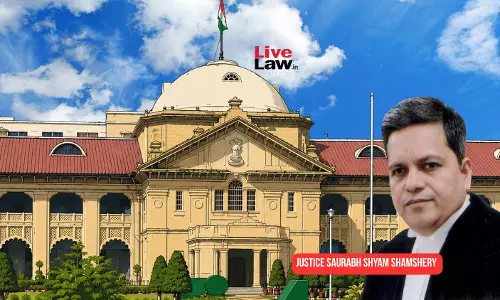
Suit Not Liable To Dismissal For Want Of Permission To Sue In Representative Capacity, But Outcome Binds Only Parties: Allahabad High Court
The Allahabad High Court has held that a suit filed in a representative capacity under Order 1 Rule 8 CPC is not liable to be dismissed merely because the permission of the Court was never sought. It held that the only consequence is that it is treated as a suit by the plaintiffs alone, binding only the parties to it.Justice Saurabh Shyam Shamshery held,“As referred above, purpose of Order...