




CPC
Appeal Can't Be Rejected Over Delay In Communication Of Judgement By Lawyer In Absence Of Gross Negligence: Gujarat High Court
The Gujarat High Court has said that non-communication of a judgement by the lawyer to the party cannot disadvantage the latter resulting in rejection of appeal on ground of delay when the very lawyer has filed the appeal, specially in absence of gross negligence. [2026 LiveLaw (Guj) 252]The court was hearing a man's plea challenging an appellate court's order refusing to condone 27 day delay...
Tenant's Plea That Possession Was Never Delivered Requires Evidence; Can't Reject Rent Case Under Order 7 Rule 11: Allahabad High Court
The Allahabad High Court has held that a tenant's plea that possession was never handed over under an executed rent deed, and that no landlord-tenant relationship therefore came into existence, raises a disputed question of fact which cannot be decided on an application under Order VII Rule 11 CPC.Justice Dr. Yogendra Kumar Srivastava held,“The plea of non-delivery of possession raised by...
Civil Suits Can Be Consolidated If Issues Are Similar And Common Evidence Sufficient To Decide: MP High Court
The Madhya Pradesh High Court has held that civil suits may be consolidated only when the issues involved in the suits are similar, and the common evidence is sufficient to decide those issues. [2026 LiveLaw (MP) 379]Dismissing a revision petition challenging the order that rejected the plea for consolidation, the bench of Justice Ashish Shroti observed: "Thus two suits can be, and should...
Once Trial On All Issues Has Started, One Issue Cannot Be Tried As Preliminary: : Supreme Court Explains Order XIV Rule 2(2) CPC
The Supreme Court today (21 September) held that a civil court cannot direct that an issue be tried as preliminary issue under Order XIV Rule 2(2) of the Code of Civil Procedure, 1908 once it has begun trying all the issues together.A bench of Justice KV Viswanathan and Justice Arun Palli set aside the orders of the trial court, the first appellate court and the Kerala High Court. The trial...
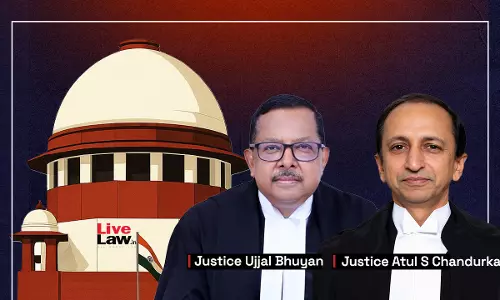
O 7 Rule 11 CPC | Admissibility Of Document Cannot Be Decided While Considering Rejection Of Plaint : Supreme Court
The Supreme Court has recently held that the question of admissibility of a document relied upon by a plaintiff is a matter to be adjudicated at the trial, and cannot be considered while seeking rejection of a plaint under Order VII Rule 11(a) or (d) of the Code of Civil Procedure, 1908 (CPC).A bench of Justice Ujjal Bhuyan and Justice Atul S Chandurkar ruled so while allowing an appeal filed...
S. 92 CPC | Civil Court Cannot Pass Interim Orders While Leave Application Is Pending Against Public Trust: Supreme Court
The Supreme Court on Friday (September 18) held that a Civil Court cannot pass protective or preservatory interim orders while an application seeking leave to institute a suit under Section 92 of the Code of Civil Procedure, 1908 is pending. Since, obtaining a prior leave of the court is mandatory to file a representative suit under Section 92 CPC when it is filed by individuals, a bench...
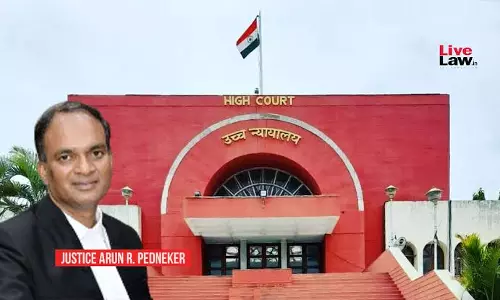
Subsequent Declaration Of Property Under Slum Area Doesn't Bar Execution Of Pre-Existing Eviction Decree: Bombay High Court
The Bombay High Court has held that a subsequent declaration of a property as a Slum Area does not, by itself, require permission of the Competent Authority under Section 22(1)(b) of the Maharashtra Slum Areas (Improvement, Clearance and Redevelopment) Act, 1971, where execution proceedings for an eviction decree had already been instituted before such declaration. The Court observed that...

Address Not Needed For Suits Against Unknown Persons: Kerala High Court Directs Numbering Of Plea Over Anonymous 'Kattalan' Film Reviews
The Kerala High Court has directed the Principal Munsiff Court, Ernakulam to number a suit preferred by production company M/s Cubes Entertainments seeking removal of the reviews of the Malayalam movie 'Kattalan' from BookMyShow platform. [2026 LiveLaw (Ker) 503]Justice Easwaran S. set aside the munsiff court's order rejecting the plaintiff's application seeking exemption from complying...
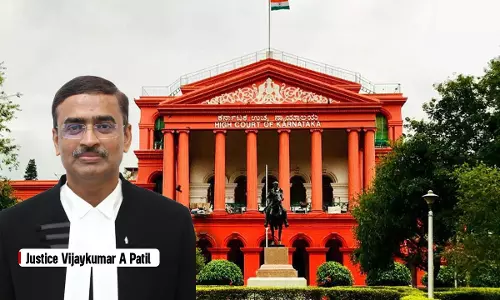
Karnataka High Court Sets Aside Trial Court's Spot Inspection In Property Suit, Says It Must Generally Follow Recording Of Evidence
The Karnataka High Court has held that the power of a trial court under Order XVIII Rule 18 CPC to inspect a suit property and record a memorandum of facts must ordinarily be exercised only after evidence has been recorded in the suit.ORDER XVIII pertains to hearing of the suit and examination of witnesses wherein Rule 18 states that Court may at any stage of a suit inspect any property or...
Article 227 Petition Maintainable Against Small Causes Court's Refusal To Stay Suit Under Section 10 CPC: Allahabad High Court
The Allahabad High Court has held that an order rejecting an application under Section 10 read with Section 151 CPC, seeking stay of a suit pending before a Court of Small Causes, does not constitute a “case decided” within the meaning of Section 25 of the Provincial Small Cause Courts Act, 1887. It held that since the revisional remedy under Section 25 was therefore not available, a...
Suit Not Maintainable To Recover Money Paid For Illegal Purpose, Must Be Rejected Under O VII R 11 CPC : Supreme Court
The Supreme Court has recently held that where a plaint itself discloses that the money sought to be recovered was paid for an illegal and fraudulent purpose, the suit is barred by the of in pari delicto and the plaint is liable to be rejected under Order VII Rule 11(d) of the Code of Civil Procedure, 1908 (CPC).A bench of Justice Ahsanuddin Amanullah and Justice Manmohan ruled so while...
Independent Title Claim Doesn't Make Person Necessary Party In Small Causes Eviction Suit: Allahabad High Court
The Allahabad High Court has held that a third person asserting an independent title over a rented property does not become a necessary or proper party to an eviction suit before the Small Causes Court only because that title clashes with the landlord's. It held that impleadment under Order I Rule 10 of the Code of Civil Procedure, 1908 cannot be used to carry a separate title dispute into a...