




Criminal Law

Allahabad High Court Sends 82 Y/O Murder Convict Back To Jail After 40 Yrs; Says It Can't Reduce Sentence By Invoking Article 142
The Allahabad High Court recently dismissed the appeal of an 82yearold man convicted of murdering his brother in 1984 and directed him to surrender to serve the remaining part of his life sentence. A Bench of Justice Atul Sreedharan and Justice Jai Krishna Upadhyay found that the evidence on record did not disclose any mitigating circumstances warranting conversion of the...
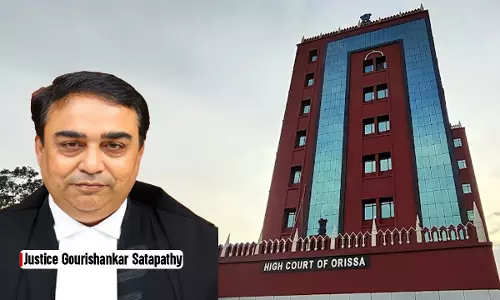
Orissa High Court Grants Bail To Woman Accused Of Torching Vehicles Near High Court Premises
The Orissa High Court has granted bail to a woman who, in March this year, threw a burnt bottle containing petrol towards the High Court premises as a result of which four vehicles parked nearby the boundary wall caught fire and were damaged.Considering the fact that the accused-petitioner is a lady who has a five-year-old son, the Bench of Justice Gourishankar Satapathy...
S. 38 BNSS | Advocate Of Accused Cannot Remain Present Throughout Police Interrogation : Supreme Court
Clarifying the scope of Section 38 of Bharatiya Nagarik Suraksha Sanhita, 2023, the Supreme Court on Monday (July 27) held that the provision entitles an arrested person to meet an advocate of choice during interrogation but does not contemplate continuous physical presence throughout the interrogation. “A plain reading of the provision makes it clear that the right guaranteed thereunder...
New Criminal Law Allows Police Custody Beyond First 15 Days : Supreme Court Explains S.187(2) BNSS
The Court explained that police custody can be sought in parts beyond first 15 days of remand subject to an aggregate of 15 days.
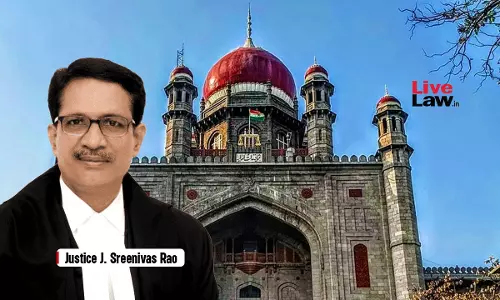
Magistrate Must Record Reasons Before Issuing Summons, Cryptic Cognizance Order Unsustainable: Telangana High Court
The Telangana High Court has quashed a Magistrate's order taking cognizance and issuing summons in a criminal case, holding that an order summoning an accused cannot be passed mechanically or through a cryptic docket order. [2026 LiveLaw (Tel) 118]The Court observed that taking cognizance requires due application of mind and recording of satisfaction that the material discloses a prima...

Telangana High Court Asks State To Declare Candidate's CWC Chairperson Exam Result, Says Pending Criminal Case Not Disqualification
The Telangana High Court has directed the Telangana Government to declare the result of a candidate who appeared for the Child Welfare Committee (CWC) Chairperson examination after an interim order of the Court. [2026 LiveLaw (Tel) 117]The Court had earlier held that the mere pendency of a criminal case is not a ground to disqualify a candidate under Section 27 of the Juvenile Justice (Care...
Gujarat High Court Quashes Cheating Case Against Ducati Over Alleged Failure To Supply Bikes To Dealer
The Gujarat High Court recently quashed a cheating case against Italian bike company Ducati and its representatives over its distributor's alleged failure to supply bikes to a dealer.[2026 LiveLaw (Guj) 206]The court held that the complainant had entered into an "exclusive agreement" only with the distributor, wherein it was clearly stated that agreements entered into by distributor shall not...
'You Took Away A Poor Candidate's Chance': Karnataka High Court Questions Ex-KPSC Chairman's Daughter Over Reservation Claim
Court questioned income declaration of ₹40,000 per annum when father drew over ₹25 lakhs annually.
State Human Rights Commission Can't Entertain Complaints Against Private Employers Over Workplace Harassment: Telangana High Court
Commission can only enquire into alleged human rights violations by Public Servants, the Court said.

Use Of Expression 'Hindu Terrorism' In Speech Calling For Unity Not Offence Of Provocation In Absence Of Any Act: Madras High Court
The Madras High Court recently held that merely uttering the word “Hindu Terrorism” will not attract the offence of provocation when the same was not followed by any act on the part of the person commenting. [2026 LiveLaw (Mad) 342] Justice Bharatha Chakravarthy thus quashed a criminal case registered against a man for allegedly making provocative speech during a public meeting....
Allahabad High Court Upholds Challan For Speeding Above 60 Kmph On Yamuna Expressway, Says State Can Prescribe Lower Speed Limits
The Allahabad High Court has upheld overspeeding e-challans issued to stage carriage bus operators for exceeding the prescribed 60 kmph speed limit on the Yamuna Expressway, holding that the State Government or a competent authority is empowered under the Motor Vehicles Act, 1988 to prescribe road-specific speed limits lower than the maximum limits notified by the Central Government.A...
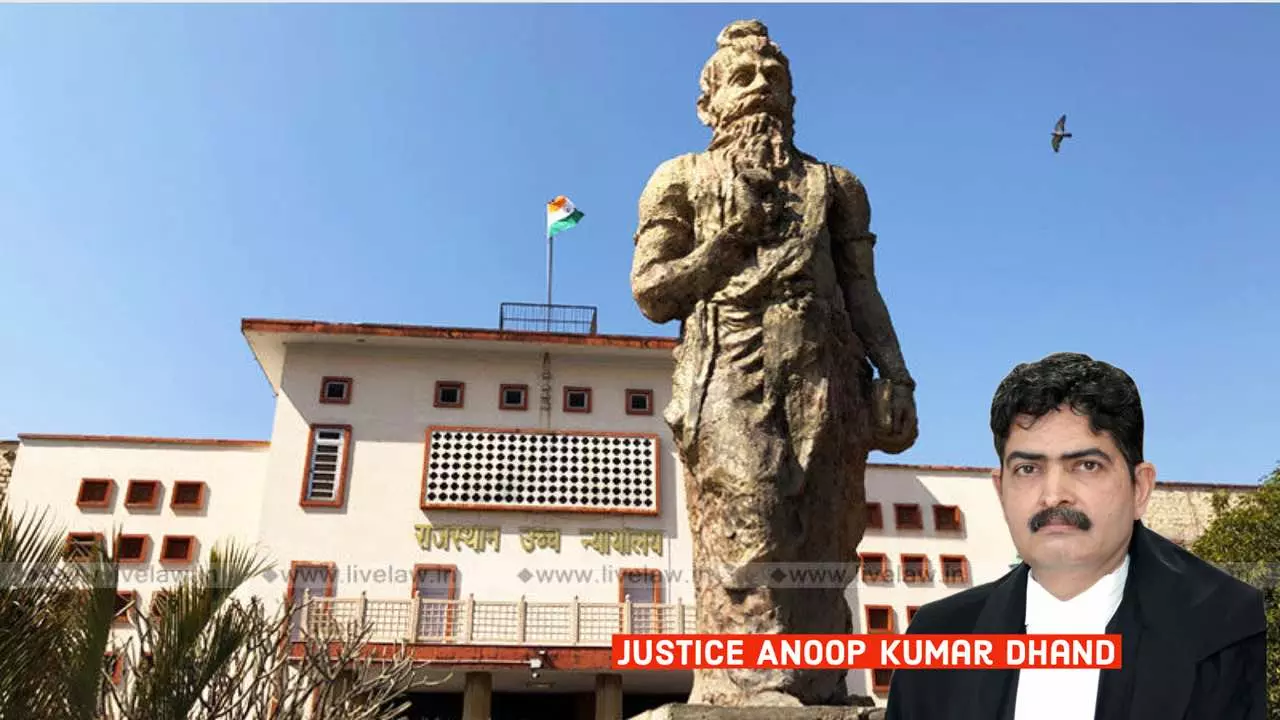
Police Official's Bonafide Failure To Produce Case Diary Not Offence, Else There Will Be 'Flood' Of Complaints: Rajasthan High Court
The Rajasthan High Court has quashed criminal proceedings initiated against a Station House Officer (SHO) under Section 175 of the Indian Penal Code (IPC), holding that a bona fide failure to produce a case diary due to non-receipt of communication from the Public Prosecutor cannot attract criminal liability. [2026 LiveLaw (Raj) 300]Section 175 IPC penalises the intentional omission to produce...