



- Home
- /
- Foreign/International
- /
- Two Judges Of Pakistan Supreme...
Two Judges Of Pakistan Supreme Court Resign In Protest Against 27th Constitutional Amendment
LIVELAW NEWS NETWORK
14 Nov 2025 11:20 AM IST
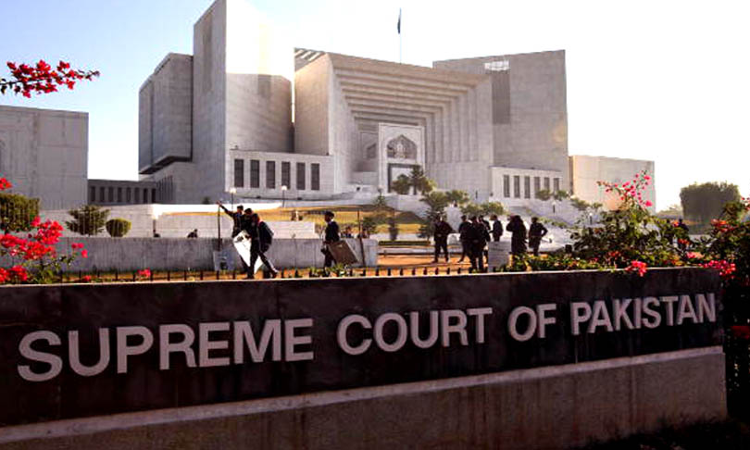
Two Judges have resigned from the Supreme Court of Pakistan, issuing an extraordinary and strongly worded letter to the President of Pakistan. Justice Athar Minallah and Justice Syed Mansoor Ali Shah resigned protesting against the 27th Constitutional Amendment which seeks to establish a Federal Constitution Court, superior to the Supreme Court. The FCC is headed by a Chief Justice, who...
This is a premium content
Available exclusively to
Our subscribers
Subscribe Premium 
INR 1099+GST
Your support helps us to bring you more content at
an affordable subscription scheme !!!
All payment options available
Two Judges have resigned from the Supreme Court of Pakistan, issuing an extraordinary and strongly worded letter to the President of Pakistan. Justice Athar Minallah and Justice Syed Mansoor Ali Shah resigned protesting against the 27th Constitutional Amendment which seeks to establish a Federal Constitution Court, superior to the Supreme Court. The FCC is headed by a Chief Justice, who is appointed by the President of Pakistan on the advice of the Prime Minister. Other judges of the FCC are appointed by the government and the amendment indicates that the executive will have a dominant role in their selection
In his five-page resignation, Justice Shah described the Twenty-Seventh Constitutional Amendment as an attack on the constitutional order that has “crippled judicial independence” and hollowed out the Supreme Court.
Justice Shah said he could not continue in a court “stripped of its constitutional jurisdiction” or uphold an oath in an institution that had been “deprived of its constitutional role.”
The amendment, he wrote, “dismantles the Supreme Court of Pakistan, subjugates the judiciary to executive control, and strikes at the very heart of our constitutional democracy.” He said the unity of the nation's apex court had been fractured, pushing the country back by decades.
“Either remain or step aside in protest”
Calling this a critical juncture, Justice Shah said he had only two options: to remain in a system where the Court's foundations had been destroyed, or to step down in protest. Staying on, he wrote, would mean “silent acquiescence in a constitutional wrong.”
He sharply criticised the current judicial leadership for supporting the amendment, saying that at a time when judicial legitimacy was under challenge, the Court “demanded principled resistance, yet the incumbent Chief Justice… assented to the amendment and negotiated only the preservation of his own position and title.”
Justice Shah said Pakistan had, since independence, lived under a single apex court, but the new amendment ruptured that architecture by creating a new Federal Constitutional Court placed above the Supreme Court. This, he said, was “an arrangement entirely alien to the common-law world” and was enacted “without debate, without consultation, and without seeking the considered input of the judiciary.”
He warned that judges who now join the new Constitutional Court would sit in a body “created not by constitutional wisdom, but by political expediency.” The amendment had “captured the judiciary” and replaced constitutional adjudication “with a court shaped by power, not principle.”
Commenting on the earlier Twenty-Sixth Amendment passed in October 2024, Justice Shah said it had begun a deliberate campaign to erode judicial independence. Even then, he wrote, he stayed on, hoping the Supreme Court would rise as a Full Court to reclaim constitutional supremacy. That hope, he said, “has now been extinguished.”
Justice Shah reflected on his judicial career since joining the Lahore High Court in 2009, saying the Constitution had guided his life and work. The role of a judge, he said, was not measured merely by the number of decided cases but by whether “the law was made a little fairer, kinder, and closer to the people it serves.”
“I leave it with honour and integrity,” he wrote, “and with peace in knowing that I leave it with a clear conscience and no regrets.”
Tags


