



- Home
- /
- Foreign/International
- /
- US Supreme Court Upholds Birthright...
US Supreme Court Upholds Birthright Citizenship, Strikes Down Trump's Executive Order
LIVELAW NEWS NETWORK
30 Jun 2026 9:08 PM IST
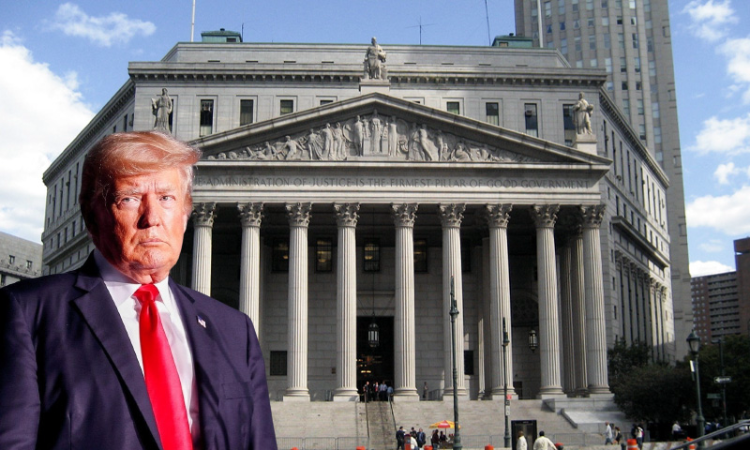
The US Supreme Court on Monday held that the Fourteenth Amendment guarantees birthright citizenship to children born in the United States irrespective of whether their parents are in the country unlawfully or only temporarily, striking down President Donald Trump's executive order seeking to deny such citizenship.In a 5-4 constitutional ruling, Chief Justice John Roberts authored the...
This is a premium content
Available exclusively to
Our subscribers
Subscribe Premium 
INR 1099+GST
Your support helps us to bring you more content at
an affordable subscription scheme !!!
All payment options available
The US Supreme Court on Monday held that the Fourteenth Amendment guarantees birthright citizenship to children born in the United States irrespective of whether their parents are in the country unlawfully or only temporarily, striking down President Donald Trump's executive order seeking to deny such citizenship.
In a 5-4 constitutional ruling, Chief Justice John Roberts authored the majority opinion, joined by Justices Sonia Sotomayor, Elena Kagan, Amy Coney Barrett and Ketanji Brown Jackson. Justice Brett Kavanaugh concurred in part in the judgment and dissented in part, while Justices Clarence Thomas, Samuel Alito and Neil Gorsuch dissented.
The case, Trump, President of the United States, et al. v. Barbara et al., arose from President Trump's Executive Order No. 14160, issued on January 20, 2025, titled Protecting the Meaning and Value of American Citizenship. The order declared that children born in the United States to parents who are unlawfully or temporarily present in the country are not "subject to the jurisdiction" of the United States and therefore are not entitled to citizenship under the Citizenship Clause of the Fourteenth Amendment or the Immigration and Nationality Act.
Several parents challenged the order on behalf of their children. A federal district court provisionally certified a nationwide class of children who would be denied citizenship under the order and preliminarily restrained its enforcement. The Supreme Court granted certiorari before judgment.
Framing the issue as whether the Constitution guarantees citizenship to children born in the United States to parents who are unlawfully or temporarily present, the Court answered in the affirmative.
"The Citizenship Clause must be understood in light of its historical context, from the English common law to the widespread condemnation of the Court's decision in Dred Scott v. Sandford," the Court observed while explaining the constitutional background of birthright citizenship.
The Court held that children born in the United States to parents who are unlawfully or temporarily present are nevertheless "subject to the jurisdiction" of the United States and are citizens at birth under the Fourteenth Amendment.
Justice Kavanaugh agreed that the executive order was invalid but took a narrower view of the constitutional question. According to his separate opinion, the order should be struck down under federal statutory law rather than because it violates the Fourteenth Amendment. As a result, while the judgment invalidating the executive order commanded a majority, the Court's constitutional holding that the Fourteenth Amendment itself guarantees birthright citizenship was decided by a 5-4 majority.
The ruling also makes clear that Congress cannot redefine the scope of the Citizenship Clause through ordinary legislation, leaving a constitutional amendment as the only route to alter the guarantee of birthright citizenship.
Click here to read the judgment
Tags


