



- Home
- /
- High Courts
- /
- Allahabad High Court
- /
- Article 25 Protects Right To...
Article 25 Protects Right To Congregate For Worship But Forbids Incitement; No Embargo On Prayers In Private Premises: Allahabad HC
Sparsh Upadhyay
18 March 2026 3:08 PM IST
The Allahabad High Court on Monday held that Article 25 of the Constitution of India protects the right to congregate for worship for every religious denomination in the country, but it does not accord protection to incitement of one faith by another in the garb of prayer. At the same time, the Court made it clear that there can be no impediment or embargo with regard to prayers...
This is a premium content
Available exclusively to
Our subscribers
Subscribe Premium 
INR 1099+GST
Your support helps us to bring you more content at
an affordable subscription scheme !!!
All payment options available
The Allahabad High Court on Monday held that Article 25 of the Constitution of India protects the right to congregate for worship for every religious denomination in the country, but it does not accord protection to incitement of one faith by another in the garb of prayer.
At the same time, the Court made it clear that there can be no impediment or embargo with regard to prayers or religious functions being conducted within the private premises of a person, irrespective of the denomination of faith he belongs to.
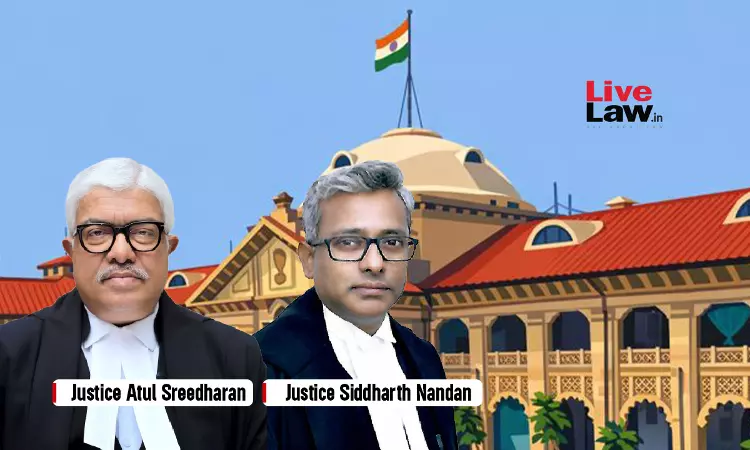
These observations were made by a bench of Justice Atul Sreedharan and Siddharth Nandan while disposing of a petition alleging that the state administration was preventing the petitioner (Munazir Khan) from performing Namaz at a site where he claimed a mosque existed.
It was the petitioner's case was that during Ramzan, a large number of persons wish to come and pray, and that there can be no constraint on the number of worshipers who may worship at a given point of time.
Hearing his case on February 27, the High Court had rejected the Uttar Pradesh administration's decision restricting the number of persons offering Namaz during Ramzan by observing that maintaining law and order is the responsibility of the State.
The bench had also remarked that if the Superintendent of Police and District Collector apprehend law and order problems and therefore seek to limit the number of worshippers, they should either resign or seek transfer if they are unable to enforce the rule of law.
More details of the case here: Can't Restrict Number Of Namaz Worshipers On Law & Order Ground; Resign If Unable To Do Duty : Allahabad High Court To Sambhal SP, Collector
When the matter came up again on March 16, the Additional Advocate General, Manish Goyal, assisted by Advocate Priyanka Midha, sought to explain that the recording of a restriction of 20 worshipers in the February 27 order had crept in on account of a misrepresentation by the petitioner's counsel, and that the State had never actually imposed any such restriction.
The Court, however, rejected this contention. It noted that the order of February 27 had been passed in open court with both sides present, and no objection had been taken by the State when the order was being dictated.
The Court also examined the supplementary affidavit filed by the petitioner, which contained photographs of the premises.
The bench recorded that the structure in question was not a mosque as of date; however, noting that the said place had been used for offering Namaz earlier, the Court directed that there shall be no obstruction to the devotees offering prayers at the same place.
The Court thus disposed of the petition by directing the State to be fully cognizant of its earlier judgment in Maranatha Full Gospel Ministries versus State of U.P. and 2 Others.
For context, in this case, the same bench had observed in January this year that a citizen does not require any kind of permission under the law to offer religious prayers, which is a part of his/her fundamental right under Article 25 of the Constitution of India, if the same is conducted within private premises of his/her own property.
The Court further directed that any objection raised by any person, whether an individual or a group, against prayers being conducted in a private space should be taken cognizance of by the State, and if need be, protection be accorded to the place of worship and the worshipers.
The State, however, submitted that it shall not interfere with or interrupt worship carried out by any denomination in their private properties or at their respective places of worship.
The Court also directed the petitioner to ensure that the traditions continuously observed since 1995 at that place are strictly observed.
Importantly, while parting with the case, the Court made substantive observations on Article 25. It noted that congregating for prayer is a facet of the Abrahamic faiths and that this provision protects such congregation for the purpose of worship.
"The Jews congregate in synagogues for Shabbath on Friday, and Saturday is a faith ordained day of rest and spiritual reflection. The Christians congregate in churches for Sunday mass and the muslims congregate in mosques for the Friday afternoon prayer. Eastern faiths like Hinduism, Buddhism by contrast don't have fixed days for community congregations for worship in temples and the community congregates for celebration (which includes worship) of festivals", the bench remarked.
The bench further clarified that Article 25, however, does not accord protection to incitement of one faith by the other in the garb of prayer.
"(Article 25) prohibits actions and speech having the propensity to vitiate public order by pitting one religious denomination against the other, which would take the proscribed act beyond the scope of the protection of article 25 and expose the person to the full rigours of the criminal law", the bench remarked.
The Court also clarified that Article 25 is not to be construed as giving any special status to the adherents of the Islamic faith in India. Article 25, the Court held, is religion and faith neutral, and the freedom of conscience it protects enables equally an atheist to profess, practice and propagate that there is no God, on the anvil of logic, reason and science.
"The glory of this republic of 1.4 billion of the earth's humanity lies in her resilience and strength, arising from her historical, religious, cultural and linguistic diversity, like no other nation state on this planet with every major religion, culture and varied languages having co-existed for centuries in peace, harmony and mutual respect, formalised by article 25 of the Constitution of India after the same came into force", the bench further remarked.
With the above, the writ petition was disposed of, and the State was requested to ensure that a copy of this order reaches the Director General of Police, U.P. and the Additional Chief Secretary (Home), U.P., for the purpose of circulation right down to the lowest law enforcement authority in the State.
Case title - Munazir Khan vs. State Of U.P. And 4 Others 2026 LiveLaw (AB) 114
Case Citation: 2026 LiveLaw (AB) 114
Tags

Sparsh Upadhyay
Sparsh Upadhyay is an Associate Editor with LiveLaw.

