



- Home
- /
- High Courts
- /
- Allahabad High Court
- /
- 'Dowry Death' Offence Not Attracted...
'Dowry Death' Offence Not Attracted On Mere Demand Of Valuables Sans Cruelty/Harassment Nexus: Allahabad High Court
Sparsh Upadhyay
10 April 2026 6:33 PM IST
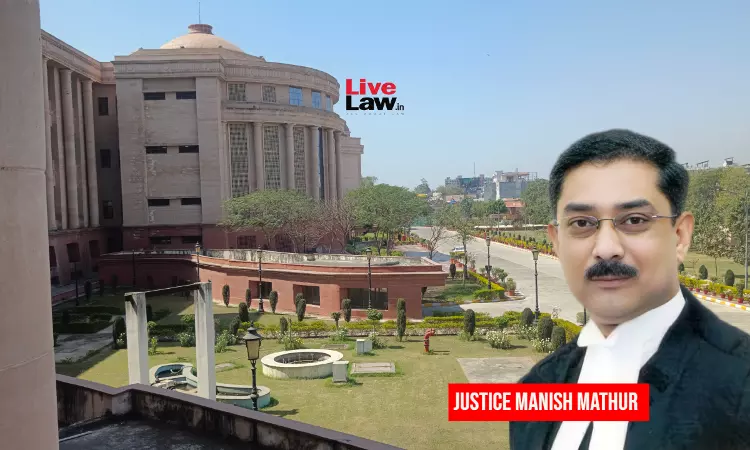
The Allahabad High Court has observed that to attract an offence under Section 304-B IPC (Dowry Death) there should be a 'perceptible nexus' between the death and dowry related harassment or cruelty inflicted upon the victim. A bench of Justice Manish Mathur added that where a mere demand for articles or valuables does not have any nexus with any harassment or cruelty which resulted...
This is a premium content
Available exclusively to
Our subscribers
Subscribe Premium 
INR 1099+GST
Your support helps us to bring you more content at
an affordable subscription scheme !!!
All payment options available
The Allahabad High Court has observed that to attract an offence under Section 304-B IPC (Dowry Death) there should be a 'perceptible nexus' between the death and dowry related harassment or cruelty inflicted upon the victim.
A bench of Justice Manish Mathur added that where a mere demand for articles or valuables does not have any nexus with any harassment or cruelty which resulted in death, the provisions of Section 304-B & Section 498-A IPC read with Section 113-B Evidence Act would be inapplicable.
The bench thus allowed a criminal appeal filed by Mewa Lal and two other in-laws of the victim, who had been convicted by the trial court in 2004 under Sections 304B, 498A of the IPC and Sections 3/4 of the Dowry Prohibition Act, 1961.
Case in brief
Briefly put, it was alleged that the appellants had killed the victim by administering poison to her due to a dowry demand not being met.
Before the HC, the appellants-accused argued that the ingredients of the offences under which they were charged were not made out and that no injury was found on the body of the deceased, nor was any poison discovered in the viscera report.
The primary argument of the appellants was that there was no evidence of cruelty or unnatural death.
On the other hand, the state argued that although there was no injury found on the body of the deceased, the statements of all 3 prosecution witnesses clearly corroborated the aspect of harassment and cruelty which resulted in the death of the victim soon after she visited her maternal house.
HC Order
Against the backdrop of these arguments, the bench noted that while the death had occurred within a period of seven years of marriage, the post-mortem report did not indicate any external injuries on the body.
It also noted that the viscera report, which was also examined by the trial court, did not indicate death due to administering any poison, and the examining doctor opined that the cause of death could not be ascertained.
The High Court pointed out that the trial court had incorrectly recorded a presumption of guilt against the appellants merely on the twin grounds of the death occurring within seven years and the unsubstantiated testimonies of family members.
Against this backdrop, the Court perused Section 304-B IPC to note that to attract this offence, it is essential that the factum of the death of a woman being caused by burns or bodily injury or otherwise than in the normal circumstances be established by evidence.
The bench noted that all such cases where the cause of death cannot be ascertained would not automatically fall within the realm of unnatural death and that “at least an iota of evidence” is required to establish that the death resulted from a cause that was not natural.
In this regard, the Court further observed that the ingredients with regard to death having occurred “otherwise than under normal circumstances” were not proved by any medical report or evidence either of the family members or as per the post-mortem report, corroborated by the examining doctor.
Therefore, in such circumstances, the Court held that the death had not occurred otherwise than under normal circumstances.
So far as the conditions of the deceased having been subjected to cruelty or harassment are concerned, the bench opined that to attract offences under Section 304-B and 498-A IPC, there should be a “perceptible nexus” between the death and dowry-related harassment or cruelty inflicted upon her.
Taking into account the facts of the case, the bench noted that the father's own deposition indicated she went away happily after her last visit just three days prior and had given birth to a daughter just three months prior to her demise.
The bench further noted that although a demand for valuables was made by appellant No.1, the same could not be deemed to be linked to the death, which had occurred particularly since "there does not appear to be any nexus between such demand and any specific case of cruelty or harassment of the deceased which resulted in her death".
In view of this, finding the trial court's reasoning to be against the material on record and perverse, the bench set aside the conviction and acquitted the accused-appellants.
Case title - Mewa Lal And 2 Ors. vs State of U.P. 2026 LiveLaw (AB) 205
Case Citation: 2026 LiveLaw (AB) 205
Tags

Sparsh Upadhyay
Sparsh Upadhyay is an Associate Editor with LiveLaw.

