



- Home
- /
- High Courts
- /
- Allahabad High Court
- /
- Marital Estrangement Not By Itself...
Marital Estrangement Not By Itself Ground For Abortion Under MTP Rules: Allahabad High Court Dismisses Woman's Plea
Sparsh Upadhyay
6 Oct 2026 9:03 PM IST
The Allahabad High Court has held that marital estrangement, by itself, cannot be treated as a ground for medical termination of pregnancy under the Medical Termination of Pregnancy Rules, 2003 (as amended in 2021). The Court said ordinary matrimonial differences cannot be equated with a change in marital status, such as 'divorce' or 'widowhood', which Rule 3B(c) specifically mentions in...
This is a premium content
Available exclusively to
Our subscribers
Subscribe Premium 
INR 1099+GST
Your support helps us to bring you more content at
an affordable subscription scheme !!!
All payment options available
The Allahabad High Court has held that marital estrangement, by itself, cannot be treated as a ground for medical termination of pregnancy under the Medical Termination of Pregnancy Rules, 2003 (as amended in 2021).
The Court said ordinary matrimonial differences cannot be equated with a change in marital status, such as 'divorce' or 'widowhood', which Rule 3B(c) specifically mentions in the context of a change in marital status during an ongoing pregnancy.
For context, Rule 3B(c) permits termination of pregnancy up to 24 weeks in cases involving a change in marital status during the ongoing pregnancy, including widowhood and divorce.
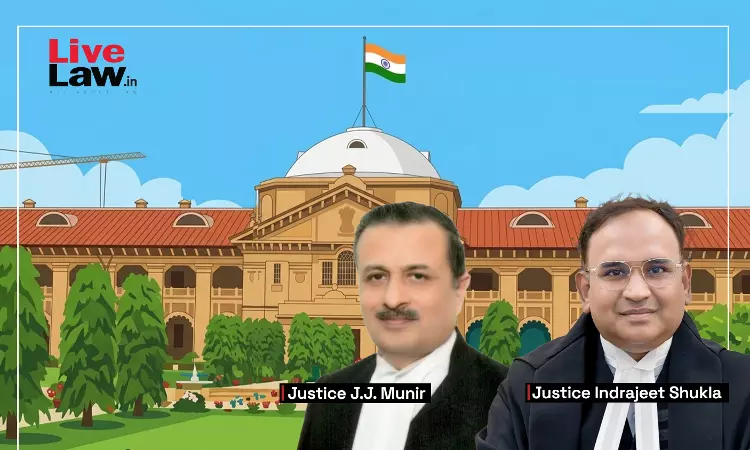
A Bench of Justice JJ Munir and Justice Indrajeet Shukla said reproductive autonomy is protected under Article 21 of the Constitution of India and a woman can be allowed termination of pregnancy "if the pregnancy is unwanted from its inception and such pregnancy would have an adverse mental and physical impact on the health of the pregnant woman".
It remarked that persistent and aggravated cruelty may, in an appropriate case, have a bearing on a pregnant woman's mental health.
However, the bench added that such a case would require "overwhelming evidence" and "cogent, credible and objectively assessable material" establishing cruelty and its consequential impact on mental health.
The Bench made these observations while dismissing a plea by a 24-year-old married woman seeking a direction to the Chief Medical Officer, Bhadohi, to medically terminate her pregnancy.
Case in brief
The petitioner told the Court that she married the third respondent, a police constable, on May 3, 2026. She alleged that her husband suspected her character and assaulted her on several occasions and subjected her to mental and physical cruelty.
She further alleged that she was forced to consume phenyl on July 27, following which she was admitted to a hospital, and that she was subjected to another "brutal assault" on August 28.
She claimed she tried to lodge an FIR against the Husband, but her efforts failed. She further claimed that her husband threatened her with an FIR if she underwent termination of pregnancy.
According to her plea, the pregnancy was initially wanted but subsequently became unwanted because of the alleged conduct of her husband and his family. She also cited financial hardship, stating that she was unemployed and dependent on her parents.
The husband, on the other hand, denied the allegations and maintained that the dispute was the result of a misunderstanding. He expressed his willingness to support the petitioner and the child.
High Court's observations
The Court examined Rule 3B(c) of the MTP Rules, which includes a change in marital status during the ongoing pregnancy among the categories for which termination may be permitted up to 24 weeks, with "widowhood and divorce" specifically mentioned.
The Bench held that although the categories under Rule 3B(c) are illustrative, the provision cannot be expanded to cover "every circumstance of matrimonial rupture".
"An entirely new or distinct category cannot be introduced under the guise of interpretation, as that would amount to adding to or rewriting the rule itself", the Court observed.
The Court specifically rejected the proposal to carve out a third category of an "estranged relationship" between spouses. It said that mere differences between spouses do not change marital status.
At the same time, the Court clarified that a further category could potentially be considered where circumstances bear equivalence to divorce or widowhood, such as permanent abandonment or circumstances, including cruelty, which make the possibility of reunion "virtually non-existent".
The Bench also considered whether alleged domestic violence and deterioration of mental health could justify termination under Section 3 of the MTP Act.
The Court noted that "mental health" is broader than a clinically diagnosed mental illness and that a woman's actual or reasonably foreseeable environment, including her social and economic circumstances, may be relevant while assessing whether continuation of pregnancy would cause grave injury to her mental health.
It observed that a purposive interpretation could potentially permit termination in a case involving repeated domestic violence, but only where there is "overwhelming evidence" establishing cruelty leading to deteriorating mental health.
In the present case, however, the Court found no material showing that the petitioner's mental health had deteriorated specifically because she had conceived or was pregnant.
It said that a reasonable apprehension regarding deterioration of mental health could have relevance, but could not be founded merely on the “sole desire and whims” of the person seeking termination.
The Bench also noted that the petitioner had not filed a complaint under the Domestic Violence Act.
It clarified that its observation that it was too early to conclude that she was a victim of domestic violence was not a conclusive opinion and would not prejudice any future proceedings before the jurisdictional Magistrate.
The Court aslo took note of the woman's own admission that the pregnancy was initially wanted but subsequently became unwanted because of the alleged ill-treatment by her in-laws.
The Court observed thus:
"The law, in its strict sense, only allows unwanted pregnancies at the inception to be terminated, and in the case in hand, neither the marital status has changed nor unimpeachable evidence of cruelty produced that might convince us to take the drastic and exterminatory decision for the ending of a life which has yet to come in the world".
The Bench said that none of the provisions of the Act, 1971 and Rules framed thereunder lend themselves to a construction that might favor termination of pregnancy in the present case.
The Court further noted that the pregnancy had occurred during the subsistence of the marriage and that there was no material to show abandonment or circumstances that would justify termination under the statutory framework.
It also observed that the petitioner was residing with her parents and that there was no material demonstrating an imminent or real danger to her mental health from her present environment.
It also noted that the medical report showed a live fetus of around 17 weeks and two days, with no abnormality or malformation. It declined to supplant the opinion of medical experts, particularly when the facts and circumstances did not establish that termination was warranted within the statutory parameters of the MTP Act and Rules.
On the other hand, the husband told the Court that he was a police constable earning about ₹40,000 per month and he was willing to bear the medical expenses and support the petitioner and child.
The Court consequently directed that ₹12,000 per month be deducted from his salary and transferred to the petitioner for medical bills, nurture and upbringing of the child.
The Bench observed that medical termination of pregnancy is "not the only panacea" for emotional distress arising from marital discord and directed that the petitioner be provided marital counseling at no cost.
The Court stressed that a domestic dispute, by itself, is not presumed by the legislature to constitute grave injury to the mental health of a married pregnant woman warranting termination.
Accordingly, the Bench declined to issue the mandamus sought and dismissed the writ petition.
Advocate Vindeshwari Prasad appeared for the petitioner-wife
Additional Chief Standing Counsel Girijesh Kumar Tripathi on behalf of respondent nos.1 and 2 and
Advocate Majahar Ali appeared for the Husband
Tags

Sparsh Upadhyay
Sparsh Upadhyay is an Associate Editor with LiveLaw.

