



- Home
- /
- High Courts
- /
- Allahabad High Court
- /
- Allottee Who Knowingly Took Lease...
Allottee Who Knowingly Took Lease Of Lesser Area Can't Claim Benefit Of Zero Period In Entirety: Allahabad High Court
LIVELAW NEWS NETWORK
15 Aug 2026 2:00 PM IST
The Allahabad High Court has held that a developer who took a lease of a smaller, scattered part of the land allotted to it, knowing the balance was not in the development authority's possession, cannot claim the benefit of “zero period” in its entirety, even where the authority was itself in default. Zero period is a concession granted to allottees of stalled group housing projects...
This is a premium content
Available exclusively to
Our subscribers
Subscribe Premium 
INR 1099+GST
Your support helps us to bring you more content at
an affordable subscription scheme !!!
All payment options available
The Allahabad High Court has held that a developer who took a lease of a smaller, scattered part of the land allotted to it, knowing the balance was not in the development authority's possession, cannot claim the benefit of “zero period” in its entirety, even where the authority was itself in default.
Zero period is a concession granted to allottees of stalled group housing projects under successive Government Orders. For the period declared zero, interest and penal interest are not charged and the instalments are shifted forward. Under the Government Order dated 05.12.2019, where more than 30% of the allotted land is affected, it is available for 100% of the land.
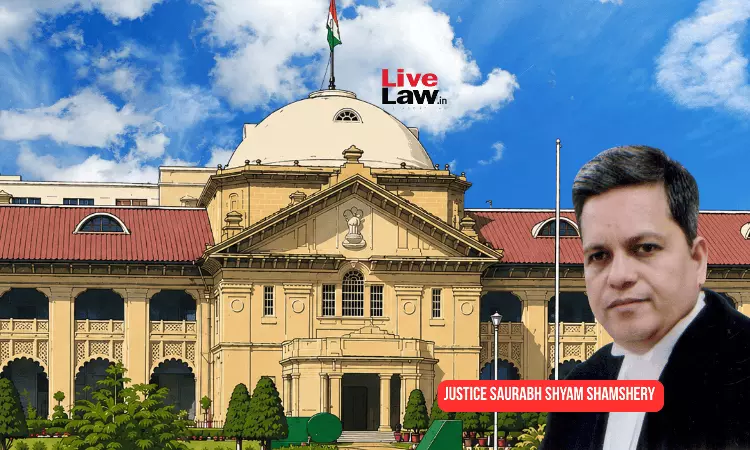
Justice Saurabh Shyam Shamshery held,
“The Court takes note that at the time when lease was executed for a lessor land there was an offer that Respondent-1 can left remaining area, however, despite it had knowledge about location of land, Respondent-1 has executed lease for a lessor area with further declaration that it will wait for remaining area to be available with YEIDA, therefore, Respondent-1 was well aware that certain area was definitely not in possession of YEIDA when lease was executed way back in the year 2012.Therefore benefit of Zero Period can be granted to Respondent-1 but not in entirety.”
Yamuna Expressway Industrial Development Authority (YEIDA) floated a residential township scheme in 2011 and issued an allotment letter dated 16th August 2011 to a consortium of four companies led by M/s Sunworld City Private Limited for Plot No. TS-7, Sector 22D, measuring 414538 sq. meters. The consortium failed to deposit the balance premium even after two extensions and the allotment was cancelled on 1st February 2012.
The cancellation was challenged and the High Court directed that it would stand set aside on deposit of the allotment money with penal interest, and that YEIDA execute the lease deed and deliver possession of the undisputed land. The allottee was left to consider whether it would stake a claim to the entire allotted area or be satisfied with the area of which possession could be given.
YEIDA then informed the consortium that only 263483 sq. meters was available. By letter dated 20th August 2012 the allottee said it wanted the complete plot, but would take a lease of the available area for the present, the balance to follow whenever YEIDA came into possession of it. The lease deed for 263483 sq. meters was executed on 14th September 2012.
No construction was begun. Part of the land remained under interim orders of the High Court and Gaon Sabha land within the leased area had not been resumed. By an order dated 19th April 2017 YEIDA granted zero period for part of the area from 16.11.2011 to 31.12.2016, on conditions that were not complied with. In 2019 the allottee applied to surrender the plot; the surrender was accepted, but the acceptance was cancelled on 29th February 2020 after another member of the consortium objected and moved the National Company Law Tribunal. That petition before the NCLT was withdrawn on 6th March 2025.
After the State announced a legacy policy for stalled real estate projects on 21st December 2023, YEIDA raised demands and called upon the allottee to deposit 25% of the dues. The allottee filed a revision before the State Government under Section 41(3) of the U.P. Urban Planning and Development Act, 1973.
By order dated 2nd July 2025 the revisional authority granted zero period from the date of allotment till the date of that order and directed that the lease of the remaining land be executed and possession given. YEIDA challenged that order.
YEIDA argued that the allottee had applied neither within the two months prescribed under the Government Order dated 5th December 2019 nor with the written assurance of completion by 30th June 2021. It had taken the plot on an “as is where is basis” and signed the possession certificate without reservation, the legacy policy and zero period for the Covid period had already been extended to it, and the revisional authority had exceeded its powers and ignored the surrender proceedings.
For the allottee it was submitted that possession had been given only on paper and in a scattered manner, that there was still no approach road, and the surrender was never complete since the conditions in the brochure had not been met. It was argued that YEIDA was itself required under Clause 21 of the lease deed to carry out peripheral development, and could not shelter behind an “as is where is basis” clause when it had allotted land it neither owned nor possessed.
The Court rejected the allottee's plea that it learnt only later that the Gaon Sabha land had not been resumed, holding that it knew the extent of the available land when the lease was executed, the map too having been sanctioned for the lesser area.
“A claim of being totally unaware of position of land on spot is, therefore, not accepted and, therefore, cannot claim benefit of zero period only on basis of default of YEIDA.”
The Court further held that though YEIDA had made clear before the lease that only 263483 sq. meters was available, it had not disclosed that even that area was not contiguous.
“The conduct of YEIDA was also similarly not bona fide. They were aware about nature of land and that they were not in position to handover entire land.”
On the 2019 policy, the Court held that its benefit could not be given to the allottee, which had not sought it at the time and had furnished no undertaking to complete the project by June 2021. It held that, that did not conclude the matter, since a later Government Order dated 27th October 2023 carried similar conditions and adopted the same method of calculating zero period. The allottee was entitled to consideration under it, and YEIDA's objections to the 2019 policy could not stand in the way, held the Court.
Noting the report placed before the revisional authority that 126470 sq. meters was affected by legal impediments, more than 30% of the allotted area, and that both sides were in default, the Court held that the allottee remained entitled to seek the benefit of the 2023 scheme, but that having knowingly taken a lease of the lesser area it could not have that benefit in full.
“there is no illegality of granting benefit of zero period, however it is directed that Respondent-1 shall pass on atleast 25% benefit of it to home buyers and since now entire land is available, the Petitioner-YEIDA will conclude the process of lease of remaining area within a month so that construction be commenced.”
The Court observed that the benefit would come to an end if the allottee failed to get the lease of the remaining area executed, or failed to raise at least 25% construction within nine months of that lease and the handover of the entire land. The parties were directed to exchange their calculations before YEIDA arrived at a final one, with liberty to either side to apply for extension of time.
Accordingly, the writ petition was disposed of.
Case Title: Yamuna Expressway Industrial Development Authority vs. Ms Sunworld City Pvt. Ltd. And Another 2026 LiveLaw (AB) 583
Case citation: 2026 LiveLaw (AB) 583
Counsel for Petitioner: Shashi Nandan, senior advocate assisted by Saurabh Pandey, advocate.
Counsel for Respondent: Nikhil Agrawal, senior advocate assisted by Varun Srivastava, advocate
Tags


