Whether Grounds Of Arrest Were Offered To Azam Khan At The Time Of His Arrest? Allahabad High Court Seeks ED Affidavit
Sparsh Upadhyay
16 Nov 2026 7:06 PM IST
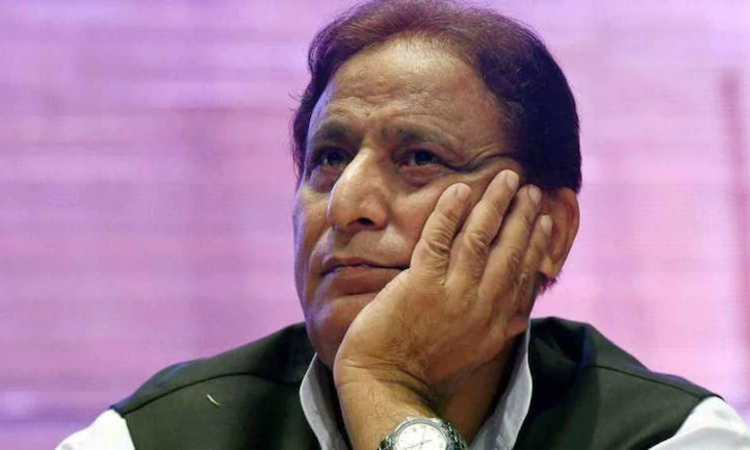
Image: PTI
The Allahabad High Court on Monday directed the Enforcement Directorate (ED) to file an affidavit by Tuesday clarifying whether the grounds of arrest were offered/served to former Uttar Pradesh Minister and Samajwadi Party leader Mohd. Azam Khan when he was arrested on October 31 in a money laundering case.
A Bench of Justice Rajiv Gupta and Justice Devendra Singh-I sought the affidavit after the ED stated that Khan was repeatedly asked to accept the grounds of arrest, but he refused to accept them. The matter will again be heard tomorrow, when the Court is likely to pass orders.
The issue arose during the hearing of Khan's writ petition challenging his arrest by the ED on October 31, just 40 minutes after he was released from Rampur jail upon securing bail in the dual PAN card case.
Appearing for the ED, Senior Advocate Zoheb Hossain had argued that the agency made 3-4 attempts to serve the grounds of arrest at the time of arrest, which Khan refused.
He further submitted that the grounds of arrest, along with the remand application and reasons to believe, were subsequently supplied within 12-14 hours, when Khan was produced before the Special Court.


According to the ED, Khan acknowledged receipt of the documents under protest by signing the relevant endorsement, while his advocate also acknowledged receiving copies.
Relying on the Supreme Court's judgment in Ram Kishor Arora, Hossain argued that the expression 'as soon as may be' under Section 19 of the Prevention of Money Laundering Act (PMLA) permitted communication of the grounds of arrest within 24 hours.
He submitted that the ED had complied with the constitutional requirement under Article 22(1), as the grounds were eventually supplied within that period despite Khan's alleged refusal at the time of arrest.
However, Senior Advocate Kapil Sibal, appearing for Khan, disputed the ED's stance.
When the ED played video recordings showing that Khan was offered the grounds of arrest, Sibal disputed its interpretation as he contended that the footage did not establish that Khan refused to receive the grounds of arrest.
Sibal said that the video recordings did not contain any clear statement by the officer that the grounds of arrest were being offered to Khan and that he was refusing to accept them.
In view of this, the Bench directed the ED to place its version on affidavit.
"We are keeping this matter tomorrow. You file an affidavit by tomorrow," the Court told the ED counsel.
The Bench clarified that the affidavit should specifically place on record the ED's assertion that the grounds of arrest had been offered to Khan.
"Let it be on record on an affidavit that yes, it was offered, and you deny it. We will pass appropriate orders tomorrow," the Bench observed.
Earlier, appearing for Khan, Senior Advocate Sibal argued that successive criminal cases are being lodged against Khan whenever he was about to secure release and that it is not a case of prosecution, but 'persecution'.
"ED and the authorities in Uttar Pradesh are acting hand in glove for the purposes of persecuting the petitioner...An attempt was made to ensure that the petitioner remains in jail. For the 2024 election, and now the 2027 election", Sibal argued.
On the other hand, opposing the petition, Senior Advocate Hossain, appearing for the ED, argued that the scope of the present proceedings was limited to examining whether Khan's arrest violated Article 22(1) or involved procedural violations affecting his fundamental rights.
He submitted that the petition did not challenge the underlying predicate offences, the FIRs, or the ECIR and its addendum. It was also not a bail petition, he argued.
Relying on the Supreme Court's judgments, Hussain contended that the ED had five contemporaneous documents, including a Panchnama and video recordings, demonstrating that Khan was repeatedly asked to read and receive the grounds of arrest but refused.
Read more about the arguments made form both sides here : 'ED Arrest Part Of Political Vendetta To Keep Me In Jail Till 2027 UP Elections' : Azam Khan Argues Before Allahabad High Court