



- Home
- /
- High Courts
- /
- Allahabad High Court
- /
- Selective Investigation And...
Selective Investigation And Prosecution Under Gangsters Act Corrodes Rule Of Law: Allahabad High Court
Upasna Agrawal
22 Dec 2025 11:45 AM IST
Observing that bail conditions are routinely flouted by gangsters and repeated adjournments are taken in Court, the Allahabad High Court observed,“At its core, the concept of a democratic State rests on the premise that every citizen is not only equal before law but equally entitled to its protection and equally significant in the eyes of a welfare State. Administrators must bear in mind...
This is a premium content
Available exclusively to
Our subscribers
Subscribe Premium 
INR 1099+GST
Your support helps us to bring you more content at
an affordable subscription scheme !!!
All payment options available
Observing that bail conditions are routinely flouted by gangsters and repeated adjournments are taken in Court, the Allahabad High Court observed,
“At its core, the concept of a democratic State rests on the premise that every citizen is not only equal before law but equally entitled to its protection and equally significant in the eyes of a welfare State. Administrators must bear in mind that the choices they make ultimately shape the administration of justice- and history not only records those choices, it also repeats them. This Court reminds the Home Department that 'selective investigation' and 'selective prosecution' are antithetical to the rule of law and inevitably corrode public trust in governance.”
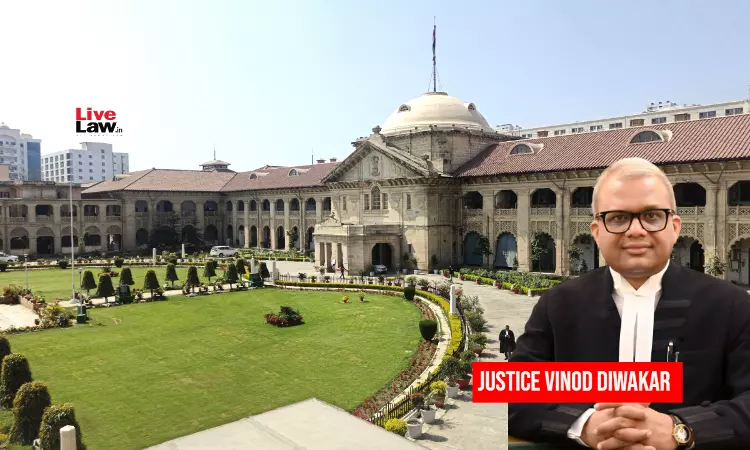
While dealing with a case under the U.P. Gangsters and Anti Social Activities (Prevention) Rules, 2021 for quashing of FIR registered without recording satisfaction as per the Act, Justice Vinod Diwakar observed that in districts where Commissionerate system had been installed, the gang charts were not being approved by a meeting where the District Magistrate was a part. However, wherever the Commissionerate was not present, then a joint meeting held between the District Magistrate and the Senior Superintendent of Police (S.S.P.) for approving gang charts.
The Court sought explanation from the State as to why the DM was not being included despite the mandate of Rule 5(3)(a) of the U.P. Gangsters Rules, 2021 which mandates a joint meeting between District Magistrate and the Senior Superintendent of Police (S.S.P.)/ Commissioner of Police for approval of a gang chart.
The Government Advocate had submitted that based on Government notification dated 26.11.2022 in exercise of the powers under sub-section (2) of Section 20 of the Cr.P.C., the Governor appoints all Additional Commissioners of Police, Joint Commissioners of Police, and Commissioners of Police of the aforesaid metropolitan areas as Additional District Magistrates and confers upon them all powers of District Magistrates, even under the Gangster Act.
Thereafter, the Court again raised a query as to why police was given unfettered powers in Commissionerate Districts whereas the same was not true for Districts where there was no Commissionerate.
Though Sections 107, 117, 133, 144 and 145 Cr.P.C. were cited to justify excluding the District Magistrate(s) from the mandatory requirement under Rule 5(3)(a) of the U.P. Gangsters and Anti-Social Activities (Prevention) Rules, 2021, the Court raised an issue regarding misuse of police power over street-level and petty offenders while the actual gangsters and organized crime syndicates remain largely unaffected.
“The State has not put in place any policy for the expeditious disposal of cases against such gangsters, for securing witness production, for the fair implementation of witness protection schemes, for ensuring timely production of prosecution witnesses in Court, or for sensitizing District Government Counsels to provide meaningful assistance to the Court, and over and above there is no program of the State Government to fix the accountability on the police except old fashioned departmental inquiries, often initiated against Inspector and below rank officers.”
Further, it observed,
“Bail conditions are routinely flouted by gangsters and resourceful persons engaged in organized crime, as the JD (Prosecution) and the DGCs are not effectively discharging their duties to secure their presence before the Court on every date. Repetitive adjournment applications filed on behalf of accused persons are frequently allowed, while prosecutors neither object to such adjournments nor pursue cancellation of bail. There is no mechanism or State programme to regulate the affairs of prosecutors and to fix accountability.”
Accordingly, the Court directed the State to provide data on the basis of satisfaction on which the Commissionerate has been functioning under the U.P. Gangsters and Anti-Social Activities (Prevention) Act, excluding the District Magistrate. It further required the State to provide data on whether crime has reduced since introduction of the Commissionerate system and whether the officers who were now carrying out functions of the DM had been trained for such purposes.
The Court also directed the Director General of Police (Prosecution) shall furnish comprehensive district-wise data under the Gangster Act. The Home Department was directed to produce data on disciplinary proceedings and actions against officers misuse of power, etc., in matters pertaining to the Gangsters Act or in any other ancillary issue.
Case Title: Rajendra Tyagi And 2 Others v. State of U.P. and Another [APPLICATION U/S 482 No. - 6547 of 2025]
Case citation : 2025 LiveLaw (AB) 561
Note: The matter has been heard at length and judgment has been reserved.
Tags


