



- Home
- /
- High Courts
- /
- Allahabad High Court
- /
- Death Of Weaver Can't Be Ground To...
Death Of Weaver Can't Be Ground To Deny Housing Colony Quarter To His Widow, Weaving Is A Hereditary Art: Allahabad High Court
Upasna Agrawal
8 July 2026 6:30 PM IST
The Allahabad High Court has held that once the Government has itself decided to transfer quarters in a weavers' colony to the occupant-weavers in possession, the death of the weaver cannot be a ground to deny the same rights to his widow. Observing that weaving in India is a hereditary art passed on to the next generation, the Court held that the family of a weaver cannot be displaced from...
This is a premium content
Available exclusively to
Our subscribers
Subscribe Premium 
INR 1099+GST
Your support helps us to bring you more content at
an affordable subscription scheme !!!
All payment options available
The Allahabad High Court has held that once the Government has itself decided to transfer quarters in a weavers' colony to the occupant-weavers in possession, the death of the weaver cannot be a ground to deny the same rights to his widow.
Observing that weaving in India is a hereditary art passed on to the next generation, the Court held that the family of a weaver cannot be displaced from the colony upon the death of the head of the family.
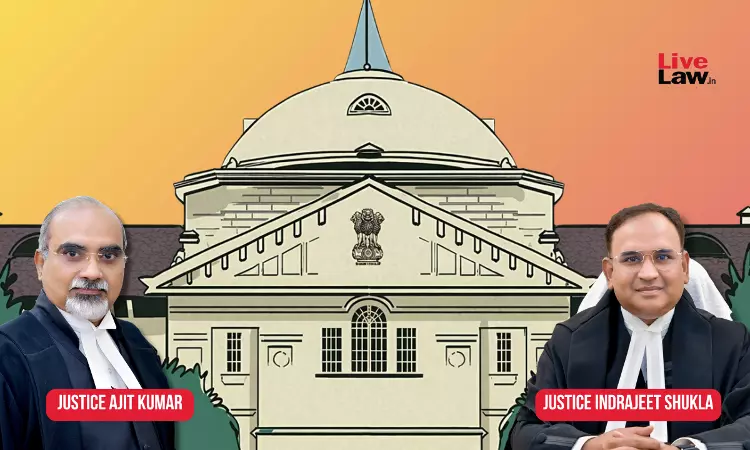
The bench of Justice Ajit Kumar and Justice Indrajeet Shukla held,
“Once the Government had itself decided to transfer quarters to the occupant-weavers in possession, the death of a husband-weaver cannot be a ground to deny same rights to weaver's widow. In a family of weavers in India, all members do weaving and the weaving is a hereditary art that passed on to the next generation. We cannot permit death of this art by displacing the members of the family of a weavers from the colony upon the death of head of the family”
Petitioner's husband was allotted Quarter No.3, Bunkar Colony, Nati Imli (Labour Colony Chauraha), District Varanasi under a State sponsored housing scheme launched for silk weavers. He remained in possession and continuously paid rent against the quarter. After his death, the petitioner, being his widow, inherited the possessory rights. Two persons forcibly grabbed possession over a small portion of the quarter.
On the petitioner's complaint and representations, the Assistant Director, Handloom and Textile Industries, Varanasi issued notices to the two occupants to vacate. After directions issued by the High Court in earlier writ petitions, the Assistant Director held by order dated 18.10.2014 that the quarter was originally allotted to petitioner's husband and that the two occupants were trespassers. Their challenge to this order was dismissed by the High Court, and in 2015 the encroached portion was got vacated with police assistance and sealed.
However, the recovered portion was not restored to the petitioner. She approached the High Court seeking possession of the locked part of the quarter and a decision on her application for the same.
The Court noted that the stand taken in the counter affidavit that no allotment was ever issued in favour of petitioner's husband ran contrary to the order of dispossession passed on 18.10.2014 by an officer of the same rank. It had directed the Assistant Director to place the allotment list of all allottees of the colony before it on affidavit, failing which he was to appear in person.
Since the State failed to produce the list, the Court observed,
“this Court is left with no other option except to draw an adverse inference against the State's stand and to treat the fact mentioned in order dated 18.10.2014 qua allotment of late Mati Ullah to be correct which consistently remained intact even after several round of litigation before this Court.”
The Court observed that the Committee constituted in 1996 for identifying occupants of the colony had itself acknowledged the petitioner's husband as a valid occupant by placing him at serial no.3 of its list. It further observed that the State had never questioned the petitioner's locus as wife of a valid allottee in the earlier rounds of litigation.
“Once the allotment could not be disputed there was no justification for the authorities to have withheld possession of any part of the quarter, especially after evicting the unauthorized occupants. Such retention of possession is wholly illegal, arbitrary and is without authority of law.
Holding that the respondents cannot be allowed to act contrary to their own records and orders, the Court allowed the writ petition and directed the Assistant Director to restore possession of the locked part of the quarter to the petitioner forthwith, and the transfer deed was directed to be executed in her favour as the successor of late Mati Ullah (petitioner's husband).
Case Title: Kamrunnisha v. State of U.P. and 3 others 2026 LiveLaw (AB) 369
Case Citation: 2026 LiveLaw (AB) 369
Tags


