



- Home
- /
- High Courts
- /
- Allahabad High Court
- /
- Defence In Written Statement Can't...
Defence In Written Statement Can't Be Converted Into Ground For Rejection Of Plaint Under Order 7 Rule 11 CPC: Allahabad High Court
Upasna Agrawal
11 Sept 2026 10:05 AM IST
The Allahabad High Court has held that a defence which, if established, may defeat the plaintiff's claim cannot ordinarily be converted into a ground for rejection of the plaint under Order VII Rule 11(a) of the Code of Civil Procedure. It held that the enquiry rests on the averments in the plaint alone and pleas taken by a defendant in his written statement are not relevant to deciding...
This is a premium content
Available exclusively to
Our subscribers
Subscribe Premium 
INR 1099+GST
Your support helps us to bring you more content at
an affordable subscription scheme !!!
All payment options available
The Allahabad High Court has held that a defence which, if established, may defeat the plaintiff's claim cannot ordinarily be converted into a ground for rejection of the plaint under Order VII Rule 11(a) of the Code of Civil Procedure.
It held that the enquiry rests on the averments in the plaint alone and pleas taken by a defendant in his written statement are not relevant to deciding whether the plaint discloses a cause of action.
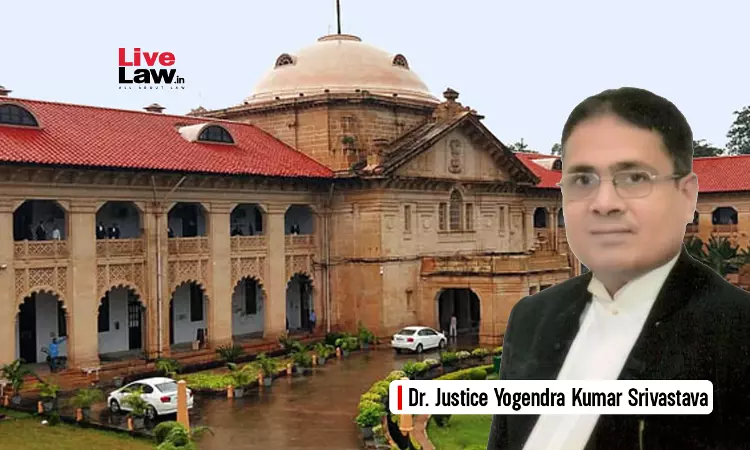
Justice Dr. Yogendra Kumar Srivastava held,
“The existence of a cause of action and the proof of the facts constituting such cause of action are distinct matters. A defence which, if established, may defeat the plaintiff's claim cannot ordinarily be converted into a ground for rejection of the plaint under Order VII Rule 11(a) CPC.”
The dispute concerns a shop at Bazaar Nadrai Gate, near Jain Mandir, Kasganj, belonging to the respondent-Trust. The petitioner claims to have succeeded to the tenancy in 2005 on his father's death, at a rent of Rs. 1,000 per month. In 2019 the Trust sued him for eviction before the Judge, Small Causes Court/Civil Judge (Senior Division), Kasganj.
In his written statement the petitioner invoked Order VII Rule 11 CPC, pleading that the plaint did not state when, where or in what manner the cause of action had arisen. He also pleaded that the Trust was not a juristic person competent to sue, that its Secretary had no authority to issue the notices or institute it, that the notices were never served, and that rent for the period from 01.10.2016 to 31.05.2018 had been deposited under Section 30(1) of the Uttar Pradesh Urban Buildings (Regulation of Letting, Rent and Eviction) Act, 1972.
The trial court decided the objection against him and the District Judge, Kasganj dismissed his revision. Before the High Court, counsel for the petitioner submitted that the other objections to maintainability raised in the written statement had neither been considered nor adjudicated by the courts below.
The Court observed that the plaint pleaded the landlord-tenant relationship, the last payment of rent on 30.08.2016, arrears running from 01.10.2016 and the notices dated 21.09.2017, 07.10.2017 and 01.11.2017 stated to have been sent by registered post. Taken at face value, those averments disclosed the factual foundation for the eviction relief claimed.
The petitioner's remaining pleas, it held, concerned the correctness of the plaintiff's allegations, the authority of the person instituting the suit and the effect of the deposits, matters going to ultimate entitlement to a decree rather than to disclosure of a cause of action.
“The Court must guard against both extremes: it must not permit a plaint which, on a meaningful reading, discloses no real right to sue to proceed merely because it contains cleverly drafted assertions; equally, it cannot reject a plaint by testing the correctness of its averments, weighing the defence, or determining disputed questions which properly fall for adjudication at the trial. Where the plaint, taken at face value and read as a whole, discloses facts constituting a right to seek the relief claimed, the objection under Order VII Rule 11(a) CPC must fail.”
While affirming the courts below, the Court held that the revisional court ought not to have relied on the tenant's admission of tenancy in his written statement.
“To the extent the revisional court also took note of the admission contained in the written statement, the same was not germane to the determination of the objection under Order VII Rule 11(a) CPC and, in any event, was unnecessary to sustain the conclusion reached by the trial court.”
Clarifying that it had decided nothing on the arrears, the notices, the authority of the Trust or its Secretary or the applicability of the Uttar Pradesh Urban Buildings (Regulation of Letting, Rent and Eviction) Act, 1972, the Court left the petitioner free to urge all his defences before the trial court, where the suit is at the stage of hearing.
Finding no patent jurisdictional error, perversity or manifest illegality in the orders impugned, it disposed of the petition.
Case Title: Neeraj Maheshwari vs. Shri Narayanlal Dharamshala Trust, Kasganj 2026 LiveLaw (AB) 692
Citation: 2026 LiveLaw (AB) 692
Counsel for Petitioner :- Aarushi Birla, Utkarsh Birla
Counsel for Respondent :- Ashutosh Ganguli, Pranab Kumar Ganguli
Tags


