High Court Directs Identification Of Dog-Bite Hotspots In Lucknow, Prayagraj; Orders Humane Removal Of Aggressive Dogs
Sparsh Upadhyay
21 Oct 2026 7:31 PM IST
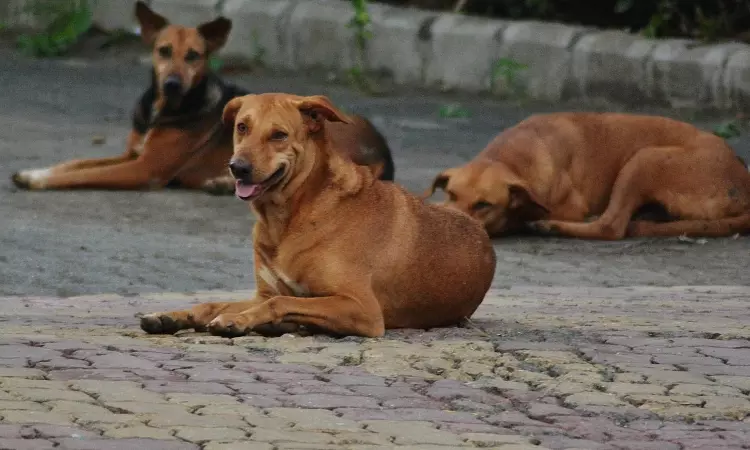
The Allahabad High Court has directed the Municipal Commissioners of Lucknow and Prayagraj to identify dog-bite hotspots in their areas/cities and undertake the exercise of humane capture and removal of dogs from such areas.
The civic authorities have been asked to give priority to dogs found on verification to have repeatedly attacked persons or shown aggressive behaviour, particularly where several complaints have been received.
The Court sought details of reported human dog-bite cases from the past 3 years together with municipal complaints and veterinary records.
The authorities have been tasked with preparing a year-wise, area-wise statement identifying where the bites occurred, so far as recorded, and the areas showing repeated or increasing incidents as well as a detailed compliance affidavits explaining the action taken.


A bench of Justice Ajit Kumar and Justice Garima Prashad passed these directions on October 1 in a suo motu compliance proceeding concerning the implementation of the Supreme Court's directions on stray dogs and dog-bite incidents.
The matter has been listed for further hearing on November 5.
In its order, the Court noted that though the affidavits filed by the State and other authorities disclosed various administrative steps taken, it considered it necessary to examine whether these steps had actually been implemented on the ground.
Therefore, the Court decided to start direct monitoring of implementation in Lucknow and Prayagraj, within their municipal corporation limits, through a practical and phased exercise.
The Municipal Commissioners have further been asked to identify at least 30 additional locations for inspection, apart from the locations identified through dog-bite records.
These may include large hospitals, schools, railway stations, markets, parks and other places of public movement, including their premises, adjoining roads and access areas.
The Court directed that the exercise be completed within 1 month.
The Court directed that veterinary and municipal officers be deputed to inspect each identified location and record the estimated number of dogs, along with the date and method of estimation.
The officers must also identify dogs associated with repeated attacks or aggressive behaviour and document the steps taken during the past 3 years to remove, sterilise and vaccinate dogs, including the numbers involved wherever available.
The Court directed that after removing dogs, they must be taken to an identified Animal Birth Control (ABC) centre or an appropriate veterinary receiving facility for examination, treatment, sterilization and vaccination as clinically appropriate.
Dogs displaying aggressive behaviour or suspected of being rabid must be separately assessed and managed through suitable segregation or quarantine arrangements.
The authorities have also been directed to record the location and basis of identification of each dog, the receiving facility and the action taken.
Their reports must separately disclose removals undertaken after the Court's order, along with the present placement or disposition of dogs associated with repeated attacks or aggressive behaviour.
The Court has also sought details of deficiencies in the existing arrangements, including shortages of teams, manpower, expertise, equipment and appropriate methods.
The authorities must explain constraints relating to ABC centre capacity, staff qualifications, further treatment and lawful placement or release of dogs.
The action plans must indicate the estimated number of dogs remaining in each identified area, the number of aggressive dogs awaiting removal, and measures proposed to prevent recurrence of incidents and secure institutional premises.
The Lucknow Municipal Commissioner has additionally been directed to submit a note explaining how the claimed "Lucknow model" operates, the present role of the Jarhara training facility, and the verified results supporting its claimed success. The note must also identify practices that may be useful for other cities.
The Chief Medical Officers, municipal and veterinary officers, heads of institutions and designated nodal officers have been directed to assist in the exercise. The District Magistrates concerned must coordinate the process and resolve difficulties.
The Court directed that all action must comply with the Supreme Court's directions, the Animal Birth Control Rules, 2023 and applicable standard operating procedures issued by the Animal Welfare Board of India.
It clarified that the focused exercise in Lucknow and Prayagraj would not affect continuing compliance with the Supreme Court's directions across Uttar Pradesh or dilute earlier directions.
The amicus curiae has been asked to examine the affidavits and material filed by the State, Union ministries and departments, and the National Highways Authority of India, and assist the Court in assessing compliance and the need for further directions.
The Municipal Commissioners must file compliance affidavits detailing the action taken before the next hearing on November 5.