



- Home
- /
- High Courts
- /
- Allahabad High Court
- /
- UP Regularisation Rules Don't Apply...
UP Regularisation Rules Don't Apply To Employees Of District Rural Development Agencies Working Under Govt Schemes: Allahabad High Court
Upasna Agrawal
1 Sept 2026 12:15 PM IST
The Allahabad High Court has held that persons engaged by a District Rural Development Agency (DRDA) cannot claim the benefit of the UP Regularisation of Persons Working on Daily Wages or on Work Charge or on Contract in Government Departments on Group 'C' and Group 'D' Posts (Outside the Purview of the Uttar Pradesh Public Service Commission) Rules, 2016, as the agency is a society...
This is a premium content
Available exclusively to
Our subscribers
Subscribe Premium 
INR 1099+GST
Your support helps us to bring you more content at
an affordable subscription scheme !!!
All payment options available
The Allahabad High Court has held that persons engaged by a District Rural Development Agency (DRDA) cannot claim the benefit of the UP Regularisation of Persons Working on Daily Wages or on Work Charge or on Contract in Government Departments on Group 'C' and Group 'D' Posts (Outside the Purview of the Uttar Pradesh Public Service Commission) Rules, 2016, as the agency is a society registered under the Societies Registration Act which discharges functions under the schemes and projects of the Government of India.
Rule 2 sub-clause (3) of the 2016 Rules provides that the Rules will not apply to persons engaged, employed or deployed on consolidated pay or fixed honorarium in schemes or projects of the State Government or a Government of India sponsored programme.
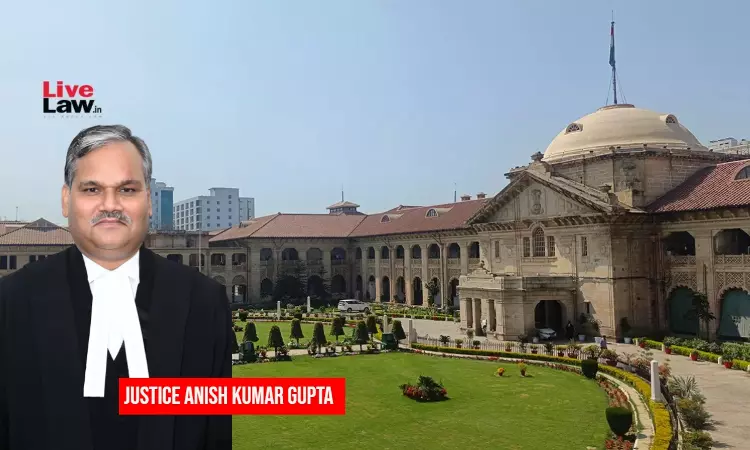
Justice Anish Kumar Gupta held,
“… since the petitioners were engaged by the DRDA, which is a Society registered under the Societies Registration Act and which is performing the functions under the Schemes and Projects of the Government of India, no benefit under the 2016 Rules can be accorded to the petitioner.”
Petitioners were engaged by the District Rural Development Agency in different districts on dates ranging between 1986 and 2003 as Data Entry Operator, Computer Operator and Programmer. It was their case that they had worked continuously since their initial engagement.
The petition, filed in 2014, sought regularisation/absorption on the post of Computer Programmer/Computer Operator along with salary in the regular pay scale applicable to the post, and in the alternative, regularisation as Statistical Assistant/Clerk in the DRDA. It was submitted that identically situated persons employed by the DRDA in Uttarakhand had been absorbed by the government.
Petitioners relied on Government Orders dated 13.08.2015 and 09.12.2021, the latter referring to Rule 6(1) of the 2016 Rules.
The Court observed that the Government Order dated 13.08.2015 applies to Government Departments, Autonomous Bodies, Public Enterprises and Corporations, Local Bodies, Development Authorities and District Panchayats, and not to the DRDA. It held that
“..the same is not applicable to the DRDA, which is a Society registered under the Societies Registration Act, which is performing the functions in terms of the Schemes of the Government of India. Therefore, in the considered opinion of this Court, no benefit under the said Government order can be accorded to the petitioners herein.”
The petitioners had also sought quashing of an order dated 03.02.2009 passed by the Chief Secretary, Government of UP, and an order dated 20.05.2010 passed by the Secretary, Rural Engineering Department, by which the claims of identically situated persons had been rejected.
The 2009 order was passed on a direction of the High Court to consider those claims in view of the judgment of the Supreme Court in State of Karnataka vs. Umadevi. The 2010 order proceeded on the footing that the posts of Computer Programmer Operator and Data Entry Operator do not figure in the staffing pattern directed by the Government of India for the DRDA.
Since the petitioners were not parties to those petitions or to the representations decided by the said orders, the Court held that they had no right to seek their quashing.
“The persons aggrieved by the rejections might have the right to challenge the said orders but the said orders cannot be quashed at the behest of the petitioners herein.”
The Court dismissed the petition.
Case Title: Rajendra Kumar And 33 Ors v. State of U.P. and Another 2026 LiveLaw (AB) 640
Case Citation : 2026 LiveLaw (AB) 640
Tags


