



- Home
- /
- High Courts
- /
- Allahabad High Court
- /
- UP Revenue Code | Examination Of...
UP Revenue Code | Examination Of Revenue Officials Not Mandatory Unless State Adopts Rishi Pal Singh Guidelines: Allahabad High Court
Upasna Agrawal
23 Sept 2026 10:15 AM IST
The Allahabad High Court has held that the guidelines laid down by its bench in Rishi Pal Singh v. State of U.P. for proceedings under Section 67 of the U.P. Revenue Code, 2006 are not mandatory unless adopted by the State, and an eviction order cannot be assailed merely because they were not followed. Relying on the Coordinate Bench decision in Shahban v. State of U.P., the Court held that...
This is a premium content
Available exclusively to
Our subscribers
Subscribe Premium 
INR 1099+GST
Your support helps us to bring you more content at
an affordable subscription scheme !!!
All payment options available
The Allahabad High Court has held that the guidelines laid down by its bench in Rishi Pal Singh v. State of U.P. for proceedings under Section 67 of the U.P. Revenue Code, 2006 are not mandatory unless adopted by the State, and an eviction order cannot be assailed merely because they were not followed.
Relying on the Coordinate Bench decision in Shahban v. State of U.P., the Court held that such proceedings are to be decided as per the procedure under the Code and the Rules framed thereunder.
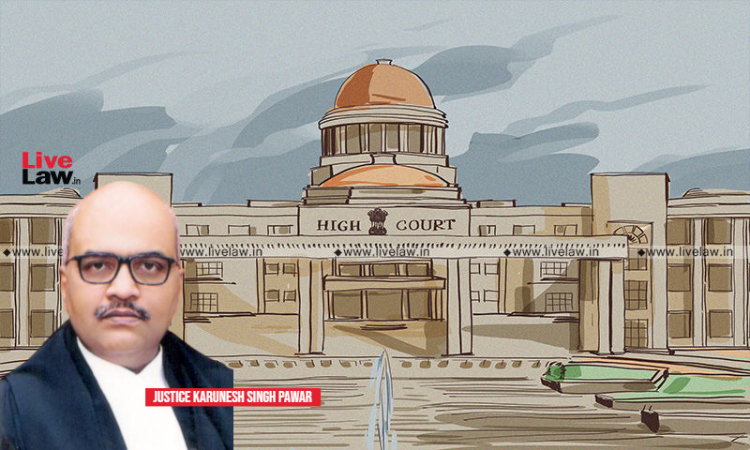
Noting the basis of the challenge, Justice Karunesh Singh Pawar observed,
“In the present case, the petitioner does not contend that any procedure expressly prescribed under the U.P. Revenue Code, 2006 or the Rules framed thereunder was not followed. The principal grievance of the petitioner is that he was not afforded an adequate opportunity of hearing and that the procedure indicated in Rishi Pal Singh (supra) was not followed.”
Proceedings under Section 67 were initiated against the petitioner on a Lekhpal report of 2018 stating that he had raised a pucca house and boundary wall over 0.006 hectare of Gaon Sabha land recorded as Naveen Parti. He filed his objection in July 2018 and sought time for evidence, but produced none till March 2023, when he was ordered to be evicted with Rs. 5,000 as damages. His appeal was dismissed.
Before the High Court, the petitioner claimed that the house stood on his own plots and that he could not appear due to a chronic ailment. Relying on Rishi Pal Singh, he argued that the enquiry under Rule 67(2) of the U.P. Revenue Code Rules, 2016 was a condition precedent to issuance of notice and had not been held.
The State submitted that the construction stood on public land and the petitioner had led no evidence despite opportunity.
The Court noted that Shahban had treated the Rishi Pal Singh requirement of examining and cross-examining the persons who submit the report as a significant departure from the statutory scheme, and had held that adopting the guidelines in full would turn the summary procedure under Section 67 into a regular one.
Rejecting the plea of illness, the Court found that the petitioner's medical documents related to November 2023 onwards, all after the eviction order. It held that he had ample time between 2018 and 2023 to substantiate his objection.
“Having regard to the said factual position, the petitioner cannot, at this stage, after conclusion of the proceedings and lapse of several years, successfully contend that he was denied an opportunity of hearing.”
Noting that the findings of the authorities below were concurrent, and referring to the Supreme Court's decision in Kaniz Ahmed v. Sabuddin, the Court held that authorities are not expected to be unduly lenient once encroachment on public land is established in accordance with law.
Accordingly, the writ petition was dismissed.
Case Title: Gorakhnath Dubey vs. State Of U.P. Thru. Prin. Secy. Revenue, Lko. And 2 Others 2026 LiveLaw (AB) 744
Case Citation: 2026 LiveLaw (AB) 744
Tags


