



- Home
- /
- High Courts
- /
- Allahabad High Court
- /
- Allahabad High Court Sets Aside...
Allahabad High Court Sets Aside 159-Page Commercial Court Order; Says Length Of Judgment No Substitute For Judicial Scrutiny
Upasna Agrawal
12 Nov 2026 12:00 PM IST
The Allahabad High Court has held that an order rejecting objections to an arbitral award under Section 34 of the Arbitration and Conciliation Act, 1996 which does no more than reproduce the award and the written submissions of the parties is only a summary disposal, however long it may run, and is a fit case for remand in appeal under Section 37.The order before the Court ran to 53...
This is a premium content
Available exclusively to
Our subscribers
Subscribe Premium 
INR 1099+GST
Your support helps us to bring you more content at
an affordable subscription scheme !!!
All payment options available
The Allahabad High Court has held that an order rejecting objections to an arbitral award under Section 34 of the Arbitration and Conciliation Act, 1996 which does no more than reproduce the award and the written submissions of the parties is only a summary disposal, however long it may run, and is a fit case for remand in appeal under Section 37.
The order before the Court ran to 53 paragraphs over 159 pages, of which, it found, pages 6 to 84 were a reproduction of the award and pages 86 to 142 a reproduction of the written submissions.
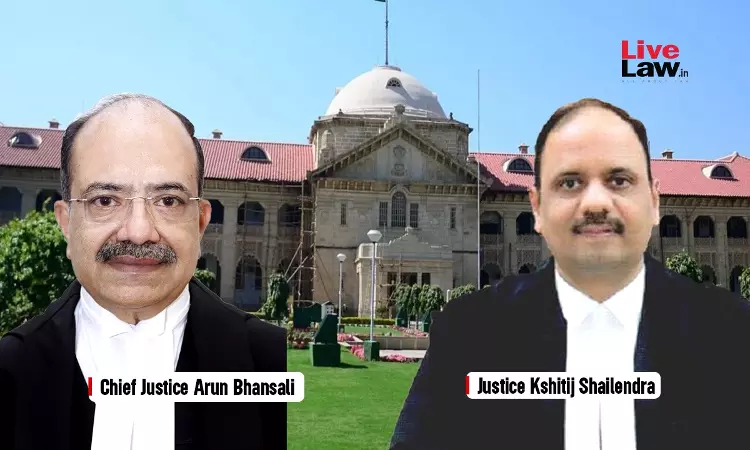
The bench of Chief Justice Arun Bhansali and Justice Kshitij Shailendra held,
“It is a fundamental attribute of judicial adjudication that the quality and efficacy of a judgment is determined not by the number of pages it occupies but by the depth of judicial scrutiny, the precision of its reasoning and the manner in which it resolves the controversy brought before the Court.”
The respondent had let out commercial premises to the appellant under a registered lease dated 24.06.2009 for 11 months at Rs. 5 lakh per month, expiring on 23.05.2010. Clause 11 made a lessee staying on after expiry without the lessor's written permission liable to pay damages/mesne profits at Rs. 50,000 per day. The appellant did not vacate, and sums at the monthly rate went on being demanded and paid up to March 2011, rent according to the appellant and damages for unauthorised use and occupation according to the respondent.
A sole arbitrator appointed on 01.04.2011 awarded the respondent damages at Rs. 50,000 per day with interest and directed the appellant to remove its fittings and fixtures. The Commercial Court, Gautam Budh Nagar dismissed the appellant's objections under Section 34 by order dated 08.12.2023.
In appeal, the appellant argued that the merits of its challenge had never been examined; that damages at Rs. 50,000 per day were excessive and awarded in ignorance of Sections 73 and 74 of the Contract Act, 1872; and that Clause 11 was displaced because rent at the agreed rate went on being accepted after expiry, attracting the deemed renewal of the lease under Section 116 of the Transfer of Property Act, 1882. It added that emails showed it had tried to vacate in March 2011 and that the keys it handed over were returned to it.
The respondent submitted that findings had been recorded in paragraphs 44 to 52 of the impugned order, that the arbitrator's view could not be disturbed where two views were possible, and that Clause 11 applied as there was no written permission to remain in possession.
All that the order offered by way of decision, the Court found, was a set of general observations that the arbitrator had applied his mind and that the award was neither perverse nor illegal. The defect, it said, went to the root of the adjudicatory exercise.
“In an apparent endeavour to create an impression of comprehensive consideration of the material on record, the Commercial Court has rendered an order which fails to disclose any meaningful adjudication of the material issues arising for consideration.”
The legality and quantum of the damages under Sections 73 and 74 of the Contract Act, the conduct of the parties and the applicability of holding over under Section 116 of the Transfer of Property Act had, it held, neither been examined nor adjudicated upon. Since Section 74 permits compensation not exceeding the sum named in the contract, the Court observed, the figure of Rs. 50,000 per day could be taken only as the outer limit of damages and not as the rate on which they were to be computed.
Referring to Bombay Slum Redevelopment Corporation Private Limited Vs. Samir Narain Bhojwani, where the Supreme Court set out the exceptional cases in which a remand in a Section 37 appeal may be warranted, among them summary disposal of a Section 34 petition without consideration of merits, the Court held,
“the present case, in our opinion, would fall within the category of 'exceptional cases' indicated in paragraph 29 of the judgment in the case of Bombay Slum (supra) as the disposal of petition under Section 34, in our opinion, notwithstanding length of the order impugned, is only a 'summary disposal'.”
Declining to say anything about the award itself lest it prejudice either side after remand, the Court allowed the appeal, set aside the order dated 08.12.2023 and remanded the case to the Commercial Court, Gautam Budh Nagar to be decided afresh in accordance with law, with utmost expedition.
Tags


