



Allahabad High Court Quashes Assistant Prosecution Officer Prelims Results, Says Unreserved Category Open To All At Every Stage
Upasna Agrawal
26 Nov 2026 8:00 PM IST
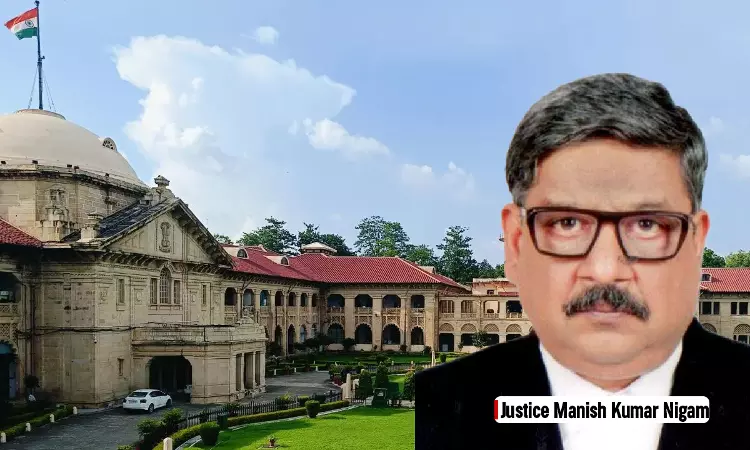
The Allahabad High Court has held that the open/unreserved category in a multi-tier recruitment examination is open to all candidates on merit at every stage, and that a reserved category candidate who secures more marks than the last unreserved candidate has to be placed in the open category list at the preliminary and mains stages as well, and not only when the final select list is drawn up.
Quashing the result of the preliminary examination of the APO Examination, 2025 declared by the Uttar Pradesh Public Service Commission on 30.04.2026, the Court held that the Commission had treated the open category as a compartment meant only for candidates who had claimed no reservation, with the result that 50% of the posts stood kept for the unreserved community at the preliminary as well as the written examination stage.
Justice Manish Kumar Nigam held,
“If a reserved category candidate, even though he has obtained more marks than the cut-off marks of the General category candidate, is excluded and ousted from the process of selection at the stage merely for the reason that he belongs to a reserved category, in my considered opinion, would be the worst form of discrimination, wholly impermissible under Articles 14 and 16 of the Constitution. The right of a candidate belonging to a reserved category, who has proved to be more meritorious to be placed in the Open category list, is not a rule of reservation, but a postulate of equality based on merit.”


The Commission issued Advertisement No. A-8/E-1/2025 on 16.09.2025 for approximately 182 vacancies, of which 27 posts were unreserved, 67 were reserved for Scheduled Castes, 9 for Scheduled Tribes, 61 for other backward classes and 18 were for the EWS category. The examination was to be held in three stages, namely, preliminary examination, mains examination and interview, with candidates fifteen times the advertised posts to be called for the mains and three times for the interview.
The three petitioners applied under the OBC category without seeking age relaxation. The preliminary examination was held on 22.03.2026 and its result, declared on 30.04.2026, showed that 2,856 candidates had qualified. The petitioners did not qualify. The mains examination was held from 28.06.2026 to 30.06.2026 and the interviews were going on in October 2026. By interim order dated 28.09.2026, the Court allowed the interviews to proceed but stayed the declaration of the result.
Petitioners pleaded that in preparing the category-wise lists after the preliminary examination, the Commission had treated the unreserved category as a category meant for candidates who had claimed no reservation, excluding reserved category candidates who had secured more marks than the last selected unreserved candidate. They also challenged the Commission's Office Memorandum dated 09.01.2020, which provided that reserved category candidates who had taken no relaxation in an essential condition would be accommodated in the unreserved category only at the time of final selection.
It was submitted that they were not aggrieved by the preparation of category-wise lists as such, but by the manner in which the unreserved list had been drawn, which converted the selection into a form of communal reservation.
On successive directions of the Court, the Commission disclosed on affidavit that 321 OBC candidates and 43 Scheduled Caste candidates had secured more marks than the last selected open category candidate, and admitted that all of them had been retained in their respective categories, to be placed in the open category only at the final selection.
Counsel for the Commission and the State contended that reservation under Section 3(6) of the Uttar Pradesh Public Services (Reservation for Scheduled Castes, Scheduled Tribes and Other Backward Classes) Act, 1994 applies only at the stage of final selection, that the preliminary examination is a screening test the marks of which are not counted for the final merit, and that placing meritorious reserved candidates in the open category at each stage would give them the benefit of migration more than once. It was also argued that such a candidate, if he later failed in the open category, would return to his own category and oust another reserved candidate.
The Court held the apprehension of multiple benefit to be misconceived, observing that a reserved category candidate may, on his own merit, exceed the unreserved cut-off at the preliminary stage and again on cumulative assessment at the final stage, without drawing upon reservation at any stage.
“The inclusion of reserved category candidate in open category list at the time of short-listing cannot be equated with 'migration', for no benefit or concession is availed.”
Rejecting the contention that no selection is involved in a screening test, the Court held that though the marks of the preliminary examination are not carried to the final merit list, there is an element of selection at that stage, as only the candidates who find a place in that list can sit in the mains examination.
“Even for the screening/Preliminary Examination merit has to be the main criteria and the procedure cannot be such which may hamper the merit itself, excluding more meritorious candidates cannot be sustained.”
The Court held that a uniform standard has to be applied at every stage, and that the open category list must be drawn first, in the number fixed by the examining body, purely on merit and irrespective of whether a candidate has claimed reservation, the reserved category lists being drawn only thereafter, excluding those already placed in the open list.
“A category will remain a category throughout the selection, and it cannot be held that at first two tiers of examination, the open category is a category reserved only for unreserved candidates, but at the final stage of selection, the open category will be a category open to all.”
Relying on Indra Sawhney, R.K. Sabharwal, Saurav Yadav and State of Rajasthan v. Rajat Yadav, the Court held that the open category is open to all on merit alone and that confining a more meritorious reserved candidate to a rigid slot would amount to communal reservation. It noted that in Chaya, the Supreme Court had held that such a candidate cannot be excluded from consideration in the unreserved category in the absence of an express prohibition in the recruitment rules or the notification. Apart from the Office Memorandum dated 09.01.2020, no statutory rule or Government Order prohibiting such a shift was brought to the notice of the Court.
On the objection that the petitioners were estopped, having participated in the selection with knowledge of the condition in the advertisement, the Court held that they were not challenging the preparation of category-wise lists, which had been disclosed, but the manner in which the unreserved list was being prepared, which could never have been perceived by a candidate.
On the objection that the challenge was hypothetical as the petitioners had failed the preliminary examination, the Court noted that the marks of that examination had not been declared, and that shifting 321 OBC and 43 SC candidates to the open category would have displaced 364 candidates from the reserved categories and altered the cut-off for every category, leaving fair chances of the petitioners finding a place in their own category. Relying on Shankarsan Dash v. Union of India, it also held that candidates who had cleared the mains examination acquired no right to appointment and were not necessary parties.
The Court further observed that the Commission had fixed an upper ceiling on the percentage of candidates to be sent for the mains examination and the interview from each reserved category, whereas the legislature has provided a minimum and not a maximum reservation, and that confining reserved candidates to their percentage had created a reservation for the unreserved category which is provided neither by the Constitution nor by the statute.
“Open category is open for all at every stage of the examination and cannot be treated as a category reserved for unreserved candidates. More meritorious reserved category candidates at every stage of examination, if they secure more marks than the last selected unreserved category candidate, have to be placed in the open category.”
Accordingly, the Court allowed the writ petition, quashed the Office Memorandum dated 09.01.2020 as well as the preliminary examination result declared on 30.04.2026, and directed the Commission to redraw the merit list of the preliminary examination and thereafter hold the mains examination afresh on the basis of the revised result before proceeding further with the selection.


