



- Home
- /
- High Courts
- /
- Allahabad High Court
- /
- Meritorious Reserved Candidates...
Meritorious Reserved Candidates Must Be Adjusted In Unreserved Category At Screening Stage, Not Only Final Selection: Allahabad High Court
Upasna Agrawal
3 Oct 2026 2:30 PM IST
The Allahabad High Court has held that a reserved category candidate who scores above the unreserved cut-off must be counted in the unreserved category at the preliminary or screening test stage itself, and not only when the final select list is drawn up, where the marks of the screening test are carried into the final merit. Condition no. 10 of the advertisement dated 22.12.2025 stipulated...
This is a premium content
Available exclusively to
Our subscribers
Subscribe Premium 
INR 1099+GST
Your support helps us to bring you more content at
an affordable subscription scheme !!!
All payment options available
The Allahabad High Court has held that a reserved category candidate who scores above the unreserved cut-off must be counted in the unreserved category at the preliminary or screening test stage itself, and not only when the final select list is drawn up, where the marks of the screening test are carried into the final merit.
Condition no. 10 of the advertisement dated 22.12.2025 stipulated that reserved category candidates would be adjusted against the unreserved category in the final selection only, and only where no benefit or concession in the qualifying standard had been availed at the screening examination. It was traceable to the Commission's office memorandum dated 09.01.2020, which circulated a decision taken on 18.12.2019 to the same effect.
Setting aside Condition no. 10 of a U.P. Public Service Commission advertisement, the Court held that the Commission's office memorandum confining such adjustment to the final stage was unreasonable and suffered from non-application of mind to relevant aspects.
Section 3(6) of the U.P. Public Services (Reservation for Scheduled Castes, Scheduled Tribes and Other Backward Classes) Act, 1994 provides that a person belonging to a reserved category who gets selected on the basis of merit in an open competition with general candidates shall not be adjusted against the vacancies reserved for that category.
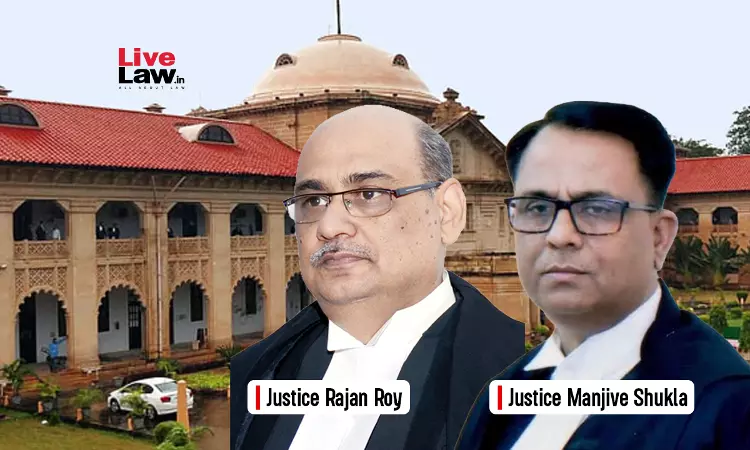
The bench of Justice Rajan Roy and Justice Manjive Shukla held,
“The O.M. dated 09.01.2020 and the decision dated 18.12.2019 referred therein insofar as it restricts the migration or adjustment of reserved category candidates to the unreserved category at the the final stage of selection only, suffers from non-application of mind to relevant aspects and is unreasonable. There is no constitutional or legal basis for such a blanket prescription, that too, by the Commission, especially when Section 3(6) of the Act, 1994 does not put any such restriction.”
The advertisement was issued for several posts, including that of Swasthya Shiksha Adhikari, with which the Court was concerned. Recruitment to the post is in two stages, a screening test and an interview, and under Clause 2(c) of the advertisement, which reproduces Rule 4(c) of the Uttar Pradesh Direct Recruitment through Public Service Commission (Screening Examination) Rules, 2025, the final merit is determined by adding 75% of the screening test marks to 25% of the interview marks.
The appellants applied for the post but, before appearing in the selection, filed a writ petition seeking quashing of the office memorandum and of Condition no. 10, and a direction that every candidate securing marks equal to or above the unreserved cut-off be treated as an unreserved category candidate at the stage where merit is first determined.
The Single Judge dismissed the petition as premature, holding that the petitioners had no right at that stage to challenge the notification and the advertisement. It was held that it rested merely on apprehension, and it was devoid of merit as no actionable cause had arisen.
In the special appeal, the Division Bench held by its order dated 13.05.2026 that the writ Court had erred, stayed Condition no. 10 and the decision dated 09.01.2020, and later tagged the writ petition with the appeal so both could be decided together.
The Court observed that Section 3(6) drew no distinction as to its applicability based on the stage of recruitment and created no bar on its application at the initial stage of a selection.
A Division Bench in U.P. Power Corporation Ltd. & Anr. Vs. Nitin Kumar & Ors. had held that the principle embodied in Section 3(6) is not confined to the stage when the final select list is drawn up, a case where O.B.C. candidates who had scored higher than the last shortlisted unreserved candidate were kept out of the unreserved shortlist merely because they had declared themselves to be of a reserved category.
The Supreme Court in Rajasthan High Court & Another Vs. Rajat Yadav & Others had likewise applied such adjustment at the preliminary stage, rejecting the objection of double benefit as resting on the wrong assumption that a reserved category candidate avails reservation at every stage.
Counsel for the Commission had initially submitted that no question of migration arose because merit was not determined at the screening stage, but subsequently accepted that 75% of those marks are added to the final marks. The factual premise on which non-adjustment at the preliminary stage had been justified was therefore incorrect, and admittedly non-existent.
“The screening test in the case at hand is not stricto sensu a mere shortlisting exercise instead it has bearing on the final selection, substantially, as, largely (75% marks) the marks in the final selection are based on this very test and interview comprises of only 25% of total marks.”
The Court also referred to Special Appeal No. 200 of 2026, where an O.B.C. candidate was shut out of the main examination at the screening stage for not reaching his own category's cut-off, which stood higher than the unreserved cut-off he had crossed, while an unreserved candidate with lower marks was allowed to appear. It had observed there that this would be an apparent violation of Article 16(1). The memorandum, the Court said, takes no account of such a situation.
“inclusion or adjustment of a reserve category candidate in the list of unreserved category candidates, which the Commission refers as migration is applicable even at the preliminary or screening test stage, especially where the marks obtained in such preliminary/screening tests are added to the marks of the final selection or a fact situation as existed in Nitin Kumar (supra).”
On the second limb of the office memorandum, which confined adjustment to candidates who had availed no relaxation in the qualifying standard, the Court held that Section 8 of the Act, 1994, which permits concession in examination fees and relaxation in the upper age limit, contains no prohibition on such inclusion.
It noted that the Supreme Court in Jitendra Kumar Singh and another vs. State of U.P. and others had held that concessions falling within Section 8 cannot be said to be relaxations in the standard prescribed for qualifying in the written examination, and that the Government instructions dated 25.03.1994 made it immaterial that a candidate had availed such a facility. Nothing before the Court showed those instructions to have been revoked, and the State filed no counter affidavit.
Referring to Union of India and others vs. Sajib Roy and Chaya and others vs. State of Maharashtra and another, the Court observed that migration of a candidate who had availed a concession in a qualifying examination depends on the recruitment rules or the employment notification, and is permissible where these permit it or are silent on it.
Counsel for the Commission ultimately stated that the relaxation spoken of in the memorandum meant relaxation in minimum qualifying standards such as educational qualification and cut-off marks, and not fee, age or attempts, and that it had no application to this recruitment at all, a statement he could not trace to the counter affidavit.
Turning to the Commission's authority to take such a decision, the Court observed that reservation policy for public services in the State is governed by the Act, 1994 and Government Orders issued by the State, referable to Articles 16(4) and 16(4-A), and that conditions of recruitment and service are the domain of the employer under Article 309. Article 320(4) expressly dispenses with consultation of the Commission on the manner in which provision under Article 16(4) may be made, it held.
“The Commission is not the employer under Article 320 (1) of the Constitution, it has the duty to conduct examinations for appointments to the services of the 'State'. It has no authority to decide the conditions of service, including the policy of reservation and its modalities.”
Having held the memorandum inapplicable to the facts, the Court expressly declined to pronounce conclusively on the Commission's jurisdiction. It left the Commission to answer, as per law and at the earliest, whether it has the power to impose such conditions regarding reservation policy, whether a blanket memorandum of this kind is otherwise sustainable, and whether it can be applied mechanically to all recruitments without reference to the rules of the department concerned.
On the objection that the appellants could not challenge Condition no. 10 having already applied under the advertisement, the Court relied on Dr. (Major) Meeta Sahai vs. State of Bihar and others, where the Supreme Court held that a candidate who agrees to participate in a selection accepts the prescribed procedure and not the illegality in it. As the challenge rested on constitutional provisions and was brought before the screening test was held, there was no question of estoppel.
The Court also rejected the plea that the advertisement predated Rajat Yadav, holding that all judgments apply retrospectively unless specifically made prospective.
Declaring that the office memorandum does not apply to the recruitment at hand, the Court set aside Condition no. 10 so far as it related to the post in question and directed the Commission to consider its applicability to the other posts advertised.
The Commission was directed to revisit the memorandum within three months, and the State Government to lay down a specific policy within the same period. Holding that the appellants, if they secure more marks than the minimum unreserved cut-off in the screening test, will have to be included in the unreserved category, the Court allowed the special appeal and the writ petition.
Tags


