



- Home
- /
- High Courts
- /
- Andhra Pradesh High Court
- /
- Repeated Extensions Do Not Give...
Repeated Extensions Do Not Give Temporary Employees Right To Continue In Service: AP High Court
Ritika Verma
29 Oct 2026 2:10 PM IST
The Andhra Pradesh High Court has held that temporary employees cannot claim continuation in service as a matter of right after expiry of their fixed tenure, even if their engagements have been extended repeatedly.The Court made the observation while dismissing a plea by 12 temporary employees of Sri Venkateswara University, Tirupati, challenging the discontinuation of their services...
This is a premium content
Available exclusively to
Our subscribers
Subscribe Premium 
INR 1099+GST
Your support helps us to bring you more content at
an affordable subscription scheme !!!
All payment options available
The Andhra Pradesh High Court has held that temporary employees cannot claim continuation in service as a matter of right after expiry of their fixed tenure, even if their engagements have been extended repeatedly.
The Court made the observation while dismissing a plea by 12 temporary employees of Sri Venkateswara University, Tirupati, challenging the discontinuation of their services without prior notice or formal termination orders.
At the outset, the Court noted that the petitioners had failed to establish any legal right warranting interference under Article 226 of the Constitution, which empowers High Courts to issue writs for the enforcement of legal rights.
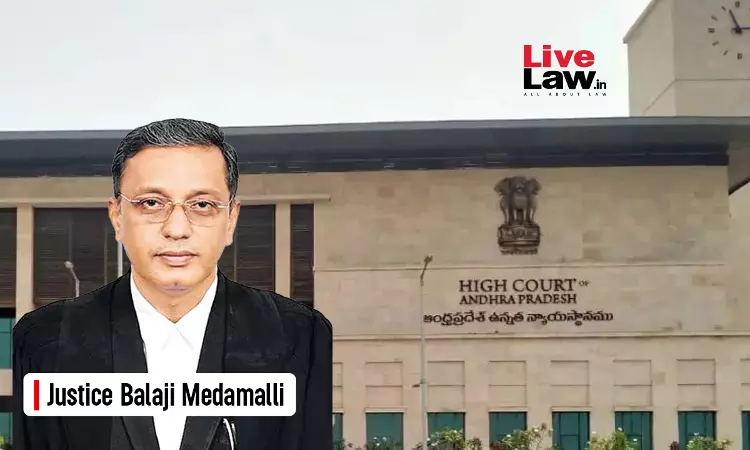
A Single Judge Bench of Justice Balaji Medamalli observed:
“The material placed on record clearly establishes that the petitioners were engaged only as temporary employees for a fixed tenure. Such engagement does not create any enforceable right in their favour to seek continuation beyond the period specified in the appointment orders. Upon expiry of the tenure, the engagement comes to an end by efflux of time and cannot be construed as termination from service requiring compliance with the principles of natural justice. The petitioners, having accepted the terms and conditions governing their temporary engagement, cannot claim continuation as a matter of right after expiry of the period for which they were appointed.
It is well settled that temporary or daily-wage employees do not acquire any vested right to regular appointment or continuation in service merely on account of having rendered service for a considerable period. Repeated extensions of temporary engagement, by themselves, do not confer any right contrary to the terms and conditions of appointment. In the absence of any statutory right or contractual entitlement, the petitioners cannot claim continuation beyond the period of their engagement.”
The petitioners had initially been appointed as temporary employees for periods of 89 days on a daily-wage basis. Their engagements were extended from time to time, with a break of one working day between successive terms. They claimed to have discharged their duties to the satisfaction of the university authorities and possessed the requisite qualifications and competence for their respective technical and administrative functions.
However, the Registrar subsequently orally instructed them not to report for duty any further. Upon making enquiries, they learnt that the Registrar had received instructions from the Vice-Chancellor not to extend the engagements of daily-wage employees until further orders.
Challenging this decision, the petitioners approached the High Court under Article 226 of the Constitution. They contended that their services had been discontinued without prior notice, a formal order or an opportunity of hearing, in violation of the principles of natural justice and their fundamental rights.
The petitioners also relied on the principle that an ad hoc employee cannot be replaced by another ad hoc employee and may be replaced only by a regularly selected candidate appointed in accordance with the prescribed recruitment procedure.
Opposing the plea, the university disputed the claim that the petitioners had been in continuous service. It submitted that they had been engaged afresh for fixed periods of 89 days, with a break of one working day between successive engagements. Their appointments had been made outside the regular recruitment process, and the workload was insufficient to warrant permanent engagement. Consequently, no further extensions were granted.
The university further maintained that the engagements had automatically ended upon expiry of the specified periods and that no separate termination order was required.
Considering the rival submissions, the Court examined the terms governing the petitioners' appointments. It noted that the appointment letter stipulated that the engagement was temporary, that the period of service would not be counted as university service and that the appointment could be discontinued at any time without prior notice.
In view of these conditions, the Court held that the petitioners could not claim continuation beyond their specified tenure merely because their engagements had been extended repeatedly.
The Court also found that no material had been placed on record to establish that the petitioners were being replaced by another set of temporary employees. It, therefore, held that the principle relied upon by them had no application to the facts of the case.
Finding no legal right warranting interference with the university's action, the Court dismissed the writ petition. It ordered that there would be no order as to costs, vacated any interim orders granted earlier and closed all pending miscellaneous petitions.
Counsel for the Petitioners: Bandi Srihari
Counsel for the Respondents: Government Pleader for Services, K. Radhika & Ramesh Babu Talluri
Tags


