


Bombay High Court

Words Fall Short To Describe Impact Of Ordeal On Victim: Bombay High Court Denies Bail To Neighbour Accused Of Sexually Abusing Child For Nine Yrs
The Bombay High Court on Monday denied bail to a man accused of continuously sexually abusing a child over a period of nine years observing that his “horrible, appalling and obnoxious” crime caused so much trauma to the child that she has become a nymphomaniac.In his order, Justice Prithviraj K Chavan reproduced verbatim 27 handwritten pages in the victim's notebook narrating repeated...

Reassessment Can't Be Based On Reasons Borrowed From Other Dept. Or Justice M.B. Shah Commission Report: Bombay High Court
The Bombay High Court has held that the reasons for reopening clearly show that the assessing officer, except borrowing the information from the third report of the Justice M.B. Shah Commission, failed to record independently to his own satisfaction any reason so as to direct the reopening of the assessment. The bench of Justice Bharat P. Deshpande and Justice Valmiki Menezes did not see...

Ensure Effective Implementation Of Law Against Manual Scavenging: Bombay High Court To State
The Bombay High Court recently called for information from the Municipal Corporations of Greater Mumbai, Thane, Kalyan-Dombivali, and Mira-Bhayander on steps taken for effective implementation of the Prohibition of Employment as Manual Scavengers and Their Rehabilitation Act, 2013. These Municipal Corporations have to furnish the information in the first phase of gathering information from...
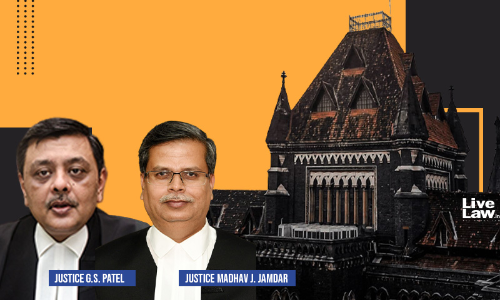
"Strong-Arm Tactics": Bombay High Court Says Public Sector Banks Can't Request Look Out Circulars Against Defaulters, Quashes LOCs
The Bombay High Court recently observed that Look Out Circulars (LOCs) issued by Ministry of Home Affairs (MHA) against loan defaulters at the behest of public sector banks (PSBs) are strong-arm tactics to circumvent legal processes and violate Articles 14 and 21 of the Constitution.“The LOCs boil down to nothing but a strong-arm tactic to bypass or leapfrog what PSBs clearly see...

'Sordid State Of Affairs': Bombay High Court Orders SP To Personally Look Into Rape Probe After Noting IO May Have Ulterior Intentions
The Bombay High Court recently ordered the Superintendent of Police, Jalgaon to personally look into an investigation into a rape case after noting that the investigating officer (IO) may have some ulterior intentions considering his unresponsiveness.A division bench of Justice Mangesh S Patil and Justice Shailesh P Brahme noted that despite promptly reporting to the police, the offence...
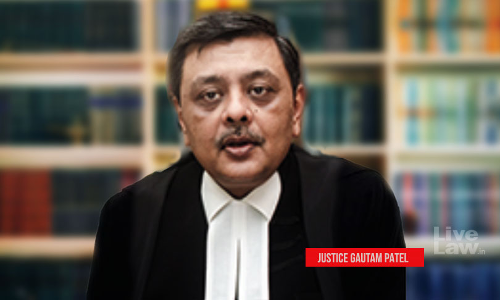
Only Time Can Assess How One Acquits Oneself In The Enterprise Of Cause Of Justice: Bombay High Court Bids Farewell To Justice Gautam Patel
The Bombay High Court today held a Full Court Farewell Reference to bid adieu to Justice Gautam Patel, as he retired after a tenure spanning over a decade.Justice Patel expressed gratitude for the honour of a Full Court Reference, a tradition that has never been observed before in the Bombay HC on the occasion of a judge's retirement. He reflected on the significance of serving the cause...
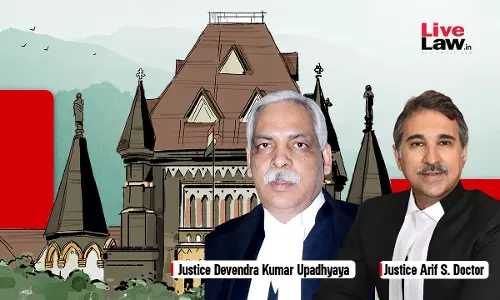
Contractors Challenging Tender Conditions Via PIL Pollute Purity Of The Stream Of Public Interest Litigation: Bombay High Court
The Bombay High Court on Tuesday observed that permitting contractors to file PILs challenging tender conditions is a sheer abuse of process of the court, and “pollutes purity of the stream of PIL”.A division bench of Chief Justice Devendra Upadhyaya and Justice Arif S Doctor dismissed a PIL by a contractor against a tender issued by Mumbai Metropolitan Region Development Authority...

Least Plausible For Syedna Mohammed Burhanuddin To Think Of Appointing Successor Immediately After Assuming Office In 1965: Bombay High Court
The Bombay High Court observed that Taher Fakhruddin, challenger to his uncle Mufaddal Saiffuddin's position as the Dai al-Mutlaq of the Dawoodi Bohra community, accepted vague indications for his own nass, but dismissed concrete evidence for the nass conferred on Syedna Saifuddin.“Clearly, the Plaintiff applies different standards to the nass he claims was conferred on himself and the...
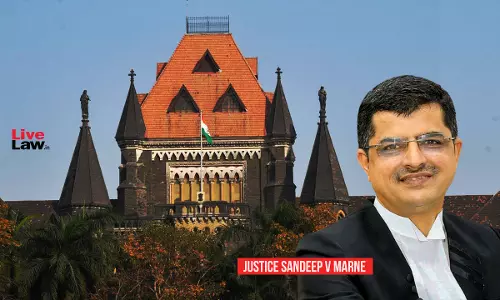
Abandonment Of Service Needs To Be Established By Conduction Of Enquiry: Bombay High Court
A single judge bench of the Bombay High Court comprising of Justice Sandeep V. Marne while deciding a Writ Petition in the case of Bhushan Industries vs Lohasingh Ramavadh Yadav has held that abandonment of service is a question of fact that needs to be established by conduction of an enquiry. Background Facts Bhushan Industries (Petitioner) was a partnership engaged in business...
Lengthy Period Of Absence Without Leave Documentation Is Unjustified, Bombay High Court Reduces Back Wages Of MSRTC's Employee
The High Court of Bombay single bench of Justice Sandeep V. Marne held that lengthy periods of absence from duty without proper leave documentation are unjustified, regardless of the plausibility of the reason behind the absence. The High Court acknowledged that the Labour Court's decision of reinstatement of the absent employee with 25% back wages could not be reversed as the employer failed...
Undisputed Employer-Employee Relationship Must For Proceedings Under Contract Labour (Regulation & Abolition) Act, 1970: Bombay High Court Set Asides Industrial Court Order
The Bombay High Court single bench of Justice Amit Borkar held that for the proceedings under the provisions of Contract Labour (Regulation & Abolition) Act, 1970, the relationship between employer-employee should be undisputed. The court held that in absence of such a relationship, the labour court or the industrial court doesn't have any jurisdiction to deal with the matter...
Judges Must Not Tarnish Image Of Judiciary: Bombay High Court Upholds Removal Of Civil Judge Who Arrived At Judicial Academy In Inebriated State
The Bombay High Court recently upheld state government's order removing civil judge Aniruddha Ganesh Pathak from judicial service due to unilateral adjournment of cases, failure to follow court timings and arriving under the influence of alcohol.A division bench of Justice AS Chandurkar & Justice Jitendra Jain observed –“It is a universally accepted norm that Judges and Judicial...